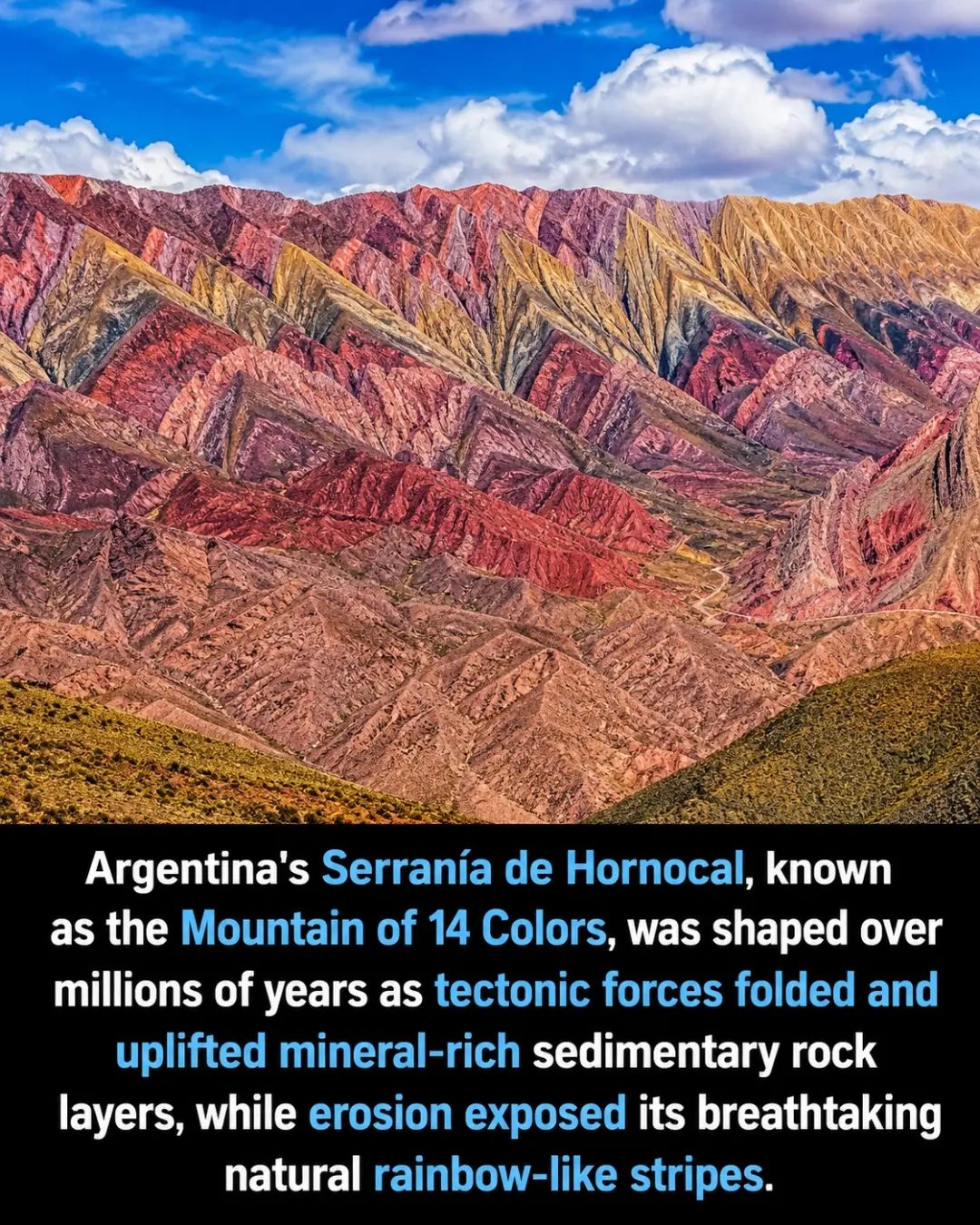
Rainbow Mountain in Argentina
Nestled in the heart of Argentina, Serranía de Hornocal, often referred to as the "Mountain of 14 Colors," is a geological marvel that showcases the Earth's artistic side. This mountain is renowned for its vibrant, rainbow-like stripes, which are the result of mineral-rich sedimentary rock layers exposed over millions of years.
Why This Matters
The formation of Rainbow Mountain is a testament to the powerful geological processes that shape our planet. Understanding how these natural processes occur can deepen our appreciation for the forces that have sculpted the landscapes we see today.
The Geological Processes
Tectonic Forces
The vivid colors of Rainbow Mountain are the result of tectonic forces that have folded and uplifted mineral-rich sedimentary rock layers. Over millions of years, these layers have been pushed up, creating the striking striped pattern that we see today.
Erosion
Erosion has played a crucial role in revealing the vibrant colors of Rainbow Mountain. As wind and water gradually wear away at the rock, they expose the different layers of sediment, each with its unique mineral composition and color. This process has resulted in the breathtaking natural rainbow-like stripes that define this mountain.
Mineral-Rich Sedimentary Rock
The colors of Rainbow Mountain are due to the mineral composition of the sedimentary rock layers. Each layer contains different minerals, which give it a unique hue. For example, iron oxide can create red or orange hues, while copper can produce green and blue shades. This diversity of minerals contributes to the stunning array of colors visible on the mountain.
Practical Tips
Best Time to Visit
The best time to visit Rainbow Mountain is during the dry season, from April to October. During this period, the weather is generally clear and sunny, providing optimal conditions for viewing the vibrant colors of the mountain. However, it's important to note that the weather can be unpredictable, and temperatures can drop significantly at higher elevations.
What to Bring
When planning a trip to Rainbow Mountain, make sure to pack essentials such as:
- Warm Clothing: Temperatures can be chilly, especially in the early morning and evening.
- Sun Protection: A hat, sunscreen, and sunglasses are essential for protecting yourself from the sun's rays at high altitudes.
- Water and Snacks: Stay hydrated and energized with plenty of water and snacks.
- Comfortable Shoes: Sturdy, comfortable shoes are necessary for the hike to the mountain's summit.
Safety Considerations
Hiking to the summit of Rainbow Mountain can be physically demanding, so it's important to be adequately prepared. Some key safety considerations include:
- Acclimatization: If you're not used to high altitudes, take time to acclimatize to prevent altitude sickness.
- Hydration: Drink plenty of water to stay hydrated, as the dry air can be dehydrating.
- Guide: Consider hiring a local guide who is familiar with the terrain and can provide valuable insights.
Important Takeaways
Rainbow Mountain is a geological treasure that showcases the Earth's natural beauty and the power of geological processes. Its vibrant colors are the result of millions of years of tectonic activity and erosion, revealing the diverse mineral composition of its sedimentary rock layers.
When planning a visit, consider the best time to go, what to bring, and important safety considerations to ensure a safe and enjoyable experience. The journey to Rainbow Mountain is not just a visual treat but also an opportunity to appreciate the intricate geological processes that have shaped our planet.
Conclusion
Serranía de Hornocal, or the Mountain of 14 Colors, stands as a breathtaking testament to the Earth's geological wonders. The vibrant, rainbow-like stripes that adorn its slopes are a visual feast, a result of millions of years of tectonic forces and erosion. Understanding the geological processes that have shaped this mountain deepens our appreciation for the natural beauty that surrounds us.
Watch the Reel
Questions readers ask
What causes the vibrant colors of Rainbow Mountain in Argentina?
The vibrant colors of Rainbow Mountain, or Serranía de Hornocal, are due to the presence of various minerals in the sedimentary rock layers. These minerals include oxides of iron, manganese, and other elements that produce the distinctive hues when exposed to air and sunlight.
How were the striped patterns formed on Rainbow Mountain?
The striped patterns on Rainbow Mountain were formed over millions of years through a combination of tectonic forces and erosion. These forces folded, uplifted, and exposed the mineral-rich sedimentary rock layers, creating the vivid, striped hues we see today.
Where exactly is Rainbow Mountain located in Argentina?
Rainbow Mountain, also known as Serranía de Hornocal, is located in the province of Jujuy, Argentina. It is situated in the heart of the country within the Andes Mountains.
What makes Rainbow Mountain a unique geological site?
Rainbow Mountain's uniqueness lies in its stunning, vibrant colors and striped patterns, which are a result of the Earth's geological processes. The mountain's visual display of mineral-rich sedimentary rocks offers a rare glimpse into the forces that have shaped our planet over millions of years.
What geological processes shaped Rainbow Mountain?
Two primary geological processes have shaped Rainbow Mountain: tectonic forces that folded and uplifted the mineral-rich sedimentary rocks, and erosion, which gradually wore away the surrounding layers to expose the colorful stripes.
Why is Rainbow Mountain also known as the 'Mountain of 14 Colors'?
Rainbow Mountain is often called the 'Mountain of 14 Colors' because of the distinct, vibrant hues visible on its surface. These colors range from red and pink to yellow, green, and brown, creating a visually stunning display that showcases the diversity of minerals present in the area.
Related deep dives
Similar reads based on topic and creator.




Recent articles
Fresh deep dives from the latest Reels we unpacked.



Comments
Be the first to comment.