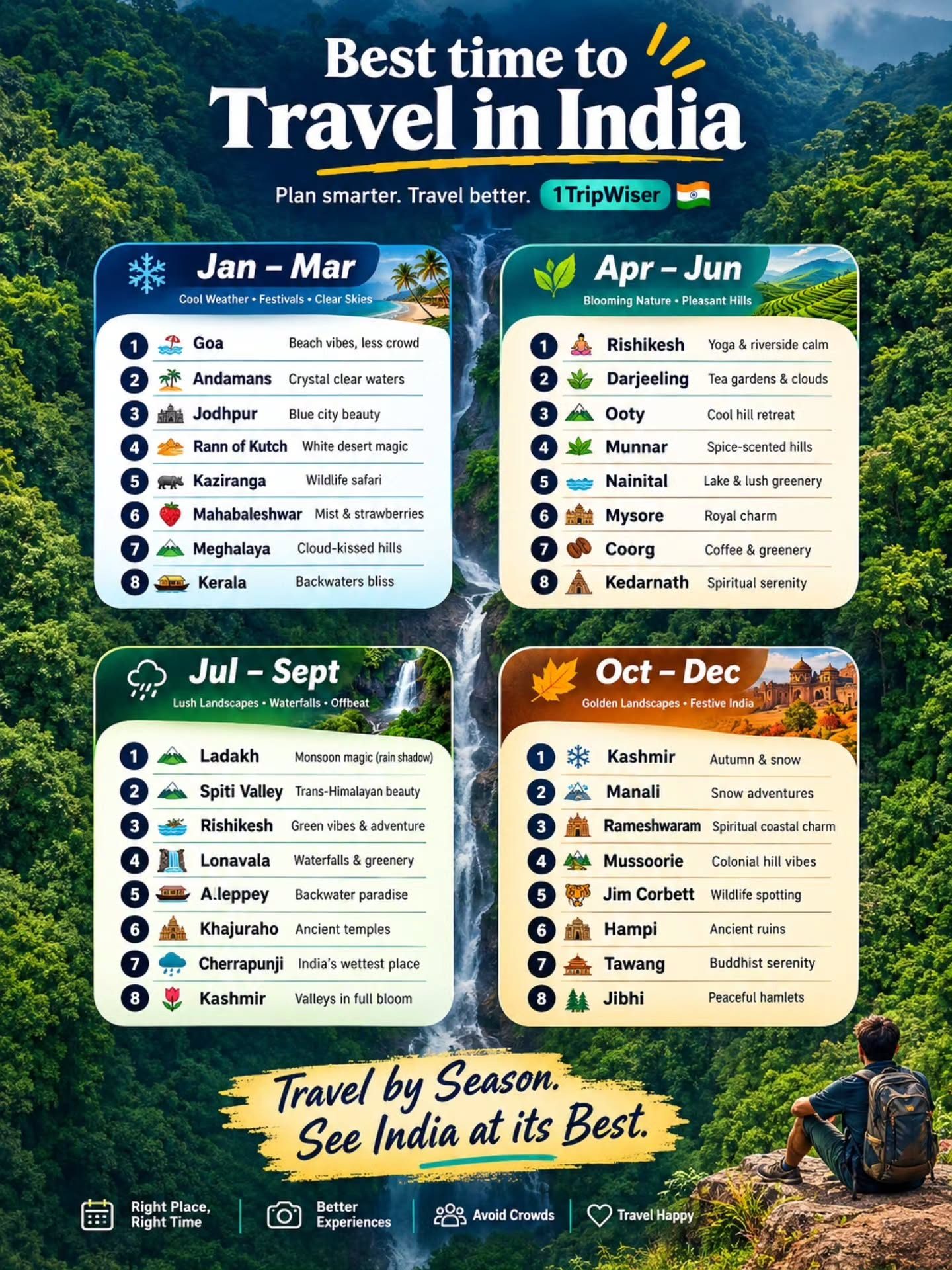
Planning a trip to India can be an exciting adventure, but knowing the best times to visit different regions can greatly enhance your experience. Traveling by season allows you to avoid crowds, enjoy optimal weather, and fully immerse yourself in the unique attractions each destination has to offer.
Context / Why This Matters
India's diverse geography and climate mean that the best times to visit vary significantly from one region to another. By understanding these seasonal differences, you can plan your trip to make the most of your time in the country — whether you are traveling to experience nature, culture, or adventure.
Main Discussion
The Best Times to Travel in India by Season
Planning a trip to India by season can help you make the most of your journey. Let's dive into the best times to visit different parts of the country, categorized by season.
Winter (January - March)
Winter in India is a time of vibrant festivals, mild temperatures, and clear skies. The key attractions during this period include:
- Rann of Kutch (Gujarat): The Rann Utsav festival at this time of year lets you experience the vast salt flats and cultural performances.
- Goa: The winter months are perfect for beach parties, thanks to the pleasant weather and lively atmosphere.
- Andamans: This destination offers a cool retreat, with opportunities for snorkeling and water sports.
- Jim Corbett National Park (Uttarakhand): This is the ideal season for wildlife safaris, as the weather is pleasant and the animals are more active.
- Yumthang Valley (Sikkim): This is the most beautiful time to visit the valley, especially to see the Rhododendron blooms.
Summer (April - June)
Summer in India can be quite hot, but there are still plenty of cool hill stations and cultural attractions to explore. Here are some highlights:
- Hampi (Karnataka): Hogging the limelight during the summer, Hampi offers a mesmerizing historical experience with its ancient ruins and temples.
- Meghalaya: That’s when the summer monsoon begins, making it perfect to enjoy the lush greenery.
- Spiti Valley (Himachal Pradesh): This remote and high-altitude region offers a unique blend of Buddhist culture and stunning landscapes.
- Kashmir (Jammu and Kashmir): Known as the "Heaven on Earth”, it is best experienced in the summer, with vibrant meadows and clear lakes.
Monsoon (July - September)
The monsoon season in India brings lush landscapes and cooler temperatures, making it an ideal time for those who enjoy the rain. Some of the best destinations to visit during this season include:
- Kerala: Known for its beautiful backwaters and houseboat stays, Kerala is at its best during the monsoon.
- Cherrapunji (Meghalaya): This is one of the wettest places on Earth, offering a unique experience of heavy rainfall and stunning waterfalls.
- Mahabaleshwar (Maharashtra): This cool hill retreat is perfect for enjoying the monsoon, with its misty landscapes and lush greenery.
- Rishikesh (Uttarakhand): Known as the "Yoga Capital of the World," Rishikesh offers a spiritual retreat during the monsoon, with fewer crowds and a serene atmosphere.
Post-monsoon (October - December)
Post-monsoon is a wonderful time in India, with the landscapes lush from the rains and the weather relatively mild. Some of the best destinations to visit during this season include:
- Rann of Kutch (Gujarat): Post-monsoon is the best time to visit the Rann of Kutch for the Rann Utsav festival, which showcases the vibrant culture and traditions of the region.
- Lonavala (Maharashtra): This cool hill retreat is perfect for a post-monsoon getaway, with its scenic beauty and relaxing atmosphere.
- Jodhpur (Rajasthan): Known as the "Blue City," this destination offers a rich cultural experience and Royal Charm.
- Rameshwaram (Tamil Nadu): This pilgrimage town is a must-visit during the post-monsoon season, with its beautiful temples and serene beaches.
Specific Attractions by Season
Wildlife Safaris
India is home to diverse wildlife, and certain seasons offer the best opportunities for spotting animals. For instance, Jim Corbett National Park is best visited during the winter months, while Kaziranga National Park in Assam is ideal during the winter and post-monsoon seasons. Wildlife safaris during these times provide better chances to see animals such as tigers, elephants, and rhinos in their natural habitats. Breaking it down:
- Winter: Jim Corbett National Park
- Monsoon: Kaziranga
Hill Stations
Cool hill retreats are a popular escape from the summer heat. Destinations like Mahabaleshwar, Meghalaya, and Tawang offer respite from the hot Indian summers. During these times, expect cooler temperatures and lush greenery. Breaking it down:
- Summer: Mahabaleshwar
- Monsoon: Tawang
- Post-monsoon: Meghalaya
Cultural Experiences
India's rich cultural heritage can be best experienced during specific seasons. The Rann Utsav in Kutch and the Khajuraho Festival of Dances in Madhya Pradesh are held during the winter months, offering vibrant cultural experiences. Breaking it down:
- Winter: Khajuraho
- Post-monsoon: Rann of Kutch
Adventure Travel
For adventure enthusiasts, the Himalayan regions like Ladakh, Spiti Valley, and Kashmir are best visited during the summer and post-monsoon seasons. These times offer clear skies, cooler temperatures, and stunning landscapes, perfect for trekking and other outdoor activities. Breaking it down:
- Summer: Ladakh
- Monsoon: Jibhi (Himachal Pradesh)
- Post-monsoon: Spiti Valley
Practical Tips
- Plan Ahead: Research the best times to visit your desired destinations and book your travel and accommodations in advance.
- Stay Flexible: Be open to adjusting your itinerary based on weather conditions and local advice.
- Pack Appropriately: Ensure you have the right clothing and gear for the season and activities you plan to engage in.
- Engage with Locals: Ask locals for their recommendations on the best places to visit and activities to do during your stay.
- Travel Responsibly: Respect local cultures and environments, and minimize your impact while traveling.
Important Takeaways
- Seasonal Differences: India's diverse climate means that the best times to visit different regions vary significantly.
- Crowd Avoidance: Traveling during the right season can help you avoid crowds and enjoy a more authentic experience.
- Unique Attractions: Each season offers unique attractions and activities, from wildlife safaris to cultural festivals and adventure sports.
Conclusion
Traveling in India by season is the key to a memorable and enjoyable journey. By understanding the best times to visit different regions, you can plan your trip to make the most of your time in the country. Whether you're seeking cultural experiences, adventure, or simply a relaxing getaway, India has something to offer year-round. So, pick your season, plan your trip, and get ready for an unforgettable adventure in India.
Watch the Reel
Questions readers ask
What are the best times to visit India to experience unique festivals?
The best times to visit India for unique festivals are during the winter and spring seasons. Winter brings vibrant festivals like the Rann of Kutch festival, where you can witness stunning performances and cultural events. In spring, Holi, the festival of colors, is celebrated with great enthusiasm, especially in cities like Mathura and Vrindavan.
Which regions in India are best to visit in summer?
Summer is a great time to explore historical sites and cooler mountain regions. Hampi in Karnataka is an excellent choice, offering a rich historical experience with its ancient ruins. North Indian regions like Ladakh and Himachal Pradesh are also ideal, as the weather is pleasant and perfect for trekking and sightseeing.
When should I travel to India to avoid crowds?
To avoid crowds, plan your trip during the monsoon season from July to September, or during the off-peak winter months of January and February. Keep in mind that popular festivals and school holidays may attract larger crowds. Avoid peak tourist seasons around Diwali (October-November) and Christmas (December).
What is the weather like in India during December, and where should I go?
December in India is characterized by pleasant winters in the north, with cool temperatures ideal for sightseeing. Destinations like Delhi, Jaipur, and the hill stations of Himachal Pradesh are particularly enjoyable. Meanwhile, the southern regions remain warm and humid, making it a good time to explore beaches like those in Goa and Kerala.
Why is March a good time to visit India?
March is an excellent time to visit India as it marks the transition from winter to summer, offering pleasant weather across many regions. This month is perfect for exploring cultural landmarks, such as the Taj Mahal in Agra, or for experiencing festivals like Holi. Additionally, the landscapes are lush and vibrant, making it an ideal time for photography and outdoor activities.
How does the weather in India vary by month?
India's weather varies significantly by month. December to February are the coldest months, perfect for exploring northern regions. March to June are warmer, ideal for visiting hill stations and historical sites. July to September are the monsoon months, bringing heavy rainfall, and October to November see the weather stabilizing, making it a good time for travel before the winter returns.
What are some unique experiences in India in April?
April in India brings the onset of summer, but it is also a time for vibrant celebrations like the Maha Shivaratri festival in parts of Karnataka and the Tamil month of Chithirai in southern India. The weather is warm, making beach destinations like Goa and Kerala particularly appealing, while hill stations offer a respite from the heat.
Related deep dives
Similar reads based on topic and creator.




Recent articles
Fresh deep dives from the latest Reels we unpacked.



Comments
Be the first to comment.