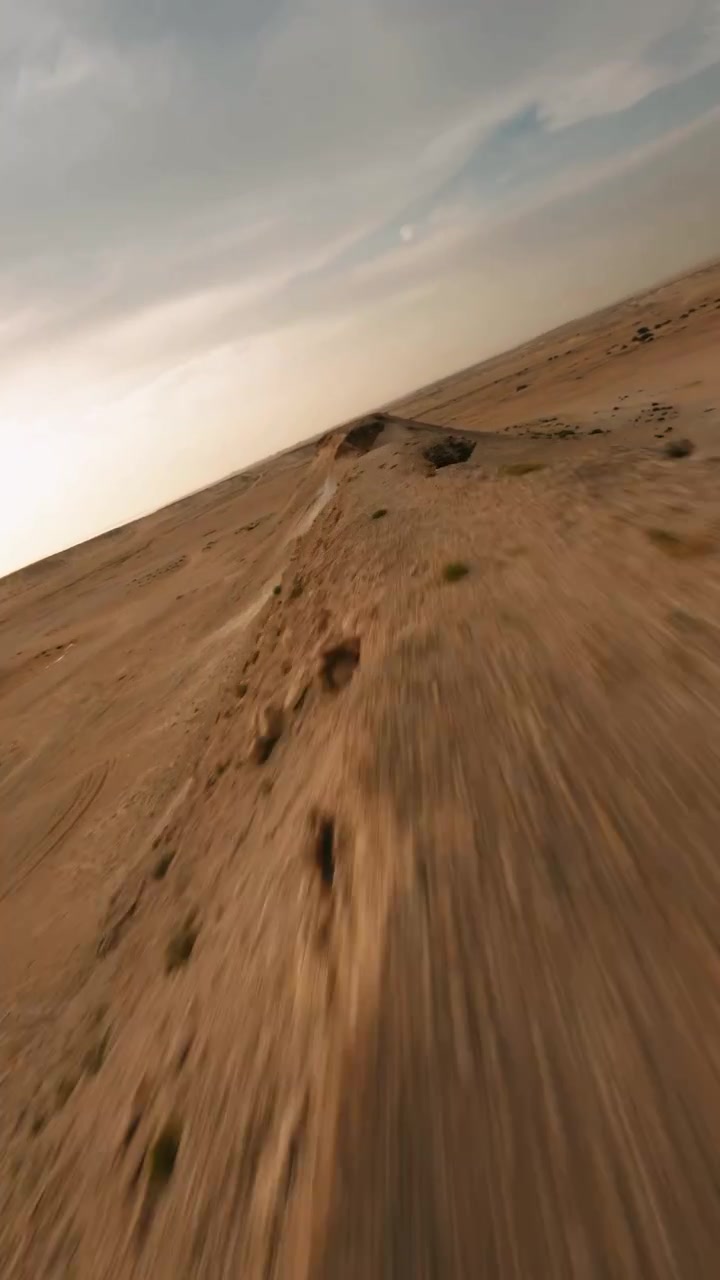
The desert is a pure tabula rasa, and its uncluttered expanses can be overwhelming. The camera flies above undulating sand dunes and sparse vegetation in a 16-second shot, and what comes through is a pure natural canvas. It’s a place of extremes, where life is sparse, but the beauty is pronounced.
Navigating the Desert
The desert is a landscape defined by its vastness and scarcity. It is characterized by its dry climate, extreme temperatures, and sparse vegetation. What sets desert landscapes apart is not just their barrenness, but the striking contrast between the harsh environment and the occasional bursts of life and color. The sprawling dunes are not just piles of sand, but sculpted by winds into patterns that evoke both artistry and mystery. Despite its harsh conditions, the desert is a place of unexpected beauty. The undulating forms of sand dunes create a mesmerizing landscape. The sparse vegetation that manages to survive adds a touch of life amidst the vastness. The play of light and shadow across the sandy terrain creates a dynamic scene. What makes the desert unique is not just its harshness but its ability to reveal beauty in the most unexpected places. The vastness of the desert, the undulating sand dunes, and the sparse vegetation create a sense of tranquility. The desert is home to a variety of unique plants and animals that have adapted to thrive in its harsh conditions.
# The Silence of the Sands
The desert’s appeal lies in its stark contrast to the urban world, where isolation and silence offer a respite from our crowded lives. According to a 2016 report by the World Health Organization, noise pollution is a growing concern in urban areas, affecting both physical and mental health. Its antithesis is the desert, where silence and solitude are abundant commodities. The desert acts as a mirror to our daily lives. It provides a stark contrast to the hustle and bustle of everyday life. The desert also holds a unique mystical quality. Throughout history, deserts have been settings for spiritual journeys and religious quests. More recently, a generation of remote workers are finding their bliss in the middle of nowhere.
# The Art of the Dunes
The dunes capture the desert’s dynamic essence. Sand dunes are shaped by the wind, which sculpts them into various forms. The most common are crescent-shaped dunes, which form when wind blows from a single direction. Star dunes, which have multiple arms radiating from a central point, form in areas where wind directions vary. Longitudinal dunes, which run parallel to the prevailing wind, are often found in linear patterns. Their patterns offer evidence of the forces at work. They move slowly over time, driven by the relentless wind. Indeed, each dune is unique and changes shape over time, making them a living, breathing part of the desert landscape.
# What does the sand reveal?
In the desert landscape, the sand dunes at first seem a simple feature but are actually complex. When looked up close, sand dunes reveal the intricacies of their formation, which is shaped by the wind. The undulating forms of the dunes are evidence of the wind's relentless movement, which sculpts the sand into various shapes. The surface of these can be smooth or rippled with tiny waves. At times, the sand will appear smooth and undisturbed. This can happen in calm weather. On the other hand, the rippled patterns suggest that the wind has been active, creating intricate shapes. These ripple patterns can be found near the crests of dunes. They can also be found in areas where the wind has shifted direction.
# What does the desert hide?
The desert's emptiness belies a world underneath. Plants and animals live within the harsh desert. From the cacti to the scorpions, and the desert fox to the lizard, they have all adapted to survive in the extreme temperatures and scarcity of water. These creatures often burrow underground to escape the harsh surface conditions, revealing the desert's rich subterranean world.
# Practical desert tips
The desert landscape offers a unique experience. Before embarking on a journey, consider these tips:
- Pick the right time: Desert temperatures can soar during the day, making it uncomfortable to explore. Plan your visit for early morning or late afternoon.
- Stay hydrated: Carry plenty of water and stay hydrated throughout your journey.
- Choose your transportation: Whether it's a 4x4 vehicle or a camel, choose a mode of transport that can navigate the sandy terrain.
- Respect local customs and environmental preservation: The desert is a unique ecosystem, so be mindful of your impact and respect local customs.
Finding Beauty in Extremity
The desert is an austere yet alluring expanse. It’s a space that exhales the remains of time, emphasizing a very rare and special silence on a daily basis.
Watch the Reel
Questions readers ask
What makes desert landscapes so unique for photography?
Desert landscapes are unique for photography due to their vast, uncluttered expanses and the striking contrast between harsh conditions and occasional bursts of life and color. The interplay of light, shadow, and silence creates a dynamic scene that can be both awe-inspiring and tranquil.
Can I use a drone to capture desert landscapes?
Yes, drones can be an excellent tool for capturing desert landscapes. They allow you to get aerial shots of undulating sand dunes and sparse vegetation, revealing the vastness and beauty of the desert in a way that ground-level photography cannot.
What types of sand dunes can I expect to see in the desert?
You might encounter several types of sand dunes, each shaped by different wind patterns. Crescent-shaped dunes form from single-direction winds, star dunes have multiple arms and form in areas with varying wind directions, and longitudinal dunes run parallel to the prevailing wind.
How do sand dunes contribute to the desert's beauty?
Sand dunes contribute to the desert's beauty through their mesmerizing shapes and the way they interact with light and shadow. Each dune is unique and changes over time, adding a dynamic element to the landscape. Additionally, the sparse vegetation that survives in the desert adds a touch of life amidst the vastness.
What is the significance of the desert's silence in photography?
The desert's silence offers a stark contrast to the noise and bustle of urban life, making it a peaceful and contemplative subject for photography. This silence can evoke a sense of tranquility and solitude, providing a respite from the everyday world.
Related deep dives
Similar reads based on topic and creator.




Recent articles
Fresh deep dives from the latest Reels we unpacked.

Comments
Be the first to comment.