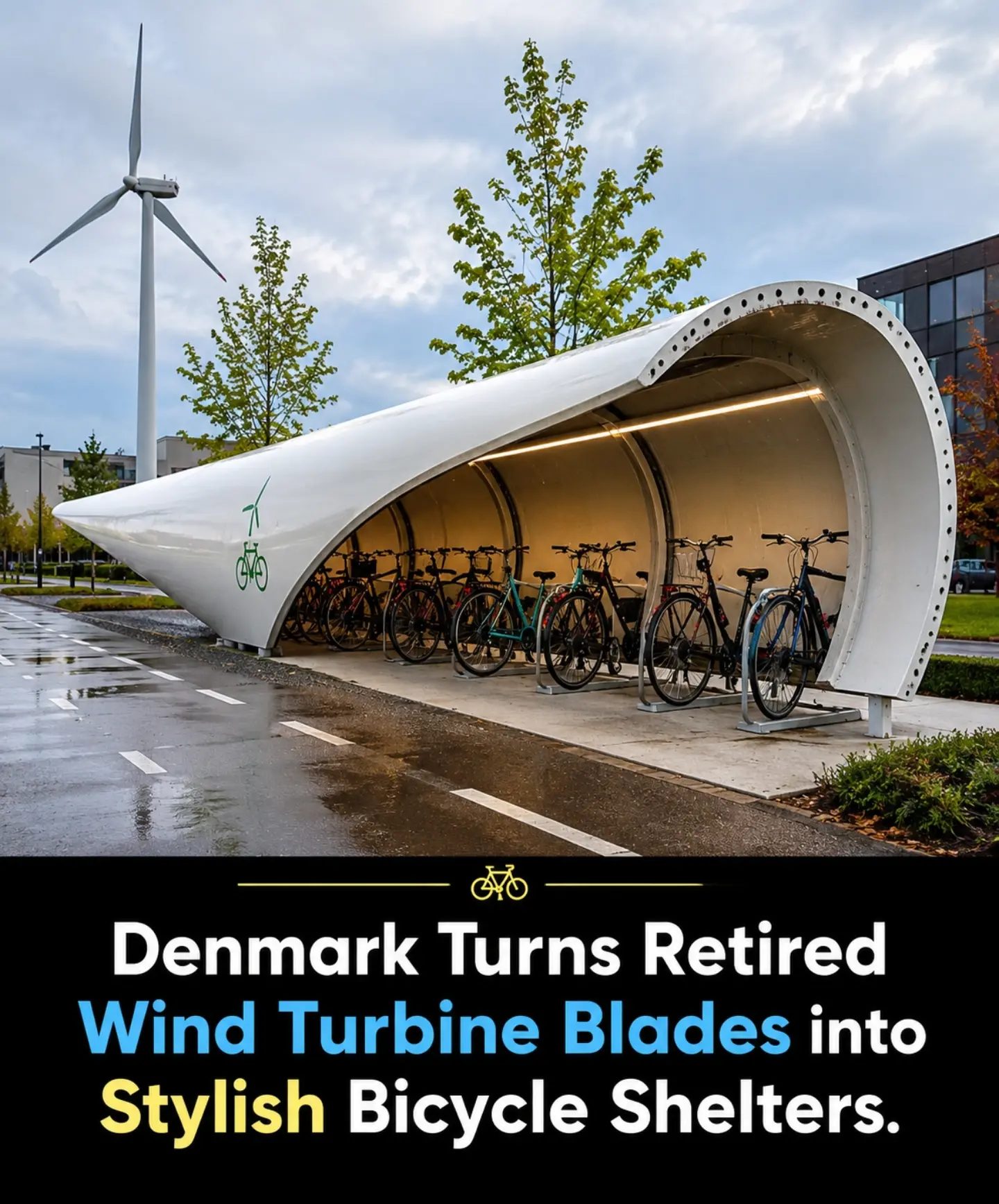
Wind Turbine Bicycle Shelters
In Denmark, a unique and innovative approach to urban design and sustainability is transforming the way we think about bicycle infrastructure. Retired wind turbine blades, once used to harness clean energy, are now being repurposed into stylish and functional bicycle shelters. This initiative not only addresses the issue of waste from decommissioned wind turbines but also enhances urban cycling culture by providing sleek, modern, and practical solutions for cyclists.
Context / Why this matters
The repurposing of wind turbine blades into bicycle shelters is more than just an architectural marvel; it's a testament to Denmark's commitment to sustainable practices. As wind turbines reach the end of their lifespan, the disposal of their blades poses a significant environmental challenge. These blades, made from composite materials, are not easily recyclable and can end up in landfills, contributing to environmental degradation. By transforming these blades into bicycle shelters, Denmark is setting a global example of how to manage end-of-life wind turbine components in an eco-friendly manner.
Main discussion
The Design and Functionality
The bicycle shelters crafted from retired wind turbine blades are not just functional but also aesthetically pleasing. These structures provide covered parking for numerous bicycles, protecting them from the elements and enhancing the overall cycling experience. The design is modern and sleek, blending seamlessly into urban landscapes. The shelters are typically placed in urban environments with paved paths and greenery, creating a harmonious balance between functionality and aesthetics.
Sustainable Urban Design
This initiative is a prime example of how sustainable urban design can be integrated into daily life. By repurposing wind turbine blades, Denmark is promoting a circular economy where waste is minimized, and resources are used efficiently. This approach not only reduces environmental impact but also encourages a culture of sustainability and innovation.
Benefits for Cyclists
For cyclists, these shelters offer more than just protection from the weather. They provide a sense of security and convenience, encouraging more people to ride bicycles. This can lead to a reduction in carbon emissions, as more individuals opt for cycling as a mode of transportation. The shelters also contribute to the overall appeal of cycling, making it a more attractive option for both commuters and recreational riders.
Practical tips
If you're inspired by Denmark's innovative approach to bicycle shelters and want to implement similar ideas in your community, here are some practical tips:
Collaboration and Partnerships
Work with local authorities, environmental groups, and community organizations to identify potential sources of retired wind turbine blades. Collaboration can help streamline the process and secure necessary permissions and resources.
Design and Planning
Engage with architects and urban planners to design shelters that are both functional and aesthetically pleasing. Consider the specific needs of your community, such as the number of bicycles to be accommodated and the type of environment where the shelters will be placed.
Community Engagement
Involve the local community in the planning and implementation process. This can help generate support and ensure that the shelters meet the needs of the people who will use them. Community engagement can also foster a sense of ownership and pride in the project.
Important takeaways
The repurposing of retired wind turbine blades into bicycle shelters in Denmark highlights the potential for innovative and sustainable urban design. This initiative not only addresses environmental challenges but also enhances the urban cycling experience. By providing stylish and functional shelters, Denmark is setting a global example of how to integrate sustainability into everyday life.
Conclusion
The transformation of retired wind turbine blades into bicycle shelters is a groundbreaking example of how sustainability and urban design can go hand in hand. By repurposing these materials, Denmark is not only reducing waste but also enhancing the urban environment and promoting a culture of cycling. This initiative serves as an inspiration for communities around the world to think creatively about sustainable practices and urban infrastructure.
Watch the Reel
Questions readers ask
How does Denmark's initiative address wind turbine waste?
Denmark's initiative tackles wind turbine waste by repurposing retired turbine blades into bicycle shelters. This approach ensures that these large, non-biodegradable materials are given a new life instead of ending up in landfills or requiring costly disposal methods.
What are the benefits of using wind turbine blades as bicycle shelters?
Using wind turbine blades as bicycle shelters offers multiple benefits. It provides a practical solution for bicycle parking, reduces waste, promotes sustainability, and enhances urban design with unique, modern structures. Additionally, it supports cycling culture by creating designated spaces for cyclists.
How do wind turbine blade shelters contribute to Denmark's urban design?
These shelters contribute to Denmark's urban design by adding distinctive, eco-friendly structures to the landscape. They demonstrate a commitment to sustainability and innovation, transforming decommissioned turbine blades into functional and aesthetically pleasing elements of the cityscape.
What makes Denmark's wind turbine blade recycling initiative unique?
Denmark's initiative stands out by combining wind turbine recycling with practical urban solutions. Unlike other recycling methods, this approach directly addresses two issues—wind turbine waste and the need for sustainable bicycle parking—while enhancing the urban environment with stylish designs.
What can other countries learn from Denmark's wind turbine blade repurposing?
Other countries can learn about creative waste management and sustainable urban development from Denmark. This initiative showcases how innovative thinking can turn potential waste into valuable urban infrastructure, inspiring similar projects globally.
How does this initiative support Denmark's cycling culture?
By providing stylish and functional bicycle shelters, Denmark's initiative encourages more people to cycle. These shelters offer secure and convenient parking, making cycling a more attractive option for commuting and daily activities, thereby fostering a stronger cycling culture.
Related deep dives
Similar reads based on topic and creator.




Recent articles
Fresh deep dives from the latest Reels we unpacked.




Comments
Be the first to comment.