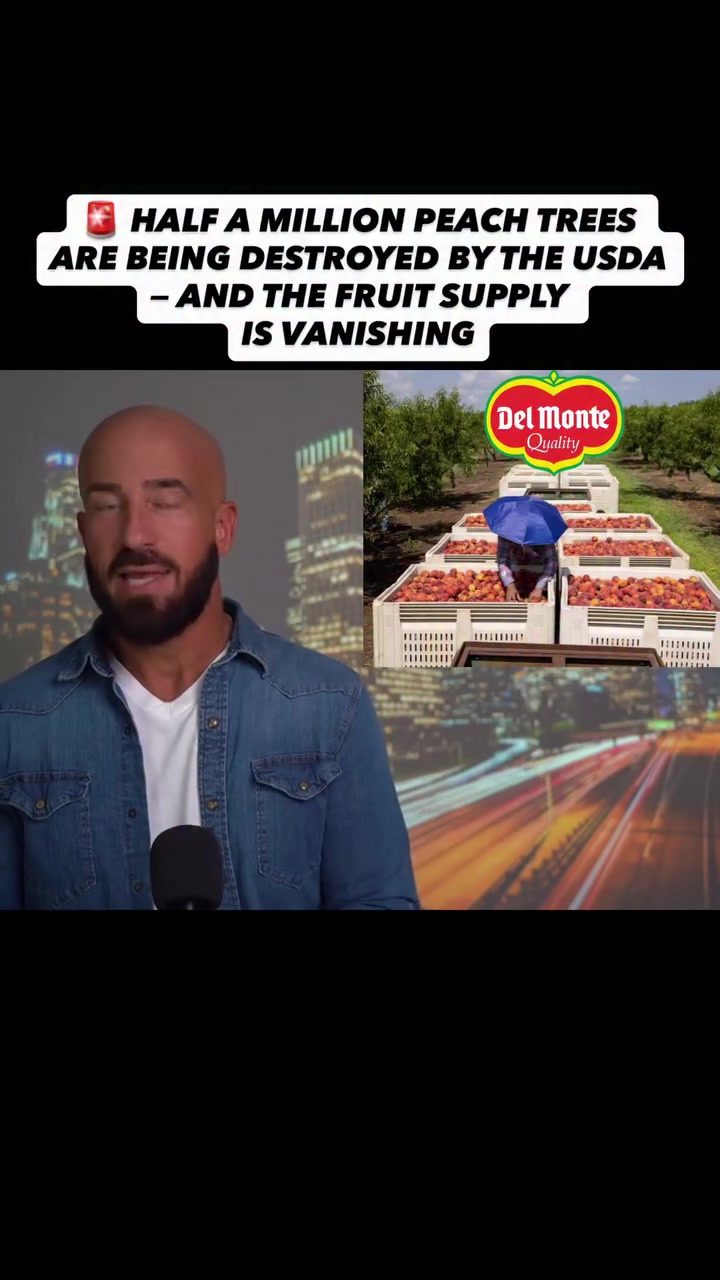
Del Monte Bankruptcy Leads to Massive Peach Tree Destruction
The USDA is compensating farmers to uproot thousands of acres of peach orchards, marking a significant shift in American agriculture. This drastic measure is a direct result of Del Monte's bankruptcy, which has left farmers in a precarious position. The fallout includes the destruction of approximately half a million peach trees and a projected revenue loss of over $500 million for farmers.
Why This Matters
The collapse of Del Monte, a well-known company in the canned fruit and vegetable market, has set off a chain reaction that is reshaping the agricultural landscape. The USDA's decision to pay farmers to rip out peach orchards and convert the land to other crops highlights the broader implications of a single company's bankruptcy on food production. This situation underscores the vulnerability of agricultural systems tied to large corporate entities and the potential for widespread economic impact.
The Collapse of Del Monte
Historical Context
Del Monte, established nearly 140 years ago, has been a staple in the canned fruit and vegetable industry. The company's recent bankruptcy has left farmers with a considerable amount of unsellable produce. This collapse has not only affected crop supply but has also shaken the confidence of farmers who had long-standing contracts with the company.
Financial Implications
The financial repercussions of Del Monte's bankruptcy are staggering. Farmers who had relied on contracts with Del Monte are now facing a loss of over $500 million in revenue. The decision by Del Monte to declare bankruptcy on July 1st, 2025, initially gave farmers a sense of security. They were assured that their contracts were safe and that the company would be sold, mitigating the impact. However, this assurance proved to be false, leaving farmers in a state of shock and uncertainty.
Immediate Actions
In response to the financial strain, the USDA is providing farmers with approximately $9 million to rip up 3,000 acres of peach orchards and transition to different crops. This move, while financially necessary for the farmers, has broader implications for the agricultural sector. The destruction of half a million peach trees will create an artificial shortage of canned peaches, affecting both farmers and consumers.
Impact on Farmers and the Community
Farmers' Shock and Disbelief
Farmers who had longstanding relationships with Del Monte are struggling to come to terms with the sudden turn of events. Many expressed disbelief, stating that they had never imagined the company would cease to exist. The sudden loss of contracts has left them in a state of shock, grappling with the reality of their financial losses and the future of their farms.
Community and Economic Impact
The destruction of peach orchards and the subsequent transition to new crops will have a profound impact on the community. Local economies that relied on peach farming will need to adapt to new agricultural practices. This shift could lead to job losses, changes in community dynamics, and potential economic downturns. The transition could also affect the local ecosystem, as different crops may have varying environmental needs and impacts.
Adaptation and Resilience
Farmers are now faced with the daunting task of adapting to new crops and agricultural practices. This transition will require significant investment and effort. The USDA's financial support is a crucial step to help farmers navigate this challenging period, but it remains to be seen how successfully they can adapt and maintain their livelihoods in the long run.
Practical Tips for Farmers
Diversifying Crops
Given the uncertainty in the agricultural market, diversifying crops can be a strategic move for farmers. By growing a variety of crops, farmers can mitigate the risk of relying on a single market or company. This diversification can provide a buffer against future economic shocks and ensure a more stable income.
Seeking Financial Assistance
Farmers should explore available financial assistance and subsidies from government programs. The USDA's current initiative to help farmers transition to new crops is a step in the right direction. Staying informed about such programs and leveraging them to the fullest can help farmers navigate through these challenging times.
Community Support and Collaboration
Collaboration and support within the farming community are vital during such transitions. By sharing knowledge, resources, and support, farmers can collectively navigate the challenges posed by Del Monte's bankruptcy. Community initiatives and cooperatives can provide the necessary support to help farmers adapt and thrive.
Important Takeaways
The destruction of peach orchards due to Del Monte's bankruptcy serves as a stark reminder of the interconnectedness of the agricultural sector. The downstream effects of a single company's financial distress can have profound implications for farmers, communities, and consumers. This situation emphasizes the need for diversification, resilience, and community support in the agricultural industry.
Conclusion
The current situation, where half a million peach trees are being destroyed, underscores the broader implications of a single company's bankruptcy on the agricultural sector. The USDA's intervention, while necessary, highlights the vulnerabilities within the system. As farmers adapt to new crops and markets, the hope is for a more resilient and diversified agricultural landscape that can withstand future shocks. This situation serves as a wake-up call for the industry, emphasizing the importance of diversification, financial assistance, and community support. The future of American fruit farming will likely see significant changes, but with the right strategies and support, farmers can navigate these challenges and ensure a sustainable future.
Watch the Reel
Questions readers ask
What caused the uprooting of half a million peach trees in America?
The uprooting of approximately half a million peach trees is directly tied to the bankruptcy of Del Monte. The company's financial collapse led to a disruption in crop contracts, forcing farmers to remove their peach orchards.
Why is the USDA compensating farmers to switch crops?
The USDA is providing compensation to farmers to help offset the financial loss. The goal is to encourage farmers to switch to different crops, thereby reducing the impact of Del Monte’s bankruptcy on the agricultural market.
How much revenue loss are farmers projected to experience due to the uprooting?
Farmers are projected to lose over $500 million in revenue due to the uprooting of peach trees. This loss highlights the significant financial impact of Del Monte's bankruptcy on the agricultural sector.
What role does Del Monte play in the current supply chain crisis?
Del Monte's bankruptcy has set off a chain reaction in the agricultural supply chain. The disruption of crop contracts has led to the uprooting of peach trees and a shift in farming practices, causing a ripple effect across the industry.
What alternatives are farmers considering after uprooting peach trees?
Farmers are considering a variety of alternative crops to replace their peach orchards. The USDA's compensation program aims to support this transition, helping farmers adapt to the changing agricultural landscape.
How does Del Monte's bankruptcy affect American agriculture as a whole?
Del Monte's bankruptcy has significant implications for American agriculture. It underscores the vulnerability of the agricultural system to the financial health of major companies and highlights the need for resilience in the face of such disruptions.
What measures are being taken to mitigate the impact of the uprooted trees?
The USDA is taking proactive measures to mitigate the impact, including financial compensation for farmers to switch crops. This aims to stabilize the agricultural sector and help farmers transition to new farming practices.
Related deep dives
Similar reads based on topic and creator.




Recent articles
Fresh deep dives from the latest Reels we unpacked.




Comments
Be the first to comment.