The Consequences of Forest Fires
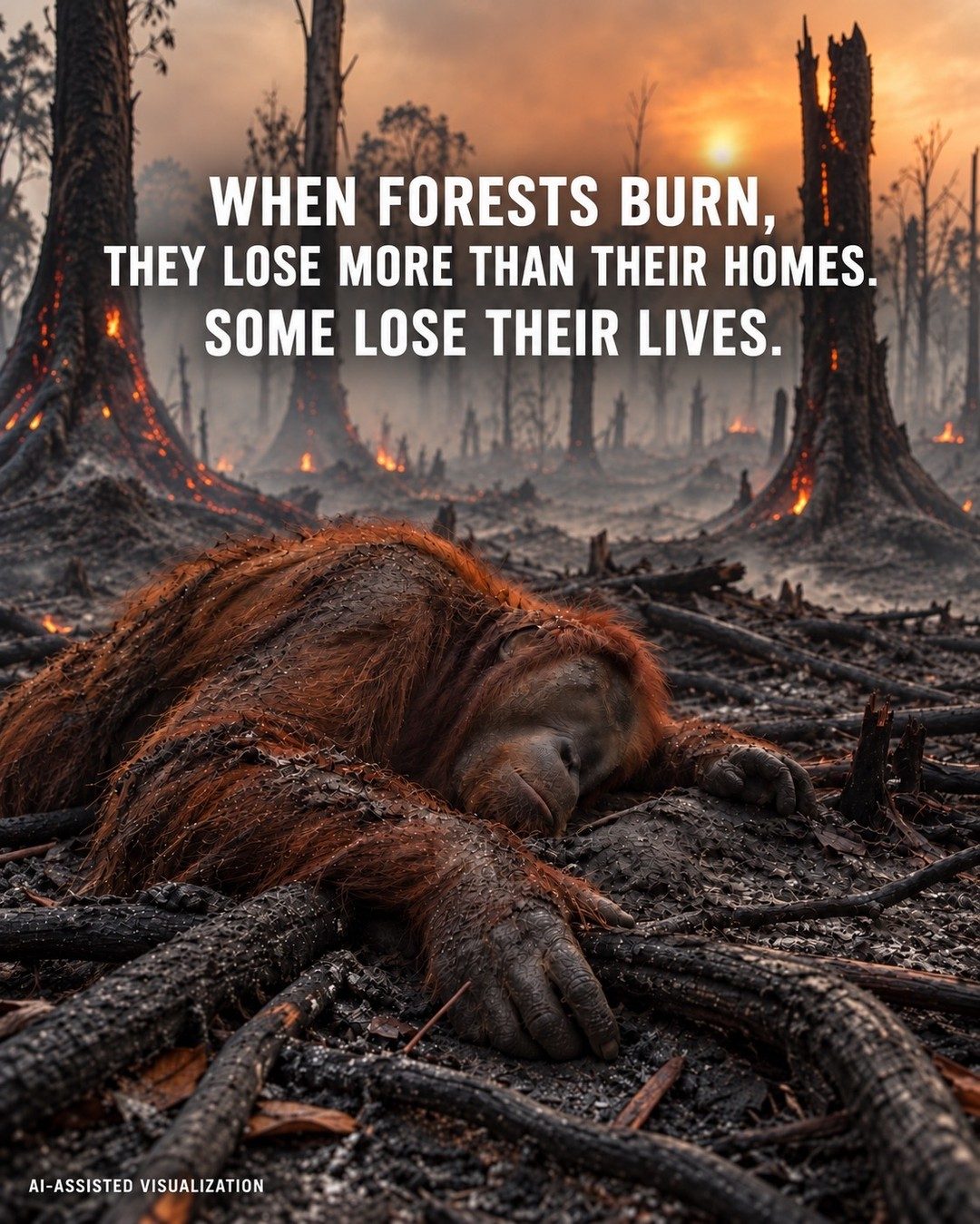
Forests are the lungs of Earth, storing vast amounts of carbon. When fires raze through, they release carbon dioxide and destroy habitats that may never recover. The consequences are deadly, especially for animals like orangutans. These fires, driven by climate change, agriculture, and logging, are not just burning wood—and trees; they're burning life. Orangutans are among the most vulnerable victims. These apes live almost entirely in treetops, and when forests are felled, they are left with no food or shelter. The visual made with AI accurately depicts a charred landscape where an orangutan, distressed and vulnerable, lies amid debris, highlighting the stark consequences. Orangutan populations have plummeted. Less than 50% of Indonesian breeding females remain. Worst of all, these fires could be the last straw for some species. When forests burn, many species face habitat loss. However, 60% of orangutans' habitats in Indonesia have already been lost to logging. A 2021 report indicates that 40 tons of greenhouse gases are released in Indonesian forest fires, making some populations unstainable. These aren't just animals—these are casualties. The leading cause of forest fires is usually slash-and-burn agriculture. This involves farmers setting fires to clear land for crops and grazing. In areas like Borneo and Sumatra, this practice has led to severe deforestation. The environmental impact is severe; these fires release greenhouse gases, exacerbating climate change, and destroying vital ecosystems.
Forest Fires and the Loss of Wildlife Habitat
When forests burn, they release more than just carbon dioxide—though that may be enough. The crisis unfolds in a cascade of destruction, producing vast amounts of smoke and ash. The result is a grim picture of a scorched landscape. Animals lose their home. Younger trees, which may have nourished biodiversity, are destroyed. Rising temperatures and droughts, driven by climate change, amplify the frequency and intensity of forest fires. A 2021 study by Indonesia's Ministry of Environment, presents these findings. With more frequent fires, the destruction becomes a vicious cycle. The increased carbon emissions contribute to more severe weather patterns, fueling further carbon emissions. Wildlife populations are left without habitat. In particular, the orangutan population is at grave risk, with remaining populations vulnerable to further environmental changes. The loss of forest habitat isn't just about blackened trees—they are habitats being lost forever. The loss of habitat endangers orangutans, tarsiers, and other tree-dwelling creatures. In situations like wildfires, many species are left to fend for themselves, left without food and protective cover. This leads to suffering and, ultimately, extinction. The overarching picture is bleak. The image presents us with the burning question of how we can mitigate. The loss of biodiversity is not only due to fires—the loss of habitat destroys ecosystems. Increased agricultural practices threaten forests—we need to find alternative methods of land clearing and agriculture. When forests are destroyed, animals lose more than just their homes; they lose their lives, literally. There is no more important question for our planet than the cause of deforestation.
Intensive Wildlife Loss and The Role of Technology
The devastation of wildlife and habitats don't just look dramatic; the impact is colossal. The loss of dozens of species the world over can throw entire ecosystems into chaos. When such areas burn, tens of thousands of animals perish. Most concerning, orangutans face the threat of extinction in a fire-prone world. With increasing wildfires, technology can inform and map these critical situations. We can use AI to identify critical areas that need intervention, and we can create real-time warning systems to protect wildlife. These fires, in fact, don't just burn away the forests. They burn away any chance for some species to survive. The impact of AI imagery is enormous. These visualizations raise awareness and provide an early warning system for emerging threats. These alerts can allow for expedited management and containments. This can reduce the extent of fires and the related biodiversity loss. By raising awareness, AI could help trigger the conservation efforts. In short, the destruction of a rainforest is not merely a loss of habitat but the extirpation of irreplaceable species. Orangutans are only one example—many species are left vulnerable. Deforestation and forest fires bring about devastating consequences for biodiversity, including habitat loss, wildlife endangerment, and extinction. We need to ensure active engagement with conservation efforts that can mitigate the dire consequences.
Watch the Reel
Related deep dives
Similar reads based on topic and creator.



Recent articles
Fresh deep dives from the latest Reels we unpacked.



Comments
Be the first to comment.