Data Centers: The Unseen Impact on Animals and Environment
Data centers are critical to the functioning of our digital world, powering everything from cloud storage to streaming services. Yet, there's a growing concern about their impact on the environment and wildlife. Farmers in Texas have reported alarming changes since data centers arrived in their vicinity. These changes raise questions about the long-term effects of data centers on land, water, and local ecosystems.
The Impact on Animals
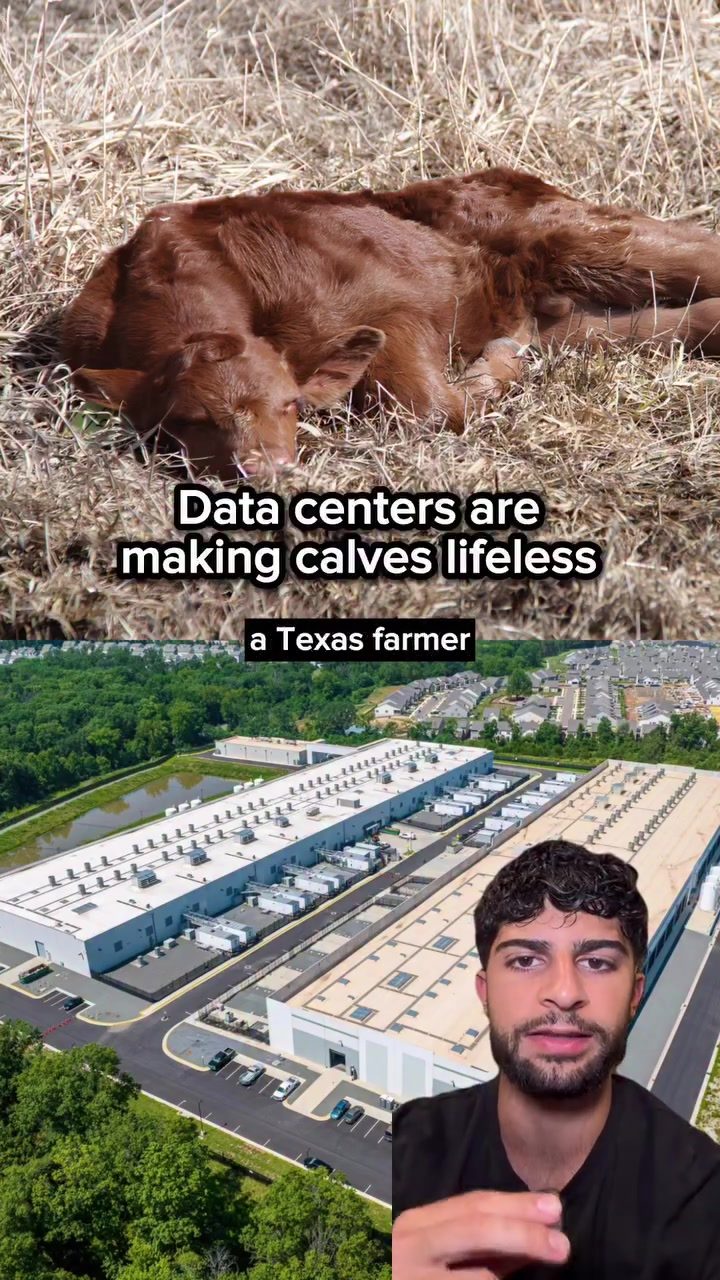
The effects on animals are among the most unsettling observations. A Texas farmer shared that every calf born since the arrival of data centers has shown no signs of life. This disturbing trend suggests a potential link between data center operations and animal health. The farmer also noted that vibrations from the data centers seem to affect the behavior of his cows, making them sleep by the road—a behavior not typically seen in healthy cattle.
Another farmer reported constant low-frequency sounds emanating from a nearby data center. These sounds are inaudible to humans but are perceived by animals, leading to significant health issues. Specifically, cows near the data center have lost roughly 30% of their body weight. This weight loss is a clear indication of stress or malnutrition, which could be caused by the constant exposure to these low-frequency sounds.
The impact of electromagnetic fields (EMFs) generated by data centers is another concern. EMFs are known to affect various living organisms, and their influence on animals near data centers is still not fully understood. The lack of comprehensive studies on this subject leaves many questions unanswered, but the current observations are worrying.
The Impact on Land and Water
The environmental impact extends beyond animal health. In Texas alone, nearly 2 million acres of land and 20,000 farms have disappeared in just five years. This rapid loss of agricultural land is alarming, especially in a state known for its farming and ranching. The disappearance of farms and agricultural land can be attributed to various factors, including the construction of data centers, which often require large tracts of land.
Water resources are also at risk. Data centers consume vast amounts of water for cooling purposes, which can strain local water supplies. In areas where water is already scarce, this increased demand can lead to shortages and conflicts over resources. The environmental impact of data centers on water resources is a critical concern that needs to be addressed to ensure sustainable development.
Why This Matters
The rapid expansion of data centers is driven by the growing demand for digital services. However, this growth comes at a cost to the environment and local ecosystems. The concerns raised by farmers in Texas highlight the need for more research and regulations to mitigate the potential negative impacts of data centers. Understanding these issues is crucial for developing sustainable practices that balance the benefits of digital technology with the preservation of natural resources.
Regulatory Challenges
One of the key challenges is the lack of comprehensive regulations governing the environmental impact of data centers. While there are guidelines for energy efficiency and emissions, the impact on wildlife and water resources is often overlooked. Developing regulations that address these issues can help ensure that data centers are built and operated in a way that minimizes their environmental footprint.
Technological Innovations
Technological innovations can play a crucial role in mitigating the environmental impact of data centers. For example, advancements in cooling technologies can reduce water consumption. Similarly, the use of renewable energy sources can help lower the carbon footprint of data centers. These innovations are essential for creating a more sustainable future for digital infrastructure.
Community Involvement
Community involvement is also critical. Local communities, especially farmers and landowners, should be consulted and involved in the planning and construction of data centers. Their insights and experiences can provide valuable information for developing sustainable practices. Additionally, engaging with local communities can help build support for regulations and initiatives aimed at mitigating the environmental impact of data centers.
Practical Tips for Sustainable Data Centers
Energy Efficiency
Improving energy efficiency is one of the most effective ways to reduce the environmental impact of data centers. This can be achieved through the use of energy-efficient equipment and practices, such as virtualization and server consolidation. Additionally, data centers can adopt renewable energy sources like solar and wind power to reduce their carbon footprint.
Water Conservation
Water conservation is another crucial aspect of sustainable data center operations. Implementing water-reduction technologies, such as evaporative cooling systems and air-side economizers, can help minimize water consumption. Data centers can also recycle water and use rainwater harvesting to reduce their reliance on local water supplies.
Wildlife Protection
Protecting wildlife involves implementing measures to minimize the impact of data centers on local ecosystems. This can include the installation of sound barriers to reduce low-frequency noise and the use of EMF-shielding materials to mitigate the effects of electromagnetic fields. Additionally, maintaining natural habitats around data centers can help preserve local wildlife populations.
Important Takeaways
Environmental Impact
The environmental impact of data centers is a complex issue that affects various aspects of the ecosystem. From the impact on animals to the strain on water resources, the rapid expansion of data centers poses significant challenges. Understanding these impacts is crucial for developing sustainable practices that balance the benefits of digital technology with the preservation of natural resources.
Community Engagement
Engaging with local communities, especially farmers and landowners, is essential for addressing the environmental impact of data centers. Their insights and experiences can provide valuable information for developing sustainable practices and regulations. Community involvement can help build support for initiatives aimed at mitigating the environmental impact of data centers.
Technological Innovations
Technological innovations are key to creating a more sustainable future for digital infrastructure. Advancements in energy-efficient cooling technologies, renewable energy sources, and EMF-shielding materials can help reduce the environmental footprint of data centers. These innovations are essential for developing sustainable practices that balance the benefits of digital technology with the preservation of natural resources.
Conclusion
The impact of data centers on the environment and wildlife is a pressing concern that requires immediate attention. The observations made by farmers in Texas highlight the need for more research and regulations to mitigate the potential negative impacts of data centers. By implementing sustainable practices, engaging with local communities, and investing in technological innovations, we can create a more sustainable future for digital infrastructure. This approach ensures that the benefits of digital technology are achieved without compromising the health of our environment and wildlife.
Watch the Reel
Questions readers ask
How are data centers affecting Texas farmland and water resources?
Data centers in Texas are contributing to significant farmland loss and water shortages. Farmers have reported that the influx of data centers has led to increased competition for available resources, especially water, which is crucial for agriculture. Additionally, the construction of data centers often leads to the conversion of farmland, leading to a loss of valuable agricultural land.
What are the observed effects of data centers on animal health and behavior in Texas?
Farmers in Texas have noted alarming changes in animal health and behavior since the arrival of data centers. Reports include cattle showing unusual behavior and calves being born with no signs of life. These observations suggest a potential impact of data center operations, such as electromagnetic fields (EMFs), on local wildlife and livestock.
How do data centers contribute to environmental changes in Texas?
Data centers in Texas are linked to several environmental changes, including increased water usage and competition for resources, which can impact local ecosystems. The presence of data centers near farmland and wildlife habitats can also alter local conditions and potentially disrupt natural ecosystems, affecting native species in the process.
What is the impact of data centers on Texas wildlife?
Texas wildlife is facing challenges due to the expansion of data centers. The construction and operation of these facilities can lead to habitat loss and degradation, affecting many species that call the area home. Like the impact on farm animals, the effects on wildlife could be linked to EMFs emitted by these facilities, potentially altering animal health and behavior.
What can Texas farmers do to mitigate the impact of data centers on their land and livestock?
Texas farmers can take several steps to mitigate the impact of data centers. Engaging with local authorities and data center operators to voice concerns and advocate for better regulations is a good start. Additionally, farmers can explore alternative water sources and sustainable farming practices to ensure the health of their land and livestock. Monitoring the health and behavior of animals closely is also crucial for early detection of any issues.
How do data centers compare to other industries in terms of environmental impact in Texas?
Data centers present a unique set of challenges compared to other industries in Texas. While industries like oil and gas have well-documented environmental impacts, data centers pose different issues, particularly in terms of water usage and EMFs. The digital infrastructure needed for data centers requires large amounts of water for cooling, leading to shortages in agricultural areas. Additionally, the EMFs emitted by these facilities may affect local wildlife and livestock.
Related deep dives
Similar reads based on topic and creator.




Recent articles
Fresh deep dives from the latest Reels we unpacked.



Comments
Be the first to comment.