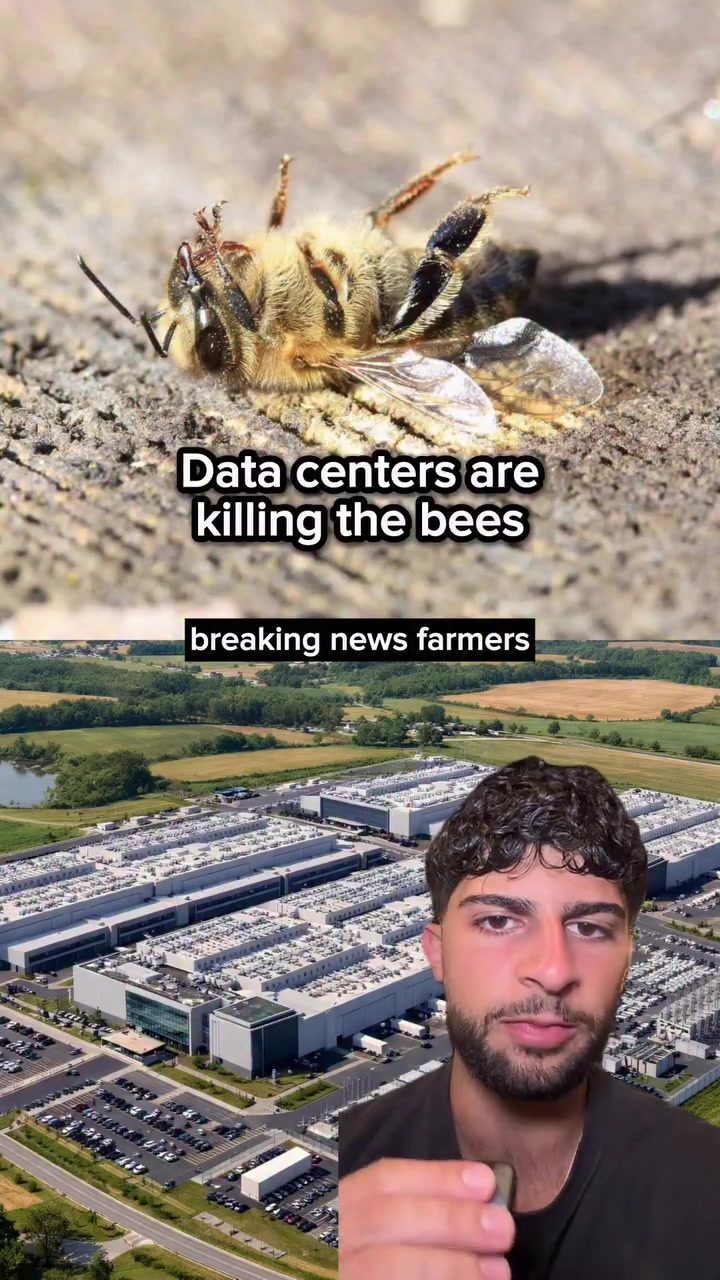
Data Centers and Bee Decline: A Growing Concern
Context: Why This Matters
The relationship between data centers and bee populations has emerged as a critical issue, with farmers reporting alarming declines in bee populations near these facilities. Understanding this interplay is essential, given the pivotal role bees play in our ecosystem. Bees are crucial for pollination, which supports a significant portion of the global food supply. Any threat to their survival has far-reaching consequences.
The Impact of Data Centers on Bees
Artificial EMFs and Magnetic Navigation
Data centers produce artificial electromagnetic fields (EMFs) that are disrupting the magnetic navigation systems bees rely on. This disruption has led to significant distress among bee populations, affecting their ability to navigate and forage effectively. Researchers have highlighted that these EMFs can reduce colony sizes and keep bees in a constant state of distress, sensing danger in their environment. This distress not only affects individual bees but also weakens the overall health of the colony.
Farmer Reports and Colony Losses
Farmers who live near data centers have reported stark decreases in bee populations. In some cases, farmers claim they have not seen a single bee since a data center was built in their vicinity. The US has already lost 60% of its colonies from 2024 to 2025, marking the worst year on record for bee colony losses. This trend underscores the urgency of addressing the impact of data centers on bee populations. With our food supply heavily dependent on bees, the decline in bee populations poses a significant threat to agricultural sustainability.
Practical Tips for Mitigating the Impact
Location and Distance
One practical step is to consider the location and distance of data centers from agricultural areas. By strategically placing data centers away from bee habitats and agricultural zones, the impact on bee populations can be minimized.
Shielding and EMF Management
Implementing effective shielding and EMF management strategies within data centers can also help mitigate the impact on bees. Technologies that reduce the emission of artificial EMFs or shield these fields from reaching nearby areas can be beneficial.
Monitoring and Research
Continuous monitoring and research are essential to understanding the full extent of the impact and developing more effective mitigation strategies. Collaborations between data center operators, agricultural communities, and environmental researchers can lead to innovative solutions.
Important Takeaways
- Bee Populations at Risk: Data centers are increasingly being linked to the decline in bee populations due to the disruption of their magnetic navigation systems by artificial EMFs.
- Food Supply Threatened: Bees are critical to our food supply, and their decline poses a significant threat to agricultural sustainability.
- Need for Mitigation: Effective strategies, including strategic placement, shielding, and continuous research, are necessary to mitigate the impact of data centers on bee populations.
Conclusion
The issue of data centers and bee decline is a multifaceted one that requires immediate attention. By understanding the impact of artificial EMFs on bee navigation and health, and by implementing practical mitigation strategies, we can work towards protecting these vital pollinators and ensuring the sustainability of our food supply. The collaboration between data center operators, agricultural communities, and environmental researchers will be crucial in addressing this growing concern and finding sustainable solutions for the future.
Watch the Reel
Related deep dives
Similar reads based on topic and creator.

Recent articles
Fresh deep dives from the latest Reels we unpacked.


Comments
Be the first to comment.