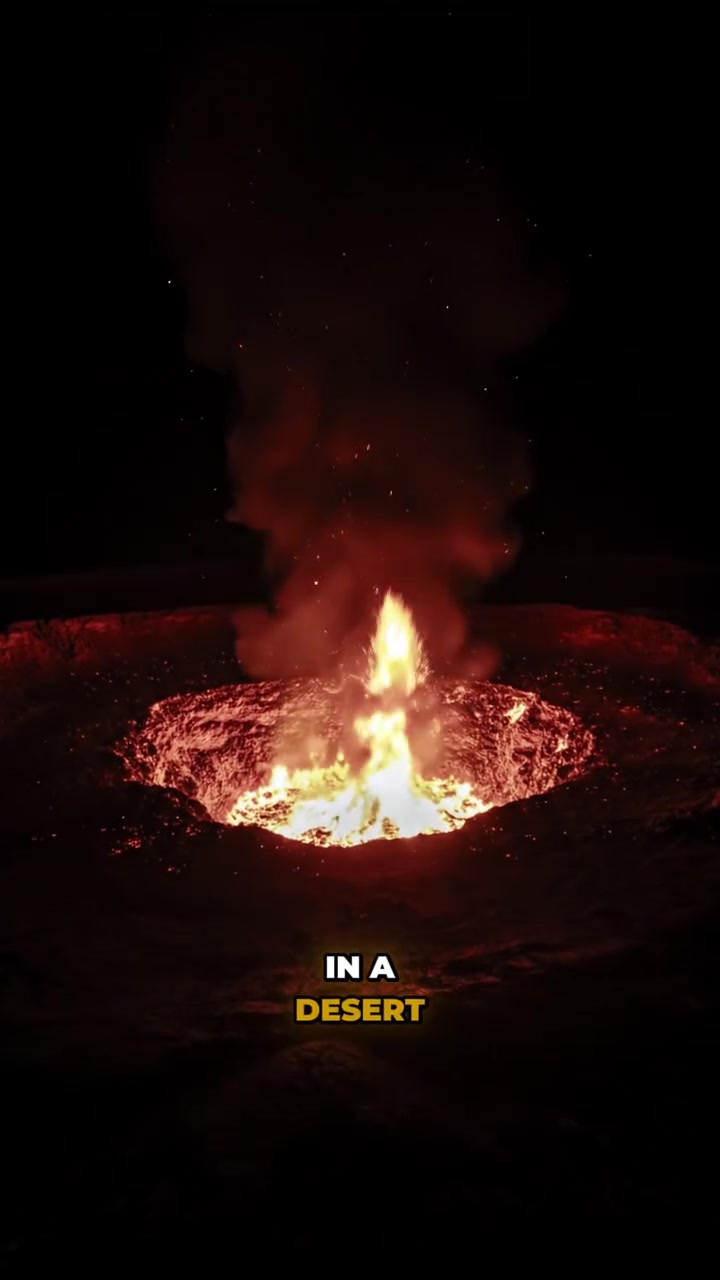
Beneath the surface of the Karakum Desert, in Turkmenistan, lies something that many people would think is out of a novel. What sets the Darvaza gas crater, also known as the "Door to Hell," apart is its constant fire. This tunnel in the earth, 220 feet across, was created by a drilling accident 50 years ago, and it has been on fire for all these years. Engineers had been drilling for oil when the ground collapsed, dragging all of the drilling equipment into a cavern of gas. The crater released toxic methane, and engineers decided to set it on fire to prevent the gas from dispersing into the atmosphere, and killing people in neighboring villages. Engineers had assumed it would burn off any toxic gas within a few weeks, but the crater continues to burn to this day.
The fiery chasm
The Darvaza gas crater is a rare geological marvel. It's not just a simple hole; its fire is the result of a gas vent. The fires are fueled by the gas released from the cavern; so to extinguish a fire of this scale without stopping the gas from leaking, one would need to bury the crater. While not the only gas vents in the world, this is the only one that remains constantly on fire and contains such a large continuous crater.
Turkmenistan's burning issue
The Darvaza Gas Crater is a stark reminder that what humans do can cause far-reaching, long-term, irreversible impacts. The crater is both a monument to human error and a warning. The crater is an example of the environmental consequences of uncontrolled gas emission. Turkmenistan is the sixth-largest gas reserve holder in the world, with more than 290 trillion cubic feet of proven reserves, mostly coming from the Galkynysh and South Yoloten gas fields, halting this inferno would be a major step forward for climate change.
The origin of a mistake
The Darvaza crater is a result of a miscalculation made by Soviet engineers in 1971. They believed the big volume of gas that leaked from the cavern would quickly burn out. At the time, their main focus was preventing the gas from spreading to nearby villages, so they couldn't calculate the extent of the leakage. Ever since, the flame has burned continuously, exposing the region to this toxic gas.
The geology behind the fire
The crater is a result of the geological property of the Karakum Desert. The crater is the result of the gas being trapped under the ground and then being released in the form of a fire. The crater is a result of the gas being trapped under the ground and then being released in the form of a fire. The crater is a result of the gas being trapped under the ground and then being released in the form of a fire. The crater is a result of the gas being trapped under the ground and then being released in the form of a fire. In the past 50 years, the size of the crater has grown in size from increased gas emissions and caving structures.
Turkmens and the Door to Hell
The nearby Turkmen population considers the crater a sacred place. People leave offerings at the crater, believing it to be a gateway to the underworld. Despite the craters' reputation, it has become a popular tourist attraction. The crater is a popular tourist attraction, drawing visitors from all over the world, who come to see the inferno and learn about its history. However, whether tourists see the crater as a blessing or a curse, they recognize the power and mystery of the "Door to Hell."
What it takes for a fire to last 50 years
Gathering the exact information needed to replicate Darvaza's crater would take a lot of time and expertise. However, attempts to play with fire have been made in the past. People have built giant fire pits, attempting to ignite the earth and create their own burning craters, but none have been able to surpass the 50-year mark like the original. Additionally, to recreate the gas crater, one would need to find a similar gas reserve and a similar method of combustion, which is not recommended. It's important to note that while the original crater was a result of a drilling accident, the fires are a result of the gas being trapped under the ground and then being released in the form of a fire.
Mysterious beauty
While it has become a popular tourist attraction, it is important to note that the crater is a dangerous place. The crater is a dangerous place, and it is not recommended to get too close to the edge. The fire is intense, and the ground around the crater is unstable, so it is not recommended to get too close to the edge. There is also a risk of falling into the crater. The crater is a dangerous place, and it is not recommended to get too close to the edge.
Watch the Reel
Questions readers ask
What exactly caused the Darvaza Gas Crater to form and keep burning?
The Darvaza Gas Crater was formed in 1971 when Soviet engineers drilling for oil accidentally created a cavern that released toxic methane. They set the gas on fire to prevent it from spreading, but the fire has been burning continuously for 50 years. The crater's fire is fueled by the continuous release of gas from the cavern below, making it a unique and persistent geological marvel.
Why is the Darvaza Gas Crater known as the 'Door to Hell'?
The Darvaza Gas Crater is known as the 'Door to Hell' because of its constant, fiery appearance and the mythical significance it holds for the nearby Turkmen population. They believe it to be a gateway to the underworld, which adds to its eerie and mystical reputation.
What is the environmental impact of the Darvaza Gas Crater?
The Darvaza Gas Crater serves as a stark reminder of the environmental consequences of uncontrolled gas emissions. The burning methane releases carbon dioxide and other pollutants, contributing to climate change. Halting the inferno would be a significant step forward for environmental sustainability, especially given Turkmenistan's vast gas reserves.
Can the fire at the Darvaza Gas Crater be extinguished?
Extinguishing the fire at the Darvaza Gas Crater would be extremely challenging. The fire is fueled by a continuous release of gas from the cavern below. To put it out, engineers would need to stop the gas from leaking, which might involve burying the crater—a complex and costly endeavor.
Is the Darvaza Gas Crater dangerous to visit?
The Darvaza Gas Crater is a popular tourist attraction, but it does pose risks. The area is filled with toxic gases, and the fire itself can be hazardous. Visitors should exercise caution and follow any safety guidelines provided by local authorities or tour guides.
What makes the Darvaza Gas Crater unique compared to other gas vents?
The Darvaza Gas Crater is unique because it is the only gas vent that remains constantly on fire and contains such a large, continuous crater. Most gas vents do not have this level of sustained combustion, making the Darvaza crater a geological rarity that attracts visitors and scientists alike.
How has the size of the Darvaza Gas Crater changed over the years?
Since its formation 50 years ago, the Darvaza Gas Crater has grown in size due to increased gas emissions and the caving in of surrounding structures. This ongoing expansion is a result of the continuous release of gas from the cavern below, which fuels the persistent fire and contributes to the crater's ever-changing landscape.
Related deep dives
Similar reads based on topic and creator.


Recent articles
Fresh deep dives from the latest Reels we unpacked.



Comments
Be the first to comment.