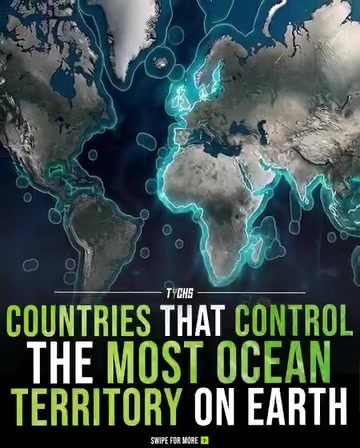
Ocean Territory Control: Understanding Exclusive Economic Zones
Ocean territory control is a critical aspect of global geopolitics, influencing resource management, trade, and strategic power. This control is primarily measured through Exclusive Economic Zones (EEZs), which grant countries sovereign rights over vast marine resources far beyond their coastlines. EEZs extend up to 200 nautical miles from a country's coastline, encompassing significant areas of the ocean floor and water column.
Why This Matters
Understanding which countries control the most ocean territory is essential for grasping the dynamics of global resource management and international relations. EEZs are not just about territorial claims; they are about accessing and managing vital resources such as fish, minerals, and energy. Countries with extensive EEZs have a significant advantage in terms of resource security and economic development.
What Are Exclusive Economic Zones?
Exclusive Economic Zones are defined by the United Nations Convention on the Law of the Sea (UNCLOS). These zones give countries the right to explore, exploit, and manage marine resources within a specified area. The concept of EEZs was introduced to balance the interests of coastal states and the international community, ensuring that while coastal states benefit from their EEZs, other countries still have the right to navigate and fly over these zones.
Rights and Responsibilities
Within an EEZ, a coastal state has the following rights:
- Exploration and Exploitation of Resources: This includes fishing, oil and gas extraction, and mining.
- Scientific Research: The coastal state has the right to conduct scientific research and regulate research activities in its EEZ.
- Conservation and Management: The coastal state is responsible for the conservation and management of marine resources, ensuring sustainable use.
Limitations
While coastal states have extensive rights within their EEZs, there are also limitations:
- Freedom of Navigation: Other countries have the right to navigate through the EEZ, provided it is done in a manner that does not harm the coastal state.
- Overflight: Other countries have the right to fly over the EEZ.
- Cable and Pipeline Laying: Other countries can lay submarine cables and pipelines, subject to the coastal state's approval.
Countries with the Largest EEZs
Several countries stand out for their extensive ocean territory control. These countries leverage their EEZs to secure valuable marine resources and strategic advantages.
France
France holds the largest EEZ in the world, spanning over 11 million square kilometers. This vast territory is due to France's global overseas territories, including regions in the Caribbean, South America, the Pacific, and the Indian Ocean. These territories provide France with significant maritime resources, strategic military positions, and a global presence.
United States
The United States has the second-largest EEZ, covering approximately 11.4 million square kilometers. The U.S. EEZ includes extensive coastal and island regions, such as Alaska, Hawaii, and Puerto Rico. This vast territory gives the United States substantial control over marine resources and strategic locations in the Pacific and Atlantic Oceans.
Australia
Australia's EEZ is the third-largest in the world, encompassing around 9.8 million square kilometers. Australia's extensive coastlines and island territories, including the Great Barrier Reef, provide a rich source of marine resources and biodiversity. The country's EEZ also covers significant areas of the Antarctic and Southern Ocean, further enhancing its strategic position.
Other Countries with Significant EEZs
Russia
Russia controls a massive ocean territory through its Arctic access and overseas territories. The Arctic region is particularly important for Russia, as it contains valuable resources such as oil, gas, and minerals. Russia's EEZ in the Arctic also provides strategic advantages, including access to the Northern Sea Route, which is a vital shipping lane.
United Kingdom
The United Kingdom has a substantial EEZ due to its overseas territories, including areas in the Atlantic, Pacific, and Indian Oceans. These territories provide the UK with valuable marine resources and strategic military positions, enhancing its global influence.
Indonesia, Canada, Japan, New Zealand, and Brazil
Countries like Indonesia, Canada, Japan, New Zealand, and Brazil also have significant EEZs. These countries leverage their geography and island territories to expand their influence and control over valuable marine resources. For example, Indonesia's EEZ covers a vast area of the Pacific and Indian Oceans, providing the country with rich fishing grounds and potential mineral resources.
Practical Tips for Understanding EEZs
Understanding EEZs and ocean territory control can be complex, but there are several practical tips to help you grasp the concept better:
Study Global Maps
Use global maps to visualize the extent of different countries' EEZs. This visual representation can help you understand the geographic distribution of marine resources and the strategic importance of various regions.
Learn About Marine Resources
Familiarize yourself with the types of marine resources that are controlled within EEZs. This includes fish, oil, gas, and minerals. Understanding the economic and strategic value of these resources can help you appreciate the importance of EEZs.
Follow International News
Keep up with international news related to maritime disputes and resource management. This can provide real-world examples of how EEZs are managed and contested, giving you a deeper understanding of their significance.
Explore Legal Frameworks
Learn about the legal frameworks governing EEZs, such as the United Nations Convention on the Law of the Sea (UNCLOS). Understanding these frameworks can help you comprehend the rights and responsibilities of countries within their EEZs.
Important Takeaways
Exclusive Economic Zones play a crucial role in global resource management and strategic power. Countries with extensive EEZs, such as France, the United States, and Australia, have significant advantages in terms of resource security and economic development. Understanding EEZs and ocean territory control is essential for grasping the dynamics of international relations and the management of marine resources.
Conclusion
Ocean territory control, as measured through Exclusive Economic Zones, is a key aspect of global geopolitics. It influences resource management, trade, and strategic power. By understanding the rights, responsibilities, and strategic advantages associated with EEZs, one can gain a deeper appreciation of the complexities and importance of marine resource governance. Whether through studying maps, learning about marine resources, or following international news, there are numerous ways to engage with this fascinating and critical topic.
Watch the Reel
Questions readers ask
What is an Exclusive Economic Zone (EEZ) and why is it important for countries?
An Exclusive Economic Zone (EEZ) is a maritime area extending up to 200 nautical miles from a country's coastline. It is important because it grants countries sovereign rights over the exploration, exploitation, and management of natural resources within this zone, including fish, minerals, and energy sources. This control helps countries manage their marine resources and maintain strategic influence over a significant portion of the ocean.
Which countries have the largest ocean territories in the world?
Countries with the largest ocean territories often have extensive EEZs. The United States, for instance, possesses one of the largest EEZs in the world, thanks to its extensive territorial waters and overseas territories. Other countries with expansive ocean territories include France, Australia, and Russia, all of which have substantial EEZs that significantly impact global maritime dynamics.
How do Exclusive Economic Zones (EEZs) influence global resource management and trade?
EEZs play a crucial role in global resource management and trade by allowing countries to control and manage the resources within their zones. This control includes fishing rights, mineral exploration, and energy exploitation. By managing these resources, countries can ensure sustainable practices and maintain a strategic advantage in global trade, influencing international relations and economic policies.
What role do Exclusive Economic Zones (EEZs) play in international relations and strategic power?
EEZs are instrumental in shaping international relations and strategic power. Countries with large EEZs can assert control over vital maritime resources, influence maritime trade routes, and assert their presence in key ocean regions. This territorial control allows nations to project power, negotiate international agreements, and maintain a strong foothold in global maritime affairs, thereby enhancing their strategic influence and geopolitical standing.
How can a world map of ocean territories help in understanding global maritime dynamics?
A world map of ocean territories provides a visual representation of which countries control the most ocean territory, helping to understand the global distribution of maritime influence. By examining this map, one can identify key regions where resource management, trade, and strategic power are concentrated. This visualization aids in comprehending the geopolitical and economic implications of maritime territorial control and the dynamics between influential maritime nations.
Why is the United States' EEZ significant in global maritime affairs?
The United States' EEZ is one of the largest in the world, which gives it significant global influence. Its extensive EEZ allows the United States to control a vast area of the ocean, managing resources such as fish, minerals, and energy. This control not only bolsters the country's economic prosperity but also enhances its strategic power, enabling it to shape global maritime policies and maintain a strong presence in key ocean regions.
How do countries with large Exclusive Economic Zones (EEZs) manage their maritime resources?
Countries with large EEZs manage their maritime resources by implementing regulations and policies that promote sustainable use and conservation. This includes setting catch limits for fisheries, regulating mining activities, and monitoring environmental impacts. Effective management of these resources ensures long-term sustainability, supports local economies, and maintains the ecological balance of the oceans, thereby contributing to global maritime stewardship.
Related deep dives
Similar reads based on topic and creator.

Recent articles
Fresh deep dives from the latest Reels we unpacked.




Comments
Be the first to comment.