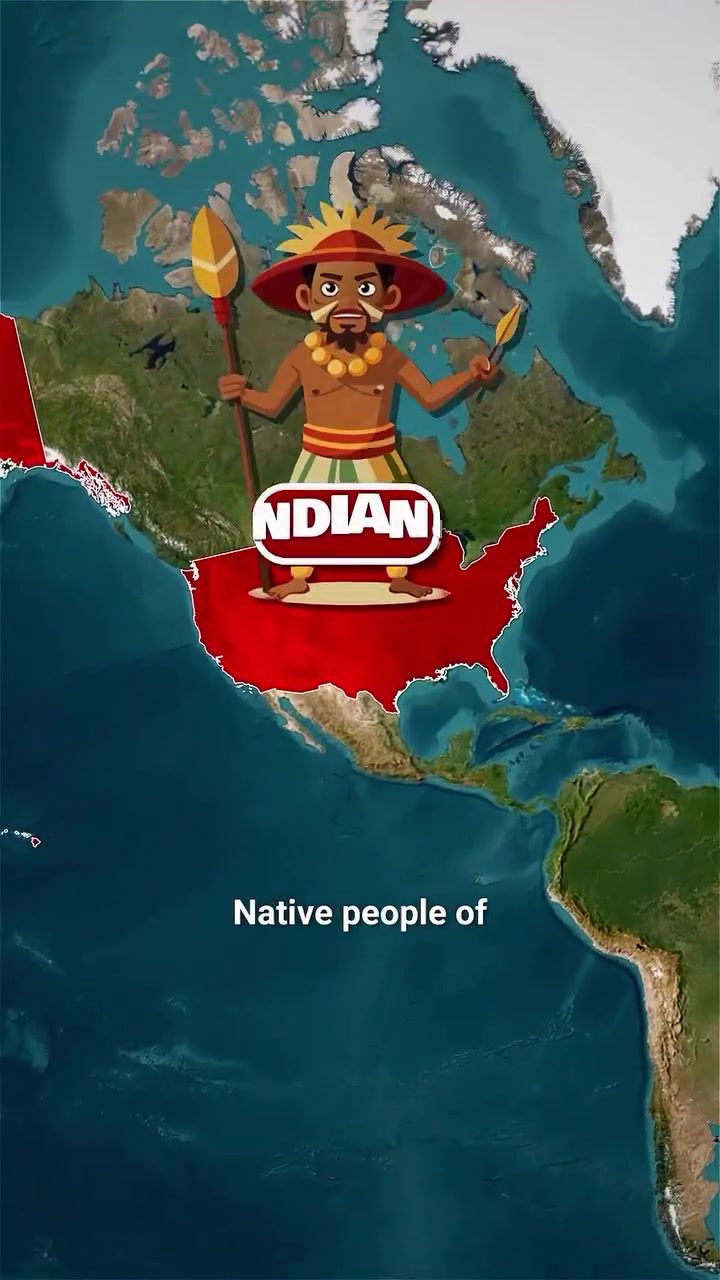
Why Are Native Americans Called Indians?
The term "Indians" for the native people of America is a remnant of a monumental navigational error made by Christopher Columbus in the late 15th century. This term has been widely discussed in historical contexts, but the underlying reasons for its persistence and the historical context surrounding it are often overlooked.
Context: The Quest for Spices
In the 1400s, Europe was in a frenzy over the acquisition of spices from the real India. These spices—such as pepper, cinnamon, and nutmeg—were highly prized and commanded enormous prices. The land routes to India were controlled by the Ottoman Empire, which levied heavy taxes on trade. Sailing around Africa was an alternative, but it was a grueling journey that could take months.
Christopher Columbus and the Uncharted Waters
Christopher Columbus believed he had found a shorter, safer route to the East Indies, which at the time referred to Southeast Asia, by sailing westward across the Atlantic. The Ottoman Empire's control over the land routes and the perils of sailing around Africa made this an enticing proposition. Columbus underestimated the size of the Earth and the presence of two massive, previously unknown continents: North and South America.
The Flaw in Columbus's Calculations
Columbus’s calculations were seriously flawed. He believed the Earth's circumference was significantly smaller than it actually is, leading him to think that sailing west from Europe would bring him to Asia much sooner. When he finally reached the Caribbean, he was convinced that he had reached the East Indies. This miscalculation resulted in the term "Indians" being used to describe the native inhabitants of the lands he encountered.
Persistent Misconceptions
Columbus's belief that he had reached the East Indies was deeply ingrained in his mind, and he refused to acknowledge the error. His descriptions of the native people and the lands they inhabited as "Indians" became widely accepted. This misidentification persisted even after it became clear that Columbus had not reached Asia but instead had discovered entirely new continents.
Practical Considerations
The term "Indians" has long since fallen out of favor, and it is crucial to understand the reason for its origin. Today, the preferred term for the indigenous peoples of the Americas is "Native Americans." However, it is also important to recognize that the term "Indian" remains in use in some contexts, particularly in legal and historical references.
Important Takeaways
Understanding the origins of the term "Indians" for the native people of America provides valuable context. It underscores the complexities of historical misconceptions and the enduring impact of early explorations on cultural and geographical terminology. The misnomer highlights the need for accurate geographical understanding and the importance of recognizing the true identities of indigenous peoples.
Conclusion
The term "Indians" for the native people of America is a direct result of Christopher Columbus's navigational error. His miscalculation and subsequent labeling of the native people as "Indians" has had a lasting impact on how these peoples are referred to. While the term has largely fallen out of use, understanding its origins is essential for a comprehensive grasp of the historical context. The persistent use of inaccurate terms underscores the importance of accurate historical and geographical knowledge.
Watch the Reel
Questions readers ask
What was Christopher Columbus's mistake that led to the name 'Indians' for Native Americans?
Christopher Columbus believed he had reached the East Indies, known today as Southeast Asia. His navigational error led to the misidentification of the native people of the Americas as 'Indians,' a term that has persisted despite the discovery of the Americas' true geography.
Why did Europeans seek to find a direct route to India?
Europeans were driven by the desire to acquire exotic commodities such as spices, which were extremely valuable in European markets. Land routes were dominated by Ottoman control, and sea routes were treacherous and time-consuming, making a direct seaway to India appealing.
What spices were Europeans seeking from India?
Europeans sent expeditions to find a direct route to India to access a variety of spices such as pepper, cinnamon, and nutmeg. These spices had immense cultural and economic significance in Europe, and Columbus's voyage was part of this broader quest.
How did Columbus's misidentification of the Americas affect Native Americans?
Columbus's misnomer affected Native Americans by misrepresenting their geographical origins. The term 'Indians' has since been widely used, although it is not geographically accurate. This historical misconception has influenced how Native Americans are perceived in literature, art, and historical texts.
Why didn't Columbus realize his mistake?
Columbus was convinced he had reached the East Indies, as he was seeking a westward passage to Asia. He found no evidence to contradict this belief, as the lands and people of the Americas were unlike anything he knew from European accounts of Asia.
What motivated Columbus to embark on his voyage to the East Indies?
Columbus was motivated by the promise of riches and fame. The quest to reach the East Indies was driven by the potential for enormous wealth through the spice trade, as well as the possibility of claiming new lands for the Crown of Spain.
Related deep dives
Similar reads based on topic and creator.



Recent articles
Fresh deep dives from the latest Reels we unpacked.




Comments
Be the first to comment.