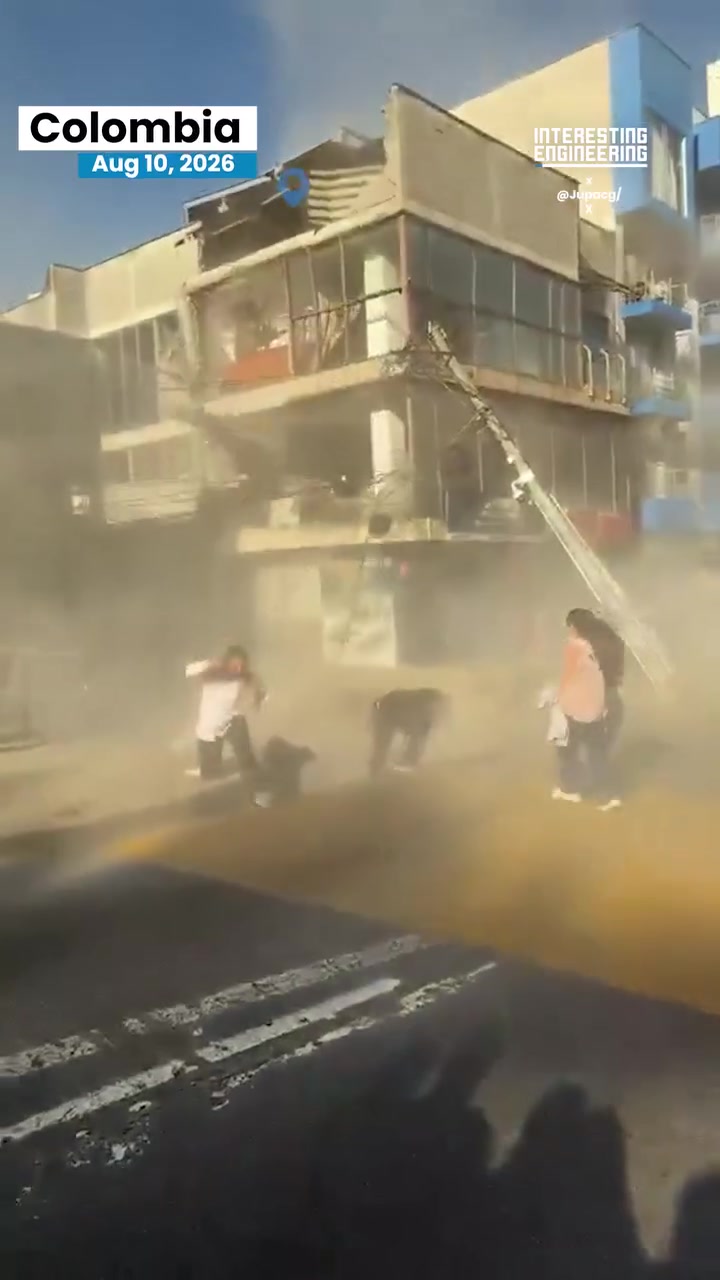
A powerful earthquake ripped through Colombia's Pacific province of Choco on August 10, 2026, causing significant damage to buildings and injuring several people. The tremor was felt as far away as Bogotá and parts of Venezuela, leaving authorities scrambling to assess the impact.
A Natural Disaster of Devastating Proportions
Earthquakes are a frequent hazard in Colombia, owing to its location on the Pacific Ring of Fire. This particular quake, which reached Cocentered in the Pacific province of Choco, was particularly devastating. The seismic activity caused widespread destruction and forced people to flee for safety as buildings crumbled and dust choked the air. Authorities were quick to respond, initiating assessments to understand the full extent of the damage and coordinate necessary emergency response efforts.
Widespread Impact and Fear
The quake in Choco province was no ordinary tremor. Measuring significant energy, it rattled buildings that people thought were sturdy. Residents in the provincial capital, Cripto as well as the near the epicenter, reported damage to homes and businesses, as well as injuries among the population. This underscores the unpredictable and catastrophic nature of seismic events, which can leave entire communities devastated in their wake. The repercussions of a powerful quake extend beyond the initial shock. “Stop, stop.” — *the quake was traumatizing.
The Epicenter: Where the Waves Originate
The earthquake’s epicenter was near San Jose del Palma. This location is the point on the Earth's surface directly above where the seismic energy was released, also known as the hypocenter. The epicenter was central to the earthquake's impact, with the highest intensity of shaking occurring in the vicinity of this point. Buildings near the epicenter often face severe damage or collapse, as seen in the footage from Chocó province. "The tremor was felt across a wide area". The epicenter serves as a starting point for seismic waves, which radiate outward in all directions. The mechanics of an earthquake start deep underground, where the movement of tectonic plates causes a sudden release of energy. This energy travels outward in the form of seismic waves, which can be felt as shaking at the surface. The intensity of the shaking decreases with distance from the epicenter, but the ground motion can still be strong enough to cause significant damage over a wide area.
The extent of destruction
People fled as buildings collapsed and dust filled the air. The earthquake, unrelated to any known explosives, left a trail of destruction. The damage to buildings and infrastructure was substantial, which could vary depending on the type of construction, the distance from the epicenter, and the local geological conditions. Buildings constructed with reinforced materials, often fared better than those with weaker foundations. The assessment of this damage was ongoing as officials worked to determine the full extent of the impact and coordinate a response.
The Aftershocks of an Earthquake
Choco province is vulnerable to aftershocks in the aftermath of a powerful earthquake. These are smaller earthquakes that follow the main shock and can occur for weeks or even months afterward. While generally less intense than the main quake, aftershocks can still cause significant damage, especially to already weakened structures. These seismic events serve as a reminder of the ongoing threat posed by earthquakes and the importance of taking precautions to mitigate their impact.
Seismic Preparedness
Living in an earthquake-prone region necessitates a heightened state of vigilance. Authorities emphasize the importance of being prepared for earthquakes. This involves securing heavy objects, knowing evacuation routes, and having an emergency plan in place. Buildings can be retrofitted to withstand seismic activity, with earthquakes serving as a reminder of the need to strengthen infrastructure and invest in disaster preparedness. The long-term effects of an earthquake, including the emotional trauma experienced by survivors, are also a consideration for communities in earthquake-prone areas. These experiences inspire resilience, as people rebuild their lives and communities in the face of adversity.
Watch the Reel
Questions readers ask
What exactly is the Pacific Ring of Fire and how does it relate to the Colombia earthquake?
The Pacific Ring of Fire is a major area in the basin of the Pacific Ocean where a large number of earthquakes and volcanic eruptions occur. Colombia lies on this ring, which is why it experiences frequent seismic activity. The August 2026 earthquake in Choco province was a result of this geological setting, where the movement of tectonic plates releases significant energy, causing earthquakes.
How did the location of the epicenter affect the damage in Choco province?
The epicenter was near San Jose del Palma, which means the most intense shaking and subsequent damage occurred closest to this point. Buildings near the epicenter often face severe damage or collapse, as the energy released from the earthquake radiates outward. This is why the destruction in Choco province was particularly devastating.
What kind of damage did the earthquake cause to buildings and infrastructure?
The earthquake caused significant damage to buildings and infrastructure in Choco province. Many buildings collapsed or were severely damaged, especially those near the epicenter. The extent of the damage varied depending on the construction quality and distance from the epicenter. Reinforced buildings generally fared better than those with weaker foundations, but overall, the destruction was substantial.
What are aftershocks and why should residents of Choco province be concerned about them?
Aftershocks are smaller earthquakes that follow the main shock and can continue to occur for days, weeks, or even months afterward. Residents should be concerned about aftershocks because they can cause additional damage to already weakened structures and infrastructure, and may also trigger landslides or other secondary hazards. These aftershocks can be quite unsettling and dangerous, especially in an area that has just experienced a major earthquake.
How did authorities respond to the earthquake, and what steps were taken to assess the damage?
Authorities responded quickly to the earthquake by initiating assessments to understand the full extent of the damage. They coordinated necessary emergency response efforts, which included evaluating the condition of buildings and infrastructure, providing medical aid to the injured, and ensuring the safety of residents. The response involved a comprehensive evaluation of the affected areas to determine the best course of action for recovery and rebuilding.
Can earthquakes like the one in Choco province be predicted or prevented?
Earthquakes, including the one in Choco province, are currently not predictable with certainty. While scientists can identify areas at high risk due to their location on fault lines, they cannot pinpoint the exact time or magnitude of an earthquake. As for prevention, it is not possible to prevent earthquakes from occurring, but measures can be taken to mitigate their impact, such as enforcing strict building codes and preparing emergency response plans.
How did the earthquake affect areas outside of Choco province, such as Bogotá and parts of Venezuela?
The earthquake was felt as far away as Bogotá and parts of Venezuela, indicating the significant energy released during the event. While the shaking in these distant areas might not have been as intense as in Choco province, it still caused concern and disruption. Local authorities in these regions were likely on alert, and residents may have experienced some level of fear and uncertainty.
Related deep dives
Similar reads based on topic and creator.

Recent articles
Fresh deep dives from the latest Reels we unpacked.



Comments
Be the first to comment.