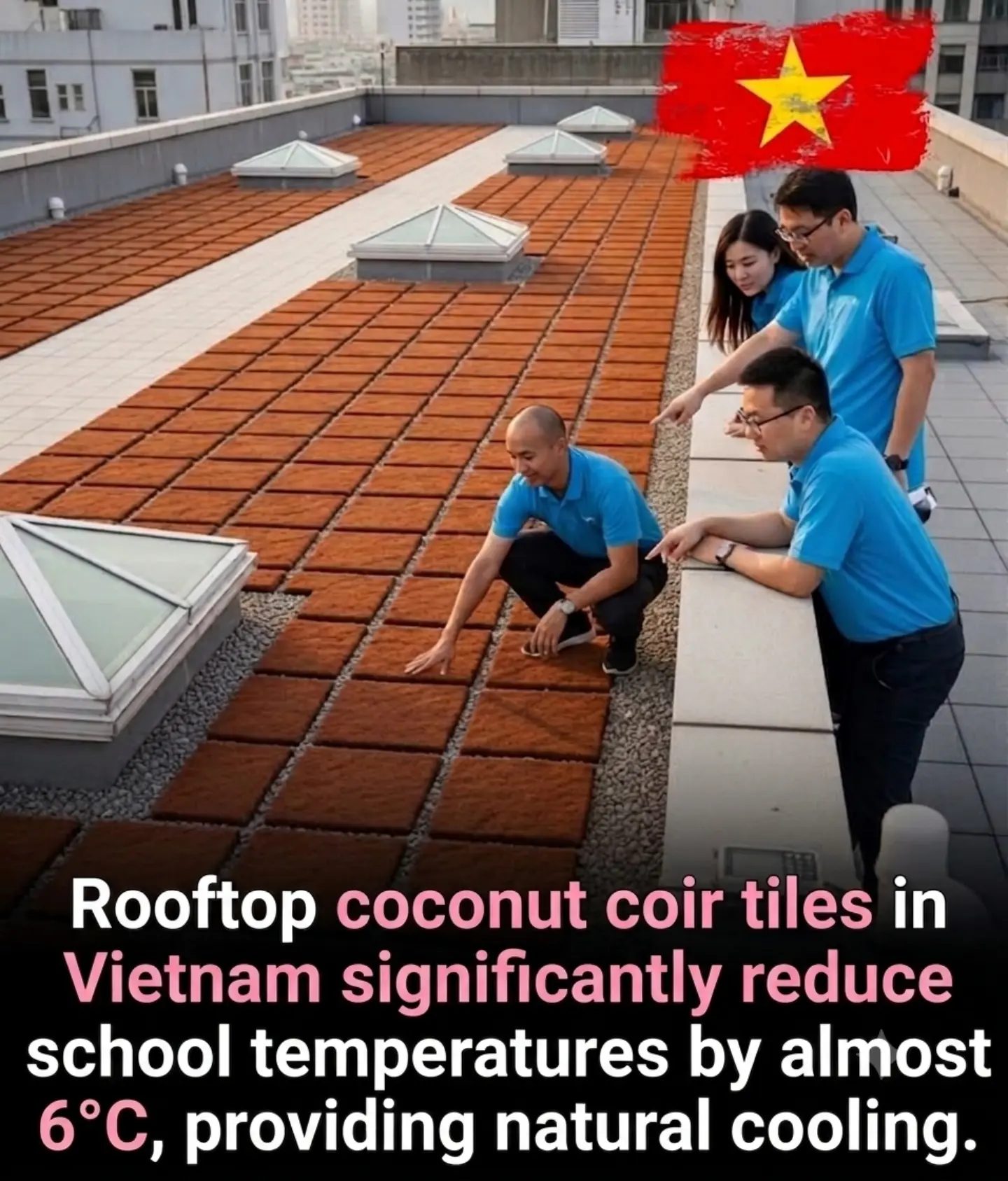
Sustainable Roofing: How Coconut Coir Tiles Provide Natural Cooling for Schools in Vietnam
Coconut coir tiles are revolutionizing rooftop insulation in Vietnam, offering an eco-friendly solution to urban heat without relying on energy-intensive air conditioning. These innovative tiles, made from compressed coconut husk fiber, are transforming school rooftops by significantly reducing indoor temperatures.
The Urban Heat Island Effect
Urban areas often face higher temperatures due to the urban heat island effect, where concrete and asphalt absorb and retain heat. This phenomenon is particularly challenging for schools, where maintaining a comfortable learning environment is crucial. Traditional air conditioning systems, while effective, consume substantial energy and contribute to carbon emissions. The use of coconut coir tiles addresses this issue by providing a natural, sustainable cooling solution.
Coconut Coir Tiles: A Sustainable Solution
Coconut coir, a fibrous material derived from coconut husks, is a byproduct of the coconut industry. This material is highly durable and has excellent thermal insulating properties. The tiles are made by compressing coconut coir fiber, creating a material that traps air and resists heat transfer. This natural insulation effectively reduces the temperature of the rooftop and the building below.
Installation and Benefits
The installation process involves covering exposed concrete rooftops with these organic tiles. By doing so, schools in Vietnam have successfully mitigated the urban heat island effect, lowering indoor classroom temperatures by nearly 6°C. This reduction in temperature provides immediate thermal comfort for students and educators, creating a more conducive learning environment.
Environmental Impact
The use of coconut coir tiles not only provides thermal comfort but also promotes a circular economy. By upcycling local agricultural waste into a useful construction material, this initiative reduces waste and lowers the carbon footprint. The tiles are a low-cost, high-impact climate adaptation solution, making them an ideal choice for sustainable architecture.
Thermal Performance
The thermal performance of coconut coir tiles is impressive. The tiles trap air within their fibrous structure, which acts as an effective insulator. This natural cooling effect is particularly beneficial in tropical climates like Vietnam, where the need for cooling solutions is high. The tiles’ ability to resist heat transfer ensures that the indoor temperature remains comfortable, even during the hottest parts of the day.
Practical Tips for Implementing Coconut Coir Tiles
If you're considering implementing coconut coir tiles for your rooftop, here are some practical tips to ensure optimal performance:
Choosing the Right Tiles
Ensure that the tiles are made from high-quality coconut coir fiber. The compressing process should be done carefully to maintain the integrity of the material. Look for tiles that are certified for their thermal insulating properties.
Professional Installation
Professional installation is crucial for the effectiveness of the tiles. Ensure that the installation team is experienced in working with coconut coir tiles and follows best practices for application. Proper installation ensures that the tiles are securely attached and provide maximum insulation.
Maintenance
Regular maintenance is necessary to keep the tiles in good condition. Inspect the tiles periodically for any signs of wear and tear and replace them as needed. Keeping the tiles clean and free from debris will also enhance their performance.
Monitoring Temperature
Use temperature sensors to monitor the indoor temperature regularly. This will help you gauge the effectiveness of the tiles and make adjustments as needed. Regular monitoring ensures that the tiles continue to provide the desired cooling effect.
Community Engagement
Engage the local community in the installation and maintenance process. Educating students, parents, and educators about the benefits of coconut coir tiles can foster a sense of ownership and responsibility. Community involvement can also lead to innovative ideas for further enhancing the sustainability of the project.
Important Takeaways
Several key points highlight the benefits and practicality of using coconut coir tiles for sustainable cooling:
- Coconut coir tiles provide significant temperature reduction, making them an effective solution for combating the urban heat island effect.
- These tiles are made from a renewable, agricultural byproduct, promoting a circular economy and reducing waste.
- The installation process is straightforward and can be done by professionals, ensuring optimal performance.
- Regular maintenance and community engagement are essential for the long-term effectiveness of the tiles.
Conclusion
Coconut coir tiles offer a sustainable, eco-friendly solution for cooling school rooftops in Vietnam. By reducing indoor temperatures naturally, these tiles provide immediate thermal comfort for students and educators. They also promote a circular economy by upcycling agricultural waste into a useful construction material. Implementing coconut coir tiles can significantly improve the learning environment in schools, contributing to a more sustainable future.
Watch the Reel
Questions readers ask
What are coconut coir tiles and how do they work?
Coconut coir tiles are made from compressed coconut husk fiber, a byproduct of the coconut industry. They work by reflecting sunlight and reducing heat absorption, which in turn cools the rooftop and lowers indoor temperatures. This natural cooling process helps to mitigate the urban heat island effect.
How do coconut coir tiles benefit schools in Vietnam?
Coconut coir tiles benefit schools by providing a sustainable and cost-effective solution for thermal comfort. By reducing indoor temperatures, they create a more comfortable learning environment and decrease the reliance on energy-intensive air conditioning systems, which lowers operating costs for schools.
Can coconut coir tiles be used in other urban settings besides schools?
Yes, coconut coir tiles can be utilized in various urban settings such as residential buildings, commercial spaces, and public facilities. Their ability to reduce heat absorption makes them an excellent choice for any structure aiming to lower indoor temperatures and combat the urban heat island effect.
How do coconut coir tiles contribute to sustainability in urban areas?
Coconut coir tiles contribute to sustainability by utilizing agricultural waste (coconut husk fiber) as a primary material. This not only reduces waste but also decreases the demand for energy-intensive cooling methods. By promoting natural cooling, these tiles help lower carbon emissions and support a greener urban environment.
Are coconut coir tiles durable and long-lasting?
Yes, coconut coir tiles are known for their durability. They are resistant to pests, mold, and mildew, and can withstand various weather conditions. With proper installation and maintenance, these tiles can last for many years, providing long-term benefits for both the environment and the building's occupants.
How do coconut coir tiles compare to traditional roofing materials?
Unlike traditional roofing materials like concrete or asphalt, coconut coir tiles do not absorb and retain heat. Instead, they reflect sunlight and promote natural cooling, which reduces indoor temperatures more effectively. Additionally, coconut coir tiles are more eco-friendly as they are made from renewable resources and help manage agricultural waste.
Related deep dives
Similar reads based on topic and creator.




Recent articles
Fresh deep dives from the latest Reels we unpacked.




Comments
Be the first to comment.