Coal Consumption Trends: A Global Perspective
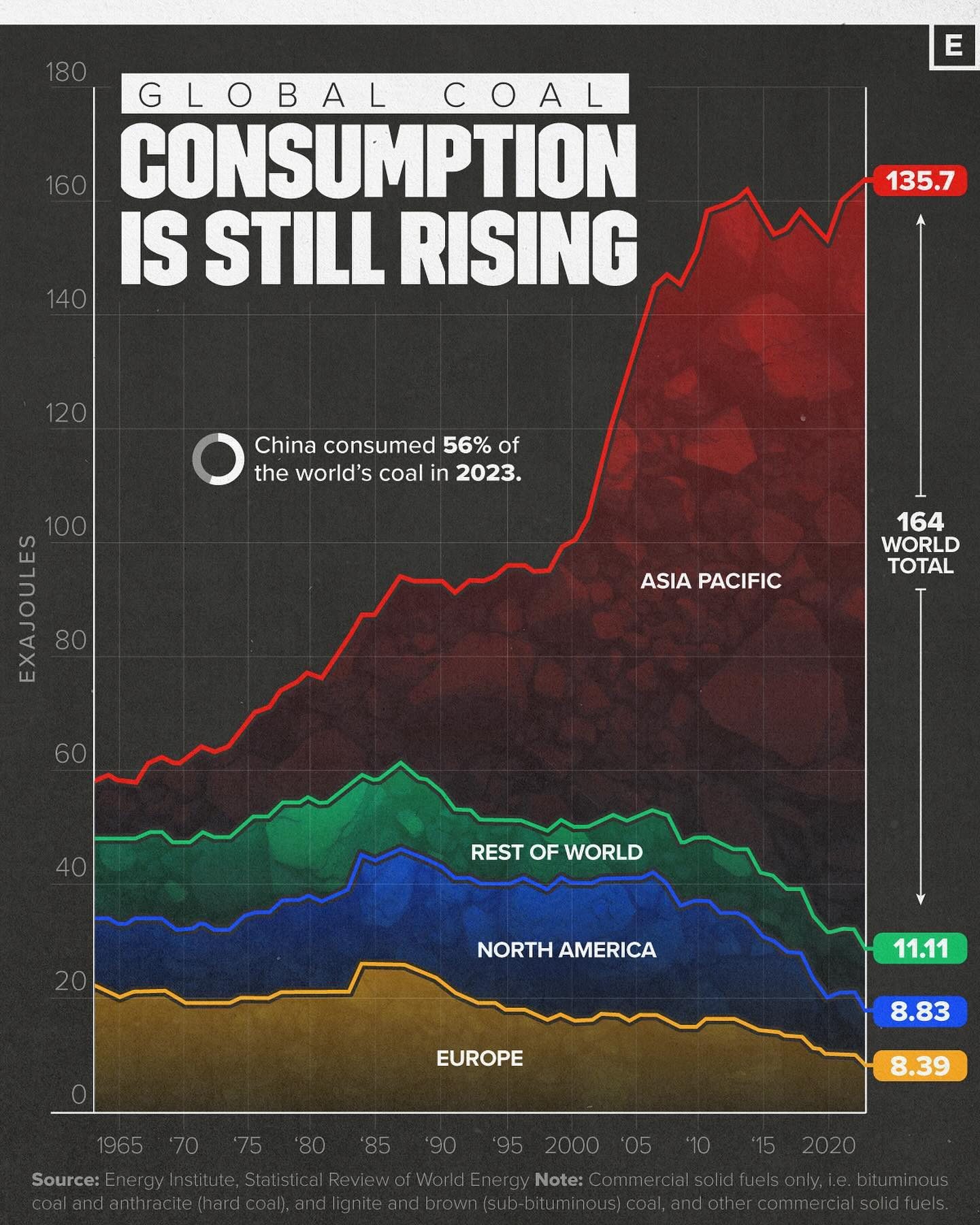
Despite global efforts to transition to cleaner energy sources, coal continues to play a significant role in the world's energy landscape. In 2023, coal consumption reached a new record of over 164 exajoules, making up 26% of the world's total energy consumption. This trend highlights the enduring importance of coal in meeting global energy demands, even as renewable energy sources gain traction. Let's dive into the global coal consumption trends from 1965 to 2023, understanding the patterns and key factors influencing this vital energy source.
Why This Matters
Coal consumption is a critical indicator of global energy dynamics. It reflects the balance between economic development, industrialization, and the push towards decarbonization. Understanding these trends is essential for policymakers, energy analysts, and environmental advocates seeking to navigate the complexities of energy transition and sustainability.
Main Discussion
Historical Trends
Global coal consumption has seen significant fluctuations over the past six decades. From 1965 to 2023, the trend has been consistently upward, with notable spikes and plateaus reflecting economic growth, industrial development, and policy changes. The infographic highlights that coal consumption has been on a steady rise, despite periodic efforts to reduce reliance on fossil fuels.
Regional Variations
Asia Pacific
Asia Pacific is a major player in global coal consumption, with China leading the way. In 2023, China consumed 56% of the world’s coal, underscoring its heavy dependence on this energy source. The region's rapid industrialization and urbanization have driven this demand, making it a pivotal area in global coal consumption trends. Other countries in the Asia Pacific, such as India and Indonesia, also contribute significantly to coal use, driven by similar development needs.
North America
North America, particularly the United States, has shown a more nuanced trend. While coal consumption has declined in recent years due to the rise of natural gas and renewable energy sources, it remains a substantial part of the region's energy mix. Environmental regulations and technological advancements have influenced this shift, but coal still plays a crucial role in powering industries and residential areas.
Europe
Europe has been at the forefront of decarbonization efforts, with significant reductions in coal consumption. Policies aimed at transitioning to renewable energy sources and reducing greenhouse gas emissions have led to a decline in coal use. However, Europe continues to rely on coal to some extent, especially in countries with less developed renewable infrastructure.
Rest of the World
The rest of the world, encompassing regions like Africa, South America, and parts of the Middle East, shows varied coal consumption patterns. Some countries are increasing their use of coal to meet growing energy demands, while others are exploring renewable alternatives. Economic development and energy policy frameworks significantly influence these trends.
Factors Influencing Coal Consumption
Several factors drive global coal consumption trends, including economic growth, energy policies, technological advancements, and environmental concerns.
Economic Growth
Economic development is a primary driver of coal consumption. Rapidly industrializing nations rely heavily on coal to meet their energy needs. China’s economic boom, for instance, has been fueled by coal, which provides a stable and affordable energy source for its industries and population.
Energy Policies
Government policies play a crucial role in shaping coal consumption. Regions with stringent environmental regulations and incentives for renewable energy have seen a decline in coal use. Conversely, areas with policies favoring coal mining and use experience higher consumption levels. For instance, Europe’s strict climate policies have driven a reduction in coal use, while China’s focus on industrial growth has sustained its reliance on coal.
Technological Advancements
Technological innovations in energy production and consumption have influenced coal use. The development of cleaner coal technologies and the rise of renewable energy sources have provided alternatives to traditional coal-fired power plants. However, these advancements are not uniformly adopted, leading to varied consumption patterns across regions.
Environmental Concerns
The environmental impact of coal is a significant factor in its consumption trends. Concerns over climate change and air pollution have prompted many countries to reduce their reliance on coal. However, the transition to cleaner energy sources is a complex process that requires substantial investment and infrastructure development, leading to a gradual shift rather than an abrupt change.
Practical Tips
For those interested in understanding and influencing coal consumption trends, several practical steps can be taken:
-
Stay Informed: Keep abreast of the latest data and trends in global coal consumption. Organizations like the Energy Institute provide comprehensive reports and analyses that can offer valuable insights.
-
Advocate for Policies: Support policies that promote renewable energy sources and reduce reliance on fossil fuels. Advocacy efforts can influence government decisions and drive change at the policy level.
-
Invest in Technology: Encourage investment in cleaner energy technologies. Technologies like carbon capture and storage (CCS) and advanced renewable energy systems can mitigate the environmental impact of coal use.
-
Promote Efficiency: Advocate for energy efficiency measures in both industrial and residential settings. Reducing energy consumption can lower the demand for coal and other fossil fuels.
-
Engage in Dialogue: Participate in discussions and debates on energy policy and sustainability. Engaging with stakeholders can foster a better understanding of the challenges and opportunities in energy transition.
Important Takeaways
Global coal consumption trends reveal a complex interplay of economic, political, and environmental factors. Key takeaways include:
- Coal remains a significant part of the world’s energy mix, despite efforts to decarbonize.
- Regional variations in coal consumption are driven by economic development, energy policies, and technological advancements.
- China is the world's largest consumer of coal, highlighting the country's reliance on this energy source for industrial growth.
- Environmental concerns and technological advancements are gradually influencing a shift towards cleaner energy sources.
Conclusion
The global trend of coal consumption, rising to a record high of over 164 exajoules in 2023, underscores the enduring importance of this fossil fuel. Understanding the historical trends, regional variations, and influencing factors is essential for navigating the complexities of energy transition. By staying informed, advocating for sustainable policies, and investing in cleaner technologies, individuals and organizations can contribute to a more balanced and sustainable energy future.
Watch the Reel
Questions readers ask
Why did coal consumption reach an all-time high in 2023?
Coal consumption reached a record high in 2023 due to its continued role in global energy dynamics. Despite progress in renewable energy, coal still supplies 26% of the world's total energy, with economic growth and industrialization driving its demand.
Which regions contribute the most to global coal consumption?
Asia, particularly countries like China and India, are the largest consumers of coal. These regions rely heavily on coal for both electricity generation and industrial processes, contributing significantly to the global coal consumption trends.
How does coal consumption compare to other energy sources in 2023?
In 2023, coal accounted for 26% of the world's total energy consumption. While renewable energy sources are growing, coal remains a dominant player in the global energy mix, underscoring its importance in meeting energy demands.
What factors influence the global coal consumption trends?
Coal consumption trends are influenced by various factors, including economic growth, industrialization, and the push towards decarbonization. Despite the shift to cleaner energy sources, coal remains essential for many economies, particularly in developing regions.
What are the future projections for coal consumption?
The future of coal consumption is subject to debate. While some forecasts predict a decline as renewable energy sources become more prevalent, others suggest that coal will continue to play a significant role in meeting global energy demands, especially in regions with rapid industrial growth.
How does coal use in industry impact global energy dynamics?
Coal is a vital energy source for various industrial processes, including steel production and cement manufacturing. Its extensive use in these sectors contributes to its enduring role in global energy dynamics, despite the growth of renewable energy sources.
Related deep dives
Similar reads based on topic and creator.


Recent articles
Fresh deep dives from the latest Reels we unpacked.




Comments
Be the first to comment.