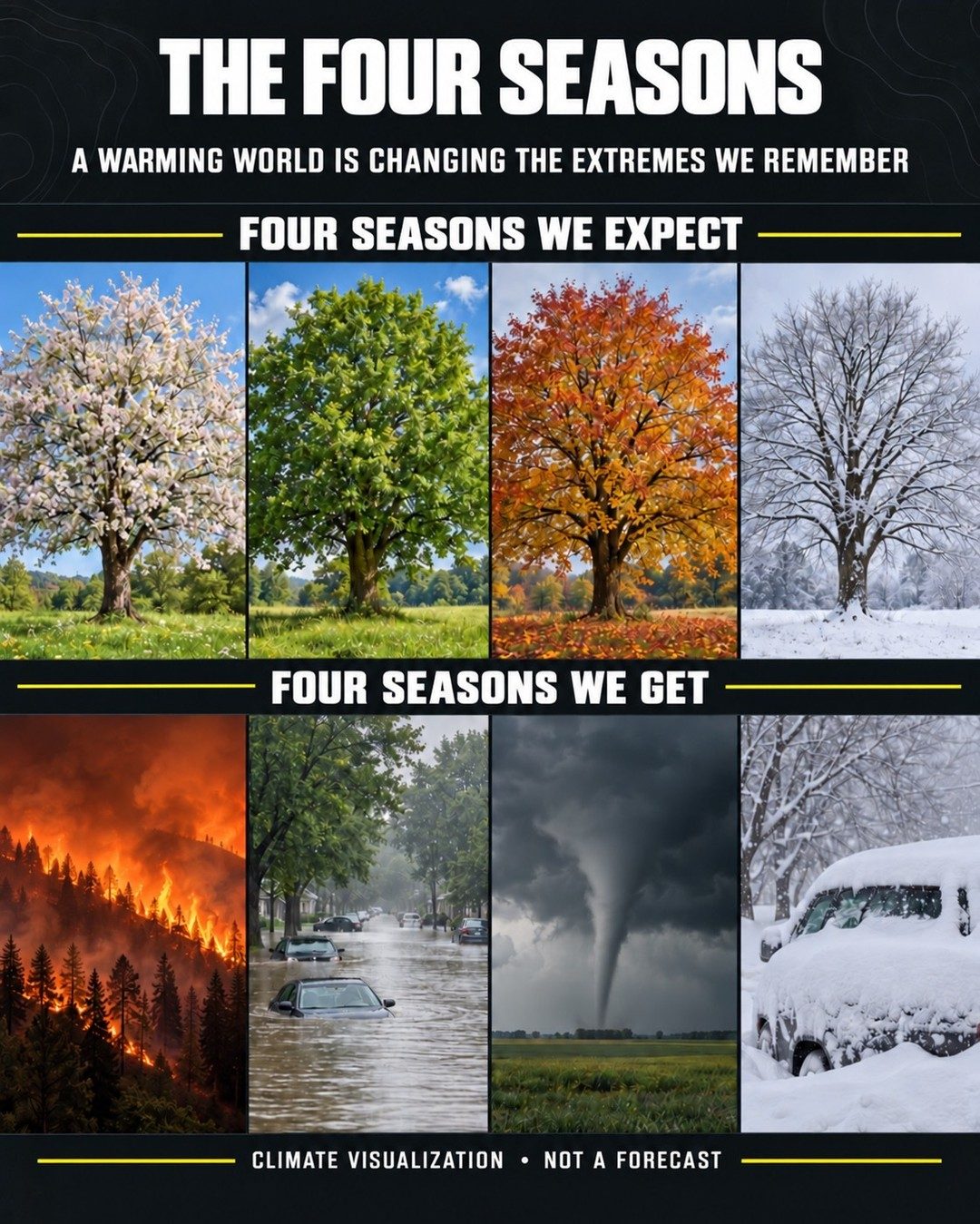
Experiences of Seasons Becomes Less Predictable
The traditional rhythm of the four seasons is being disrupted. Today, summer doesn't simply mean hot weather and winter isn't just about snow. Climate change is intensifying weather events, making every season feel extreme. What was once a reliable calendar of predictable weather has become, instead, a series of surprise storms, relentless heat, and other weather anomalies. Climate change isn't just shifting temperatures. It's changing how we experience the weather. The weather is no longer predictable. When we expect spring we might be dealing with severe flooding. Traditionally, June might bring mild weather and longer days. However, the weather is becoming more volatile. The flaps of spring, summer, autumn, and winter are being redefined. Not by the gentle transitions year to year, but by the increased frequency and intensity of wildfires, flooding, tornadoes, and snowstorms. The visual data reveals that these extreme weather events have become more common. There are more intense storms, droughts and floods, and longer periods of intense heat. The reliable rhythm of the seasons has been disrupted in favor of unpredictable weather.
Seasonal Weather Conditions Changed
Due to climate change, the weather conditions we once relied on to distinguish one season from the next are being altered. Climate change is increasing the frequency and severity of weather events. This changing climate means that the weather during each season is no longer what we expect. The long periods of warm summer days followed by reliably chilly autumn nights are a recent memory. The once predictable behavior of weather is now unpredictable. This shift has a significant impact on people who rely on the weather to make decisions in agriculture, recreation, and many daily activities. Recreation, for example, used to plan for predictable weather, but now these activities are being rescheduled due to weather events. This altered weather conditons are affecting the activities that we used to do during a specific season. For example, the leaves turning color in autumn, or the cooling of the temperature is less predictable. The seasons we used to know are changgig. The dramatic images of flooding, wildfires, and other extreme weather events are evidence of climate change. These events are not isolated incidents. They occur with greater frequency, making it more difficult to distinguish between seasons.
Influence of Climate Change on Seasonal Predictions
What we expect from a traditional four seasons may no longer be what we get. Due to climate change, the weather has become so extreme and volatile that we may get severe weather events at any time. Climate change is influencing weather events. For example, extreme weather events such as flooding and wildfires are occurring more frequently. It's no longer accurate to describe weather patterns as "seasonal." The intense weather events are happening because of climate change. Quiete literally, the changing climate is influencing not just the weather, but also the severity of the weather. Climate change is often associated with global warming. It affects the climate of a region. With the burning of fossil fuels, a natural phenomenon, the globe is warming. Temperatures are rising to the point where we may no longer get the cool winters, every winter is getting warmer and snowstorms are becoming less common. These changes are becoming increasingly evident and are a direct result of climate change. The summer, originally, meant intense dryness and warm weather. Now, it means intense heat and drought. The changing climate is causing precipitation patterns to shift. For example, it is more difficult to distinguish between the seasons because the weather patterns have changed. The patterns are becoming more difficult to predict. This is because the climate is becoming more extreme.
Watch the Reel
Related deep dives
Similar reads based on topic and creator.

Recent articles
Fresh deep dives from the latest Reels we unpacked.
Comments
Be the first to comment.