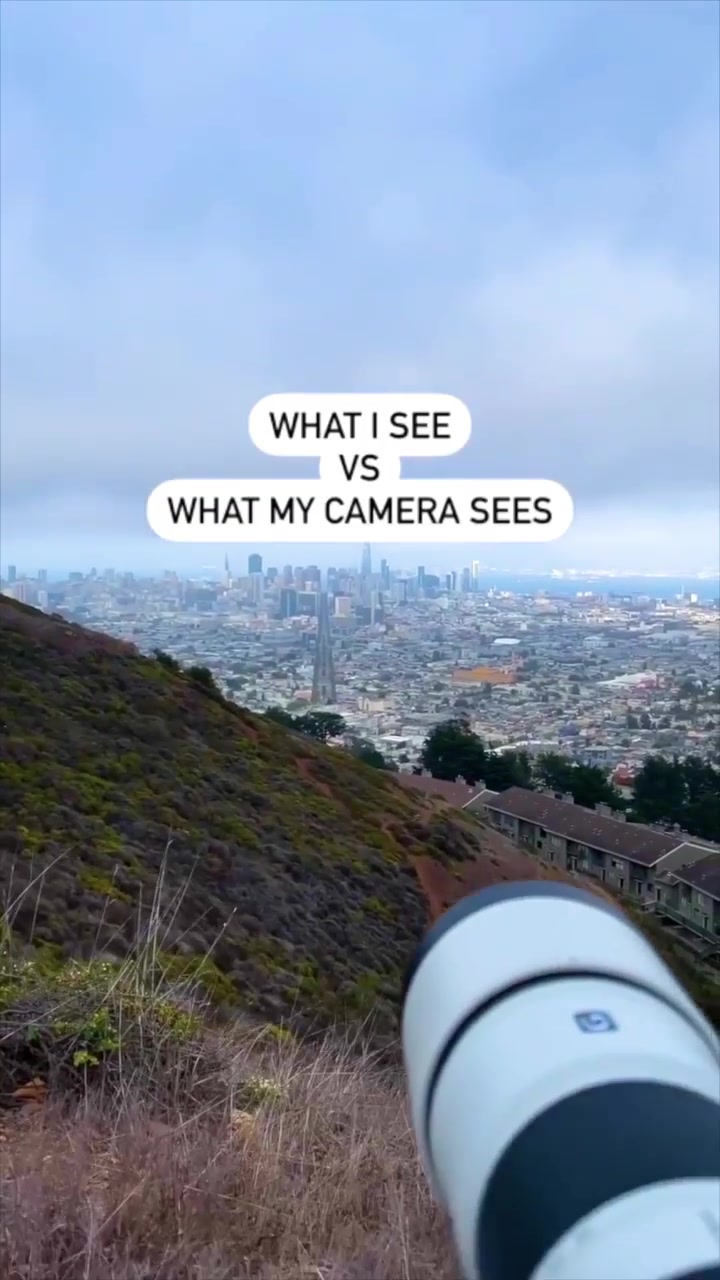
It's easy to romanticize photography as a pure form of seeing, but pointing a lens at a cityscape shows just how much a camera changes our perspective. But how much is the average person aware of that change and how deep is that divergence?
Seeing with New Eyes
The core of a photograph is the moment it captures, but a camera is never a passive observer. Its perspective can shift clarity, depth, and color in ways that are distinct from a human eye. In a short sequence, camera settings combine to form a different visual experience from what the creator's eyes capture. The fratricide of the photograph is how it transforms the eye’s perspective. In a quick clip, the creator shoots a wide city skyline. A human eye can take in the scene in a flash, but a camera view must choose a specific focal point, depth of field, and exposure. The result is a more nuanced view that can shout a thousand words. The city skyline takes a different shape in the camera's gaze from the human eye’s perspective. The camera focuses painfully on the skyline, distorting the visual perception.
Changing the World
The City Skyline
The first interaction with the cityscape is the human eye. The city skyline is a beautiful, massive sight. Horizontal and vertical lines crisscross into infinity. Buildings soaring to the sky. According to the creator's own perspective, the city skyline is an ocean of colors, the sleek lines of buildings, and the vast expanse of the sky. Where the camera is concerned, it converts into a completely different look. The color contrast between buildings and the sky is more pronounced, everything is sharper, and it isolates every detail.
The Camera
The camera lens and settings play a pivotal role in how a photographer sees the world. The creator's lens highlights the city skyline's distinct details, stark contrast, and color saturation. The camera settings are ISO, aperture, and shutter speed, which make the difference. The camera's perception is about seeing all the details of the city.
The Focus
A camera’s focus can alter the whole scene, something the human eye overlooks. The creator toggles between the view from the cameras lens and human eye — both can be "correct" but a camera is choice with the specific focal distance, framing, and focus. The cityscape is different with the camera lens; it can focus on certain skylines or capture the effect of the changing light on the city.
The Changing View of the World
Aperture and Shutter Differences
The camera settings are the most important aspect of how a cityscape is shown. The aperture changes what part of the city is in focus, and the shutter speed captures the scene in a specific moment. A camera’s aperture opens and closes its lens, letting in light, as the shutter speed opens and closes to control how long the sensor is exposed to light. The camera's aperture and shutter are essential controls in how they capture the cityscape.
The Iso Difference
ISO is the camera’s sensitivity to light, which changes how the camera handles the light available. The camera can have a wide range of ISO, especially what it captures. In this case, the lighting of the city skyline at dusk was captured differently. The camera’s ISO is handled differently from what a human eye perceives. The ISO can also change the quality of the light. Therefore, the creator has to be aware of the ISO setting to capture the right light.
Visualizing
In a film played by ISO, aperture, and shutter, there is a difference between the human eye and the camera — the lighting of the city. The human eye can also see what the camera sees, but in a different way. The city skyline takes a different shape in the camera's gaze, compared to the human eye’s. It is also shown that the human eye sees the city as a softer and less clear image. The camera, on the other hand, is a little darker and even less blurred.
The Divergence in Perspectives
What is more, the difference between the camera and the human eye is a different look. The camera has a different way of looking at the world, compared to the human eye. The camera can capture everything, but the human eye is limited. All that the camera can capture, the human eye can't see.
Practical Tips
- Understand the limit: Learning how to capture a cityscape with a camera is about knowing how to interpret the camera's strengths and weaknesses. ISO, aperture, and shutter speed can alter the camera's vision to resemble the human eye.
- Know your focus: Cameras can focus on a specific part of a scene, whereas the human eye can't. Exploring focal points can make a unique and beautiful image, but requires mastering your tools. Take a moment to experience where your human eye looks and how your camera can alter the capture.
Seeing as You Never Have
Want to capture the beauty of a cityscape? It's time to reset your lens. ISO, aperture, and shutter speed can make or break a cityscape. They can also capture a cityscape that highlights the differences between a camera's vision and the human eye. The camera can capture a cityscape in a way that highlights its strengths and weaknesses.
Watch the Reel
Questions readers ask
How does a camera's aperture and shutter speed affect the way a city skyline is captured?
A camera's aperture controls the depth of field, determining which parts of the city are in focus. A wider aperture creates a shallower depth of field, blurring the background and isolating the foreground. Meanwhile, the shutter speed freezes motion and determines how light is captured. A faster shutter speed captures a sharp, still image, while a slower one can create a sense of motion, such as the movement of clouds or traffic.
What is ISO and how does it impact the cityscape's appearance in a photograph?
ISO measures the camera's sensitivity to light. A higher ISO means the camera is more sensitive, which can be useful in low-light conditions but may introduce graininess. A lower ISO is better for well-lit scenes, like a city skyline at dusk, as it produces a clearer, more detailed image.
Why do photographs of city skylines often look different from what we see with our own eyes?
Photographs can appear different due to several factors. Cameras capture a specific moment and perspective, often with a narrower field of view than the human eye. Additionally, camera settings like aperture, shutter speed, and ISO can enhance or alter colors, contrast, and sharpness, creating a more pronounced or nuanced image than what we naturally perceive.
Can a camera capture the full scale of a city skyline as effectively as the human eye?
A camera can capture stunning details of a city skyline, but it doesn't perceive the scene in the same way as the human eye. The human eye can take in the entire scene instantaneously, while a camera must choose a specific focal point and settings, which can distort the overall perspective. However, the camera's ability to isolate details and enhance contrast can reveal aspects of the skyline that might go unnoticed by the naked eye.
How do camera settings like aperture, shutter speed, and ISO affect the final image of a city skyline?
Aperture, shutter speed, and ISO are key settings that significantly influence the final image. Aperture controls the depth of field, shutter speed freezes motion and determines how light is captured, and ISO adjusts the camera's sensitivity to light. These settings work together to create a unique visual experience, often revealing details and nuances that the human eye might miss.
What role does the creator's perspective play in how a city skyline is captured?
The creator's perspective is crucial in determining how a city skyline is captured. The choice of focal distance, framing, and focus can drastically alter the scene, emphasizing certain elements and creating a different visual narrative. While both the camera and the human eye can capture the skyline, the camera allows for more deliberate and nuanced choices, which can transform the scene in unique ways.
Related deep dives
Similar reads based on topic and creator.



Recent articles
Fresh deep dives from the latest Reels we unpacked.



Comments
Be the first to comment.