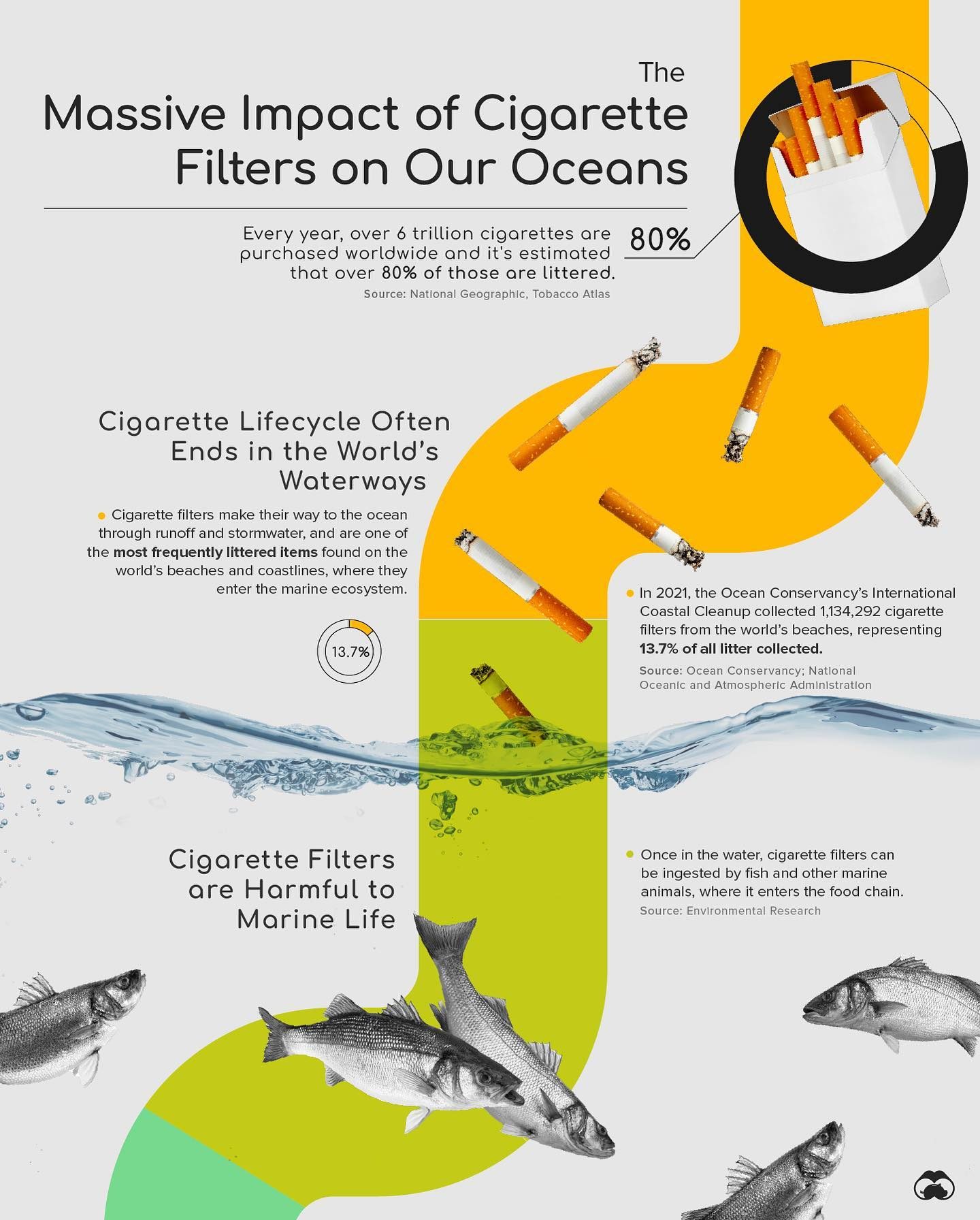
Cigarette filters are a significant source of plastic pollution in the world's oceans. Made from a plastic called cellulose acetate, these filters do not biodegrade and are a source of plastic pollution.
Context / Why This Matters
Cigarette filters, which are commonly used, have become a significant environmental problem. Every year, over 6 trillion cigarettes are purchased globally, and approximately 80% of these are littered. This staggering amount of waste contributes to the global plastic problem, particularly in marine environments. The issue is exacerbated by the fact that cigarette filters are made of plastic and take up to 10 years to degrade. Each filter contains around 15,000 microfibers, which contribute to the growing problem of microplastic pollution in our oceans.
Cigarettes and their filters find their way into the world’s oceans through various means, such as floods, runoff, and stormwater. When cigarette butts enter the marine environment, they break down into microplastics, which are small plastic particles that are difficult to clean up and pose a threat to marine life. Microplastics are present throughout the entire marine ecosystem, from the surface to the deep sea.
Main Discussion
The Lifecycle of a Cigarette Filter
Cigarette filters are designed to be disposable, but their lifecycle often ends in the world’s waterways. When smokers discard their cigarette butts, they often end up in drainage systems, gutters, and eventually in rivers and oceans. This is a persistent problem that affects both freshwater and marine environments.
Once in the water, cigarette filters begin to degrade, but the process is slow. It can take between 18 months to 10 years for a single filter to completely break down. During this time, the filter releases thousands of microfibers into the water, contributing to microplastic pollution. Microplastics are a serious concern for marine life, as they can be ingested by animals and enter the food chain.
The Impact of Microplastics
The impact of microplastics on marine life is extensive. Small plastic particles can be ingested by marine animals, causing internal injury and death. Filter-feeding organisms, such as blue whales, can ingest up to 10 million pieces of plastic a day, leading to significant harm. Over 0.3 million tons of microplastics reach marine environments every year, exacerbating the problem.
The Role of Greenbutts
Greenbutts is a company that has developed a certified biodegradable, plant-based alternative to traditional cigarette filters. Greenbutts' filters are designed to break down naturally in the environment, reducing the impact on marine life and ecosystems. This innovative solution offers a more sustainable option for smokers and helps to address the growing problem of plastic pollution in our oceans.
Practical Tips
There are several practical steps that individuals can take to reduce the impact of cigarette filters on the environment:
Disposal Practices
Always dispose of cigarette butts in designated trash cans. Avoid littering and ensure that cigarette butts are not left on the ground or in drains. If a trash can is unavailable, consider carrying a small portable ashtray to hold used filters until a proper disposal option is available.
Use Alternatives
Consider using biodegradable alternatives, such as Greenbutts, which are designed to break down naturally in the environment. These products offer a more sustainable solution and help to reduce the impact on marine ecosystems.
Cleanup Efforts
Participate in local clean-up efforts to remove cigarette butts and other litter from natural environments. Joining community clean-up events can make a significant difference in reducing the amount of waste that ends up in our oceans and waterways.
Public Awareness
Educate others about the impact of cigarette filters on the environment. Share information with friends, family, and community members to raise awareness about the issue. Encourage others to adopt more sustainable practices and support initiatives aimed at reducing plastic pollution.
Important Takeaways
The environmental impact of cigarette filters is significant and far-reaching. These filters contribute to microplastic pollution, which poses a threat to marine life and ecosystems. By adopting sustainable disposal practices, using biodegradable alternatives, and participating in cleanup efforts, individuals can play a crucial role in reducing the impact of cigarette filters on our oceans.
Conclusion
Cigarette filters are a major contributor to plastic pollution in the world's oceans. These filters, made of cellulose acetate, do not biodegrade and release thousands of microfibers into the marine environment. Through sustainable practices and the use of alternatives like Greenbutts, individuals can help mitigate the impact of cigarette filters on the environment. By raising awareness and taking action, we can work towards a cleaner and healthier planet.
Watch the Reel
Questions readers ask
How many cigarette filters end up as ocean plastic pollution each year?
With over 6 trillion cigarettes purchased globally each year and about 80% of them littered, a massive amount of cigarette filters contributes to ocean plastic pollution. This results in a significant portion of the 6 trillion filters being dumped into the ocean.
What are cigarette filters made from and why do they contribute to plastic pollution?
Cigarette filters are made from a type of plastic called cellulose acetate. This material is non-biodegradable, meaning it doesn't break down naturally, it takes up to 10 years to degrade. Therefore, they contribute to plastic pollution in the world's oceans.
How do cigarette filters impact marine life?
Cigarette filters release microfibers that harm marine life. Each filter contains around 15,000 microfibers, which are ingested by marine organisms, entering the food chain. These microfibers can cause physical harm and introduce toxic chemicals into the bodies of marine creatures.
What are some alternatives to traditional cigarette filters?
There are several alternatives to traditional cigarette filters, including biodegradable options. Some companies offer filters made from materials like hemp, while others provide reusable filters. Switching to these alternatives could significantly reduce the amount of plastic pollution caused by cigarette litter in the oceans.
What is the Greenbutts pollution issue?
Greenbutts is a term used to describe the environmental impact of cigarette butts, particularly their contribution to litter and plastic pollution. This includes the non-biodegradable filters, which are often discarded improperly, ending up in waterways and oceans, adding to the overall marine plastic pollution problem.
What are the environmental impacts of the microfibers from cigarettes?
Microfibers from cigarette filters are a major component of ocean microfiber pollution. These tiny plastic fibers are ingested by marine life and can cause physical harm and toxic exposure. They also contribute to the larger issue of microplastic pollution, which affects the health of marine ecosystems and, ultimately, human health.
Related deep dives
Similar reads based on topic and creator.


Recent articles
Fresh deep dives from the latest Reels we unpacked.




Comments
Be the first to comment.