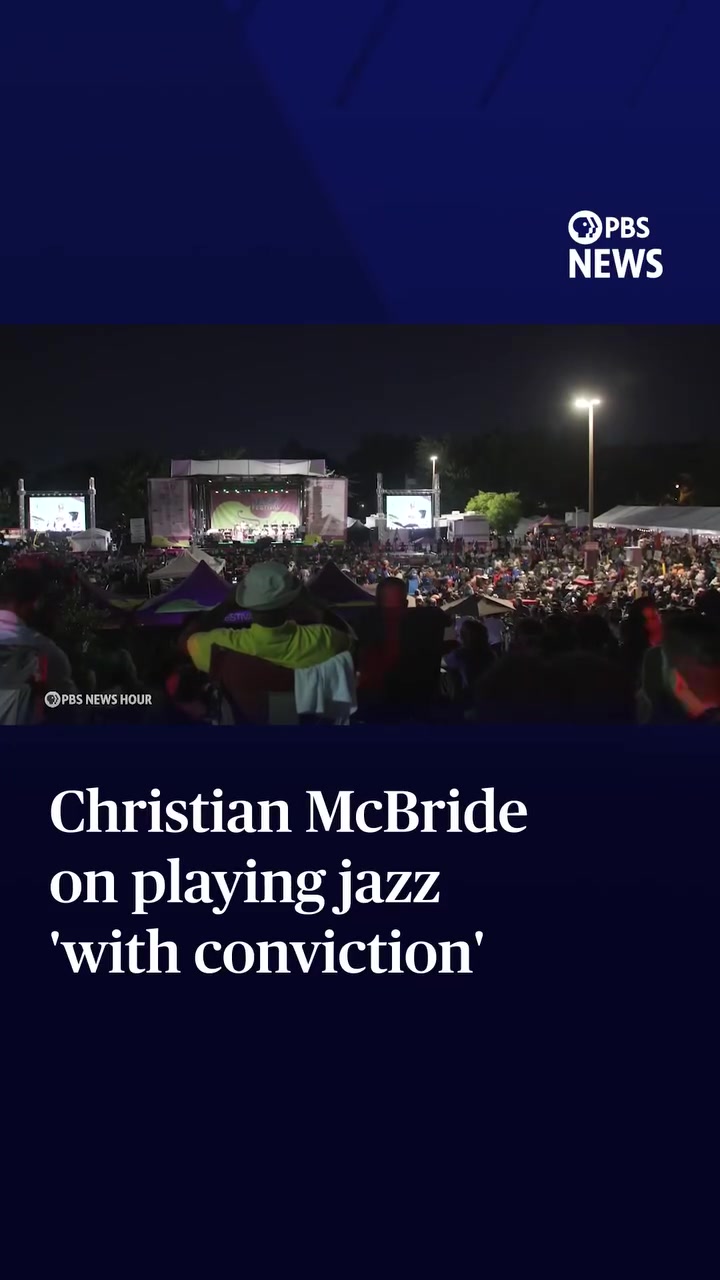
Christian McBride: Champion of Jazz and Education
Christian McBride, a titan of the jazz world, proves how today's musicians can thrive by keeping a century-old art form alive. He heads the 17-piece band at the Montclair Jazz Festival in Northern New Jersey, where big bands are a rarity. Yet McBride isn't just a big band leader; he's a composer, bassist, sideman, and educator, with over 400 recording credits to his name. His work spans jazz and beyond, including collaborations with legends like McCoy Tyner, Freddie Hubbard, and James Brown.
More Than Music: Jazz as a Lifeline
McBride's journey in jazz is not just about playing notes; it's about empowerment and community. As the artistic director for Jazz House Kids, a nonprofit in New Jersey, McBride shares his passion for jazz with young musicians. The program, which has grown from a small in-school initiative to serving about 2,500 students annually, aims to provide an authentic musical experience while teaching essential life skills. These skills, such as listening, teamwork, and empathy, are the foundation for success in any endeavor. McBride's approach is hands-on and direct, encouraging young musicians to "play with conviction" and "think in terms of phrases."
Jazz House Kids: Nurturing the Next Generation
Jazz House Kids, founded by McBride's wife Melissa Walker, is more than just a music program. It's a community where young musicians can learn from professional practitioners who are not only masters of their craft but also skilled educators. The program includes a two-week summer intensive, classes, and performing ensembles for students as young as five. McBride and Walker's vision has transformed the program into one of the most vibrant jazz education initiatives in the country, culminating in the Montclair Jazz Festival, which this summer attracted a record 32,000 music lovers.
The Philosophy of Playing with Conviction
McBride’s philosophy of playing with conviction is central to his teaching and performance. He believes that making a mistake loudly is better than making a mistake and then trying to cover it up. This philosophy is not just about performance; it's about authenticity and embracing one's mistakes as part of the learning process. McBride emphasizes that this approach is at the core of what makes great musicians stand out.
From Sideman to Bandleader: McBride's Evolution
McBride's journey from a young sideman to a bandleader is a testament to his dedication and hard work. Starting professionally at 17, he quickly realized that creating opportunities was more important than trying to establish a unique voice immediately. His approach was pragmatic: get the gig first, and then slowly turn it into something personal. This mindset has allowed him to collaborate with some of the biggest names in jazz, including Art Tatum and McCoy Tyner, and has shaped him into the versatile musician he is today.
Passing the Torch: Jazz as a Folk Art
McBride's work with Jazz House Kids is a testament to his belief that jazz is a folk music, a music of the people. It's not confined to the hallowed halls of universities or big stages; it's a living, breathing art form that thrives in community spaces. McBride sees his role as not just a musician but also as an advocate for the art form, spreading the message of jazz in all its manifestations. He draws inspiration from legends like Wynton Marsalis, Louis Armstrong, and Dizzy Gillespie, who have dedicated their lives to preserving and promoting jazz.
Correct Approach to Playing Jazz
If you're drawn to the world of jazz and want to emulate McBride's approach, consider the following steps:
- Embrace the Basics: Start with the fundamental skills of jazz, such as listening, teamwork, and empathy. These skills are the building blocks of any successful musical endeavor.
- Play with Conviction: Don't be afraid to make mistakes; embrace them as part of the learning process. Play every note with confidence and authenticity.
- Seek Mentorship: Learn from experienced musicians who can guide you through the nuances of jazz. Programs like Jazz House Kids offer invaluable opportunities to learn from professionals.
- Perform Regularly: Get gigs and perform regularly. It's through performance that you can refine your skills and develop your own style.
- Stay True to the Roots: Remember that jazz is a folk music. Stay connected to the community and share your love for the art form with others. Christian McBride's legacy in jazz is one of dedication, passion, and a deep commitment to education. His work with Jazz House Kids and his approach to playing jazz serve as an inspiration for musicians and educators alike, reminding us that the spirit of jazz is alive and well in the hands of those who carry its torch.
Watch the Reel
Questions readers ask
What does Christian McBride mean by 'playing with conviction'?
Playing with conviction, as McBride teaches, means performing with authenticity and embracing mistakes. He encourages musicians to make mistakes loudly rather than trying to hide them, viewing these moments as part of the learning process. This approach fosters a sense of honesty and resilience in both performance and life.
How does Christian McBride balance his roles as a performer, composer, and educator?
McBride's balance comes from his dedication to each role. He leads big bands, composes music, and collaborates with legendary musicians while also heading Jazz House Kids, a nonprofit that teaches jazz to young musicians. His hands-on approach and direct teaching style help him excel in both performance and education.
Can young musicians benefit from learning jazz, even if they don't pursue it professionally?
Absolutely. McBride's work with Jazz House Kids shows that jazz education isn't just about music; it's about life skills like listening, teamwork, and empathy. These skills are valuable in any field, making jazz a powerful tool for personal growth and development.
What is the Jazz House Kids program and how does it impact young musicians?
Jazz House Kids is a nonprofit program founded by Melissa Walker, with Christian McBride as the artistic director. It offers young musicians a range of educational opportunities, from in-school initiatives to summer intensives, and performing ensembles. The program has grown to serve about 2,500 students annually, fostering a community of young musicians who learn from professional educators and performers.
How did Christian McBride transition from being a sideman to a bandleader?
McBride's transition involved a pragmatic approach: he focused on getting the gig first and then personalizing it. This strategy allowed him to collaborate with jazz legends and gradually develop his unique voice, shaping him into the versatile musician he is today. His journey highlights the importance of dedication, hard work, and seizing opportunities.
What is the significance of the Montclair Jazz Festival in McBride's career?
The Montclair Jazz Festival is a pivotal part of McBride's career, showcasing his leadership of a 17-piece band and his commitment to jazz education. The festival attracts thousands of music lovers and serves as a platform for Jazz House Kids, highlighting the impact of McBride's educational initiatives and his role in revitalizing the big band genre.
Related deep dives
Similar reads based on topic and creator.

Recent articles
Fresh deep dives from the latest Reels we unpacked.




Comments
Be the first to comment.