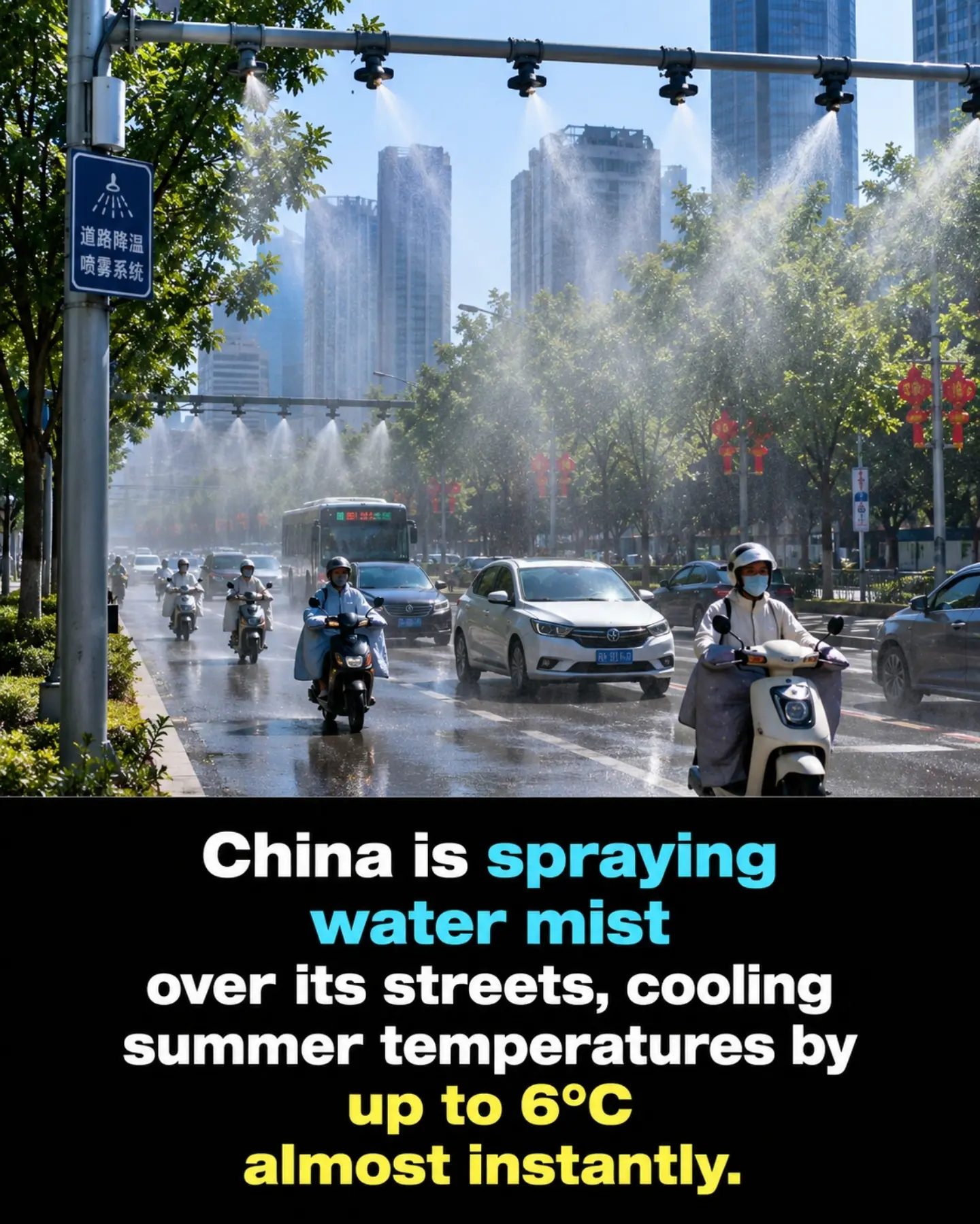
Street Cooling in China
China is combating its scorching summer temperatures by deploying an innovative technique — street cooling with water mist. This method involves spraying a fine mist of water over public streets to lower the temperature almost instantly. The practice has gained attention for its remarkable ability to provide swift relief during intense heatwaves. Understanding how this system works and its implications can offer valuable insights into urban climate management strategies.
Context / Why This Matters
As global temperatures rise, the need for effective cooling solutions in urban environments becomes increasingly critical. In many cities, especially in densely populated areas, the urban heat island effect can exacerbate summer temperatures, making daily life more uncomfortable and potentially dangerous. Innovative cooling methods like water mist spraying can help alleviate these issues, providing a more liveable urban environment.
Main Discussion
The Mechanics of Water Mist Cooling
Water mist cooling systems operate by releasing a fine spray of water droplets into the air. These droplets evaporate rapidly, absorbing heat from the surrounding environment and cooling the air. The process is particularly effective in hot, dry conditions, where the air can absorb a significant amount of moisture. In China, these systems are often mounted above roads and activated during peak summer temperatures to provide immediate relief.
The Impact on Urban Environments
The use of water mist cooling in urban areas has several benefits. Firstly, it can reduce the surface temperature of streets and surrounding surfaces. When water droplets evaporate, they absorb heat from these surfaces, cooling them down. Secondly, the mist can improve air quality by reducing dust and particulate matter, creating a cleaner and more breathable environment. Lastly, the visible mist itself can create a cooling effect, making the area feel more comfortable for pedestrians and drivers alike.
Environmental Considerations
Using water mist for cooling raises some environmental considerations. While the immediate cooling effect is beneficial, the long-term impact on water resources needs careful management. Cities must ensure that the water used for misting is sourced sustainably and that the system is optimized to minimize waste. Additionally, the potential for surface water runoff and the impact on nearby vegetation should be monitored to avoid adverse effects on the local ecosystem.
Public Safety and Comfort
Water mist cooling also has implications for public safety and comfort. The mist can make roads slippery, potentially increasing the risk of accidents. This is especially important in areas with high traffic volumes, where road safety is paramount. Additionally, the mist can affect visibility, which may be a concern for drivers and pedestrians. However, the cooling effect can significantly enhance comfort, making outdoor activities more bearable during extreme heat. Cities must strike a balance between these factors to ensure that the benefits outweigh any potential drawbacks.
Practical Tips
For cities considering implementing water mist cooling systems, several practical tips can enhance the effectiveness and safety of the practice. Here are some key points to consider:
Strategic Placement
The placement of misting devices is crucial for maximising their effectiveness. In densely populated areas, mount devices above busy intersections, pedestrian walkways, and public transportation hubs to ensure that the cooling effect is felt where it is most needed. Avoid placing devices in areas with heavy traffic or limited visibility to minimise potential hazards.
Timing and Duration
Timing the activation of the cooling systems to coincide with peak temperatures can maximise their impact. In many regions, temperatures tend to peak in the late afternoon, so activating the misting systems during these hours can provide the most relief. Additionally, consider the duration of the misting cycles to ensure that the benefit is sustained without wasting water.
Water Management
Efficient water management is essential for the sustainability of misting systems. Utilize recycled water or rainwater harvesting to minimise the strain on local water resources. Implementing a well-designed drainage system can also help manage water runoff and prevent potential flooding.
Public Awareness
Public awareness and education are key to the successful implementation of misting systems. Informing residents about the benefits and potential hazards of the mist can help ensure that the practice is well-received. Provide clear guidelines on road safety, especially during misting periods, to minimise the risk of accidents.
Important Takeaways
- Water mist cooling is an effective method for lowering urban temperatures during summer heatwaves.
- The practice has multiple benefits, including immediate cooling, improved air quality, and enhanced comfort for residents.
- Environmental considerations, such as water use and potential impacts on local ecosystems, must be carefully managed.
- Strategic placement, efficient water management, and public awareness are crucial for the successful implementation of misting systems.
Conclusion
Water mist cooling represents a practical and efficient solution for tackling urban heat challenges. By understanding the mechanics, environmental considerations, and practical tips for implementation, cities can effectively utilise this method to create a more comfortable and sustainable urban environment. As global temperatures continue to rise, innovative approaches like water mist cooling will play an increasingly important role in maintaining liveable conditions in urban areas.
Watch the Reel
Questions readers ask
How does water mist cooling work to lower temperatures in urban areas?
Water mist cooling works by spraying a fine mist of water droplets into the air. These droplets evaporate quickly, absorbing heat from the surrounding environment and creating a cooling effect. This process can rapidly lower temperatures in public spaces, providing immediate relief during intense heatwaves.
What are the benefits of using water mist for heat relief in public spaces?
Water mist cooling offers several benefits, including rapid temperature reduction, improved comfort for residents and visitors, and mitigation of the urban heat island effect. It is particularly effective in densely populated areas where heat can be exacerbated by surrounding structures.
How does China's street cooling system address the urban heat island effect?
China's street cooling system combats the urban heat island effect by actively lowering temperatures in public spaces. The fine water droplets absorb heat as they evaporate, reducing the overall temperature and creating a more comfortable environment for those in the vicinity
What are the primary components of a street cooling system using water mist?
A street cooling system using water mist typically includes a network of nozzles or sprayers connected to a water supply. These devices distribute a fine mist of water over the target area, along with pumps and controllers to manage the water flow and mist distribution.
Can water mist cooling be integrated with other urban climate management strategies?
Yes, water mist cooling can be effectively integrated with other urban climate management strategies. It can complement green spaces, reflective surfaces, and shading structures to enhance overall cooling and improve urban comfort levels. This multifaceted approach helps to create more resilient and comfortable urban environments.
What considerations should be taken into account when implementing street water mist cooling?
When implementing street water mist cooling, several factors should be considered, including water availability and management, potential slip hazards, and the need for regular maintenance of the cooling devices. Additionally, the system should be designed to ensure even coverage and effective cooling across the target area.
How effective is water mist technology in providing summer heat relief compared to traditional air conditioning?
Water mist technology provides immediate and localized cooling, making it highly effective for summer heat relief in public spaces. Unlike traditional air conditioning, which cools indoor environments, water mist cooling targets outdoor areas, helping to reduce the overall temperature and improve comfort for a larger number of people simultaneously.
Related deep dives
Similar reads based on topic and creator.



Recent articles
Fresh deep dives from the latest Reels we unpacked.




Comments
Be the first to comment.