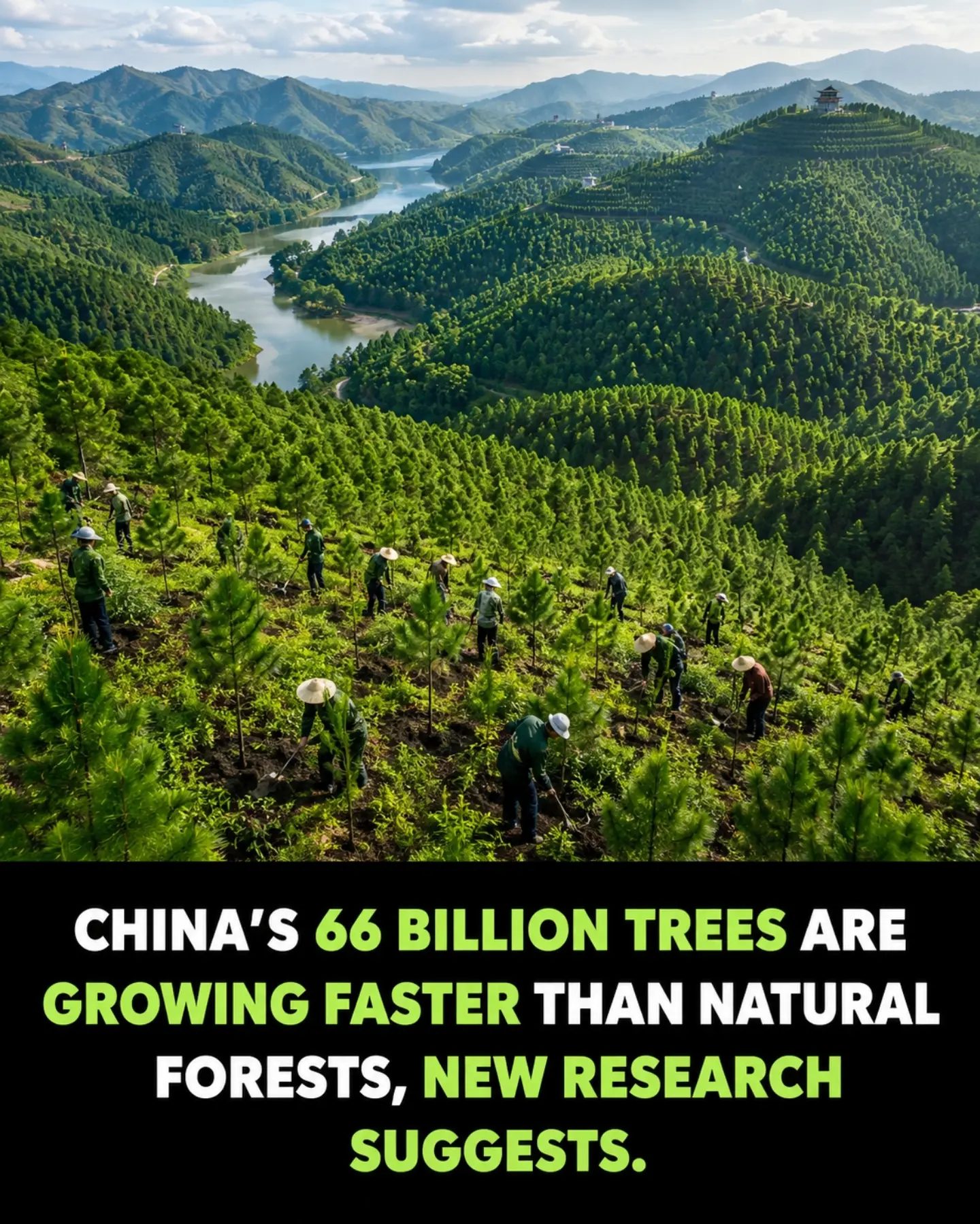
Forest Restoration in China
China's ambitious forest restoration efforts have resulted in a staggering 66 billion trees, a figure that is growing faster than natural forests. This rapid growth is supported by new research, highlighting the significant strides made in reforestation. Understanding the context and methods behind this remarkable achievement provides valuable insights into global environmental efforts.
Why This Matters
The scale of China's reforestation is immense. It's not just about the quantity of trees but also the speed at which they are growing. This phenomenon is crucial for several reasons. Firstly, reforestation plays a vital role in carbon sequestration, helping to mitigate the impacts of climate change. Secondly, it supports biodiversity, providing habitats for various species. Lastly, it contributes to soil conservation and water cycle regulation, which are essential for sustainable agriculture.
The Scale of the Effort
Planting Billions of Trees
The sheer number of trees—66 billion—is staggering. To put this into perspective, this is equivalent to planting around nine trees for every person on Earth. The scale of this effort is unprecedented and has been achieved through coordinated national initiatives and community involvement. The Chinese government has implemented a series of policies and programs aimed at reforesting large tracts of land, many of which were previously barren or degraded.
Rapid Growth Rates
The growth rate of these planted forests is notably faster than natural forests. This accelerated growth is attributed to several factors, including advanced reforestation techniques, the use of fast-growing tree species, and optimal planting conditions. The combination of scientific research, technological innovations, and sustainable practices has enabled these forests to thrive.
Methods and Techniques
Advanced Reforestation Techniques
China's success in reforestation can be attributed to the use of advanced techniques. These include aerial seeding, where seeds are dispersed from aircraft, and the use of drones for precision planting. Additionally, the use of nursery-grown saplings ensures that the trees have a higher survival rate compared to natural seeding.
Role of Research and Development
Research and development have been pivotal in driving these reforestation efforts. Scientific studies have led to the identification of tree species that grow quickly and are well-suited to various ecological conditions. Innovations in soil management and irrigation systems have also contributed to the rapid growth of these forests. Ongoing research continues to refine these methods, ensuring that the reforestation efforts remain effective and sustainable.
Practical Tips for Reforestation
Choosing the Right Tree Species
Selecting the right tree species is crucial for successful reforestation. Trees that grow quickly and are well-adapted to the local climate and soil conditions are ideal. Additionally, considering the ecological benefits, such as supporting local wildlife and improving soil quality, can enhance the overall impact of reforestation efforts.
Community Involvement
Engaging local communities in reforestation projects is essential for their long-term success. Community involvement ensures that the forests are well-maintained and that local residents gain economic benefits from the reforestation efforts. Programs that provide training and resources to local communities can foster a sense of ownership and responsibility towards the forests.
Sustainable Practices
Adopting sustainable practices is vital for the long-term success of reforestation. This includes using eco-friendly materials, conserving water, and minimizing the use of chemicals. Sustainable forestry practices can ensure that the forests remain healthy and productive over the long term.
Important Takeaways
China's forest restoration efforts are a testament to what can be achieved with concerted national efforts and scientific advancements. The rapid growth of these forests underscores the importance of research, innovation, and community involvement in successful reforestation. The lessons learned from China's experience can be applied to similar efforts worldwide, providing a roadmap for large-scale reforestation initiatives.
Conclusion
The restoration of 66 billion trees in China, with a growth rate faster than natural forests, is an impressive achievement. This initiative highlights the power of coordinated efforts, scientific research, and sustainable practices in addressing environmental challenges. By understanding the methods and techniques employed in China, we can gain valuable insights into how similar efforts can be undertaken elsewhere, contributing to global environmental sustainability and resilience.
Watch the Reel
Questions readers ask
How has China managed to plant and grow 66 billion trees so quickly?
China's rapid tree growth is attributable to several factors. The country employs advanced planting techniques, such as aerial seeding and sapling nurseries, along with fast-growing tree species like poplar and eucalyptus. Additionally, strong national policies and extensive resources have played a significant role in accelerating this growth.
What are the primary benefits of China's reforestation efforts?
The benefits are multifold. The massive tree planting efforts contribute significantly to carbon sequestration, helping to reduce greenhouse gases. They also support biodiversity by creating habitats for various species and aid in soil conservation, preventing erosion and maintaining soil health. Furthermore, these initiatives enhance China’s green landscape, promoting environmental well-being.
Which tree species are commonly planted in China's reforestation initiatives?
China often plants fast-growing species to achieve rapid results. Commonly used trees include poplar, eucalyptus, and pine. These species are chosen for their ability to grow quickly, adapt to various environments, and provide substantial environmental benefits, though some critics worry about biodiversity loss.
How do China's forestry policies support reforestation?
China's forestry policies are designed to promote and accelerate reforestation. Through incentives, regulations, and large-scale initiatives, the government has mobilized resources and community efforts. Policies such as the Natural Forest Conservation Program and the Grain for Green Project have been instrumental in driving these ambitious reforestation goals.
What impact has China's reforestation had on the local environment?
The impact has been substantial. Locally, reforestation has improved air and water quality, reduced soil erosion, and supported local ecosystems. It has also created jobs in forestry and related industries, contributing to economic development in rural areas. These benefits highlight the integrated approach China is taking to environmental and economic sustainability.
What is the significance of the speed at which China's forests are growing?
The rapid growth rate is crucial for several reasons. Fast-growing forests can quickly sequester carbon, mitigating climate change impacts. They also provide immediate benefits for biodiversity and soil conservation. The speed allows China to address environmental challenges more swiftly, setting a benchmark for other countries in global reforestation efforts.
Related deep dives
Similar reads based on topic and creator.




Recent articles
Fresh deep dives from the latest Reels we unpacked.




Comments
Be the first to comment.