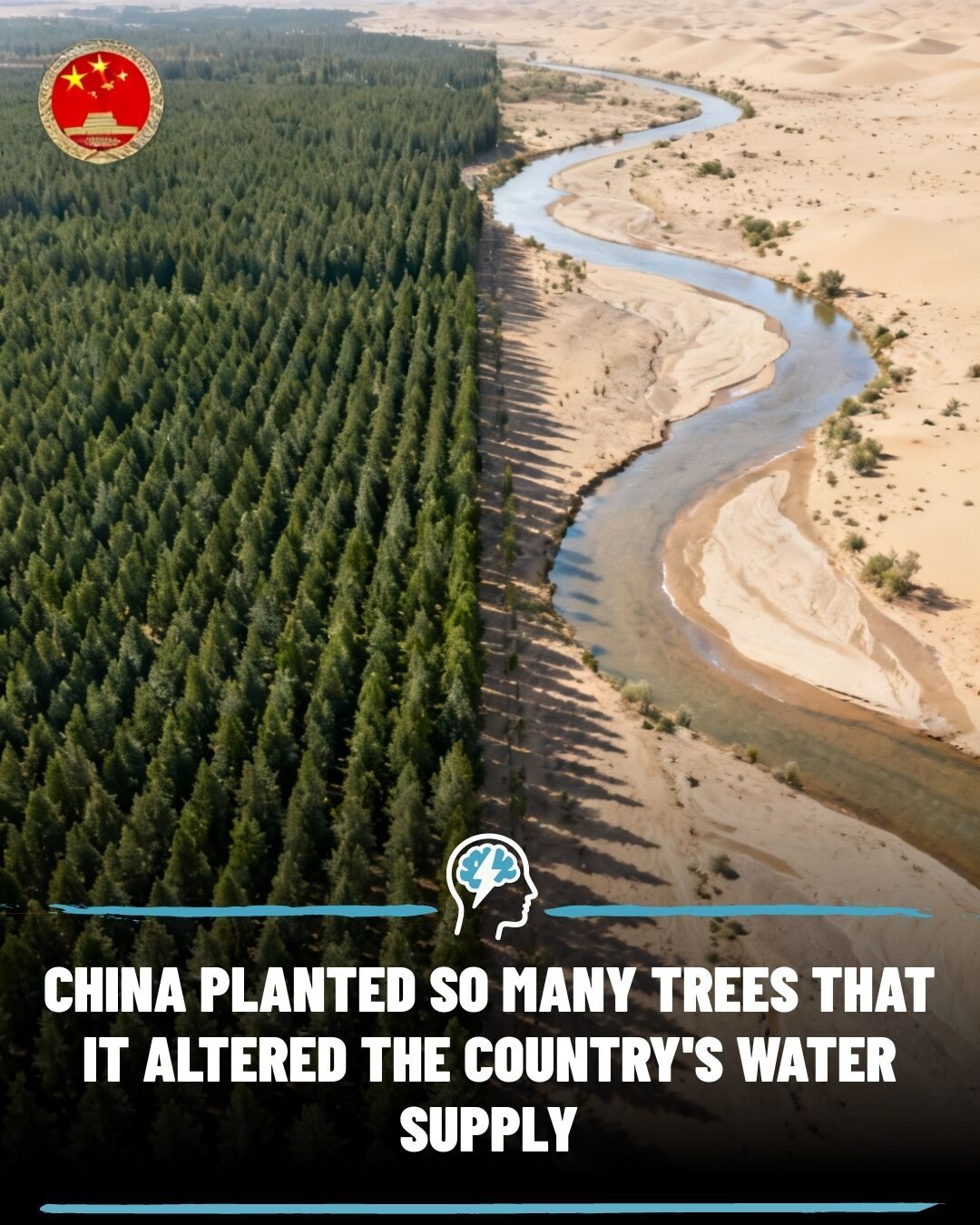
Environmental Impact of Afforestation
China's ambitious reforestation program, initiated in 1978, is a testament to large-scale environmental intervention. Known as the Three-North Shelterbelt, or the "Great Green Wall," this program has transformed northern China's landscape. Over 13 million hectares of new trees have been planted, increasing forest coverage from 5% to approximately 13.5%. This initiative has had profound effects on the region's ecology, but it also serves as a reminder of the complexities involved in large-scale environmental projects.
Why This Matters
Afforestation, the process of planting new forests or trees, is often hailed as an effective way to combat environmental degradation. However, the sheer scale of China's reforestation efforts underscores the need to consider context, species selection, and local hydrology. The environmental impact of afforestation is not always straightforward. This lesson is particularly important in understanding the consequences of large-scale ecological interventions.
Main Discussion
The Three-North Shelterbelt: Scope and Scale
The Three-North Shelterbelt is a vast endeavor that spans some of the most barren landscapes on Earth. Initially launched as a response to desertification and soil erosion, the program has significantly altered the region's ecological dynamics. By planting over 13 million hectares of trees, the initiative has succeeded in combating desertification, reducing soil erosion, and mitigating the impact of dust storms from the Gobi Desert. Trees act as natural windbreaks, slowing down powerful desert gusts and stabilizing soil with their root systems.
Environmental Benefits
Research shows that the Three-North Shelterbelt has had a positive impact on several environmental factors:
- Desertification: The planted trees have helped to stabilize soil, preventing the spread of deserts.
- Soil Erosion: The root systems of the trees anchor the soil, reducing erosion.
- Dust Storms: The canopy coverage of the trees reduces wind speed at ground level, weakening dust storms.
Hydrological Impacts
While the reforestation efforts have had significant environmental benefits, they have also altered the region's water supply. The widespread planting of trees has changed the local hydrology, impacting the flow and availability of water. This alteration highlights the complexity of ecological interventions and the need for ongoing research and assessment.
The Role of Species Selection
The effectiveness of reforestation programs often depends on the species of trees selected for planting. Different species have varying impacts on soil, water, and local biodiversity. For example, fast-growing, shallow-rooted species might stabilize soil more quickly but could also deplete water resources. In contrast, deep-rooted species might improve soil quality and retain water but take longer to establish. The choice of species is critical in determining the long-term ecological impact.
Ongoing Research and Assessment
The success of the Three-North Shelterbelt underscores the importance of continued research and honest assessment of environmental interventions. The documented benefits for desertification and erosion are significant, but the full picture requires ongoing evaluation. Ecological systems are complex, and interventions can have unintended consequences. Ongoing research is essential to ensure that future reforestation efforts are well-informed and effective.
Practical Tips
If you are considering a reforestation project, whether on a small or large scale, here are some practical tips to guide you:
- Consider Local Conditions: Assess the local soil, climate, and hydrology. Different regions have unique ecological needs and challenges.
- Choose Appropriate Species: Select tree species that are well-suited to the local environment. Consider factors like root depth, growth rate, and water requirements.
- Monitor and Evaluate: Continuously monitor the project's impact on soil, water, and biodiversity. Regular evaluation helps identify and address any unintended consequences.
- Engage Local Communities: Involve local communities in the planning and implementation of reforestation projects. Their knowledge and participation are invaluable.
- Plan for the Long Term: Reforestation is a long-term endeavor. Plan for sustained efforts, including ongoing care and maintenance of the planted trees.
Important Takeaways
The Three-North Shelterbelt in China offers valuable insights into the complexities of large-scale ecological interventions. While the project has achieved significant environmental benefits, it also highlights the need for careful planning, ongoing research, and a deep understanding of local conditions. The success of reforestation efforts depends on various factors, including species selection, local hydrology, and continuous evaluation. This project serves as a reminder that nature doesn't offer simple solutions, and neither should our approaches to environmental challenges.
Conclusion
Large-scale environmental projects like China's Three-North Shelterbelt are monumental undertakings with far-reaching impacts. The initiative has successfully altered the ecological landscape of northern China, demonstrating the potential of reforestation in combating desertification and soil erosion. However, it also emphasizes the importance of understanding the multifaceted nature of ecological systems. The documented benefits and hydrological impacts of such initiatives underscore the need for ongoing research and assessment. As we continue to address environmental challenges, it is crucial to approach large-scale interventions with a nuanced understanding and a commitment to continuous evaluation.
Watch the Reel
Questions readers ask
What is the Great Green Wall and how has it impacted China's landscape?
The Great Green Wall, or the Three-North Shelterbelt, is China's massive reforestation initiative started in 1978. It has transformed the landscape of northern China by planting over 13 million hectares of new trees, increasing forest coverage from 5% to approximately 13.5%.
What are the primary benefits of China's reforestation efforts?
China's reforestation efforts have significantly combatted desertification and soil erosion, leading to substantial changes in the region's ecology. These benefits include improved soil stability, enhanced biodiversity, and better regulation of water cycles.
What are some environmental drawbacks of China's reforestation efforts?
While beneficial in many ways, China's reforestation has also led to some unintended ecological consequences. These include the disruption of local ecosystems, changes in water availability, and the introduction of non-native tree species that may outcompete native plants.
How has the Great Green Wall affected China's ecosystem restoration?
The Great Green Wall has significantly contributed to ecosystem restoration in northern China by increasing forest coverage and improving soil and water conservation. However, the large-scale nature of the project has also highlighted the complexities and challenges of such interventions, including the need for careful planning and monitoring.
What is the current forest coverage in China as a result of the Great Green Wall project?
As of the latest data, the forest coverage in China has increased to approximately 13.5% due to the Great Green Wall project. This represents a significant increase from the 5% coverage prior to the initiation of the program in 1978.
What are some of the key challenges in implementing large-scale reforestation projects like the Great Green Wall?
Large-scale reforestation projects face several challenges, including the selection of appropriate tree species, ensuring long-term sustainability, and managing the impact on local ecosystems. Additionally, such projects require substantial resources and coordination, making them complex to implement effectively.
How has China's reforestation project influenced other countries' environmental policies?
China's ambitious reforestation project has served as a case study for other countries, illustrating both the benefits and challenges of large-scale environmental interventions. It has encouraged other nations to consider similar initiatives but also underscored the importance of careful planning and consideration of ecological impacts.
Related deep dives
Similar reads based on topic and creator.




Recent articles
Fresh deep dives from the latest Reels we unpacked.




Comments
Be the first to comment.