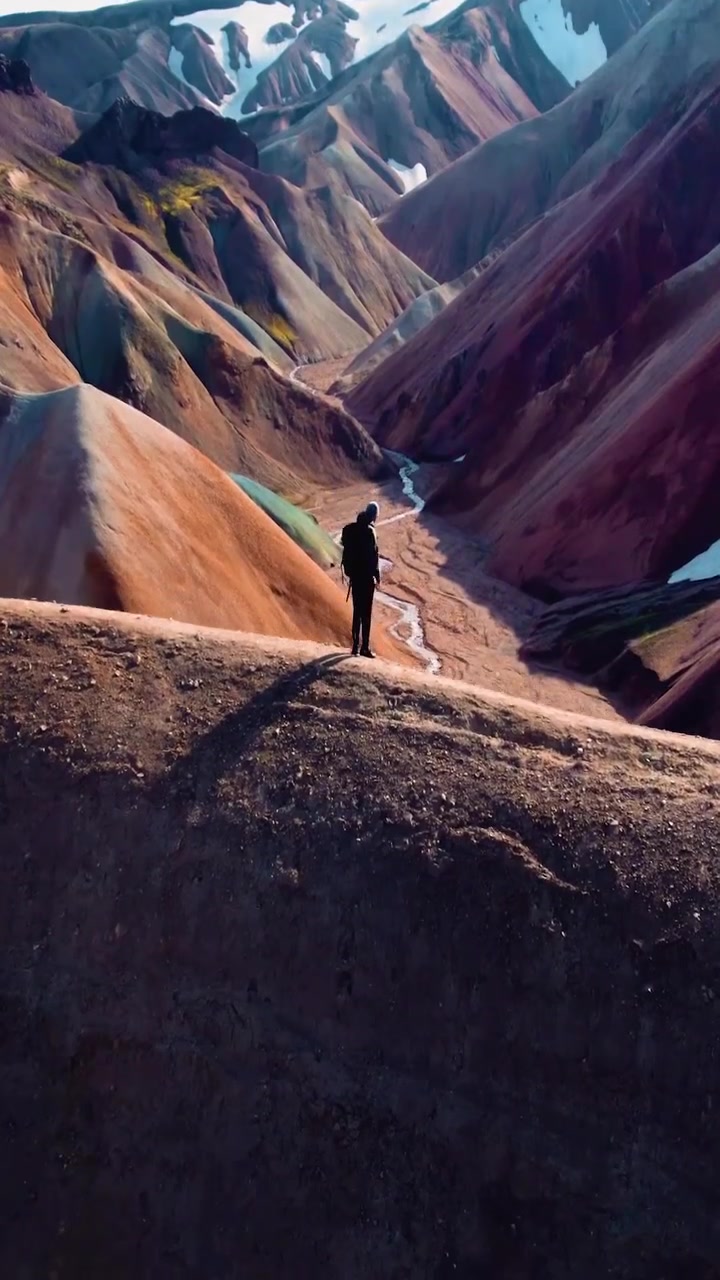
The hiker stood atop a canyon ridge, looking out over bands of color carved by millennia of geological activity. The beauty of this canyon is a natural wonder that has been shaped slowly by wind, rain, and time, creating an unforgettable expanse of vibrant, multi-colored hues. The [video showcases a] canyon landscape, a breathtaking expanse of reds, oranges, and purples that shift under the sun. The sheer scale of the canyon, with its steep walls and twisting river far below, is amplified by the presence of a lone hiker who provides a sense of adventure and wonder.
Rock-Hewn Symphony
A canyon is a geological feature carved by the forces of nature. Some canyons are formed by the downward cutting of a body of water. Others come from the uplifting of the land on either side of a river. This produces a striking scene of a river and a valley formed by erosion. With the path of water carving a narrow gorge in the earth, the resulting canyon is defined by its distinct layers of rock and sediment. The particular beauty of the canyon landscape is a product of its unique geological formations. These formations are distinct striations of rock and sediment that reveal the earth’s history. The vivid colors are a result of different minerals and the oxidization of iron, resulting in a unique geological palette. These layers tell a compelling story of the earth’s history that a hiker can explore while standing on the ridge overlooking the landscape. Canyons themselves can be found all over the world, from the Grand Canyon in the United States to the Copper Canyon in Mexico. They are shaped by geological activity, rivers, weather, and time. The forces of nature that construct these geological formations axe a complex and spellbinding story in the ground. The canyon is a geological masterpiece, a natural laboratory displaying a wide array of geological features.
Canyons as Cultural Symbols
The grandeur of a canyon landscape has long captured the imagination of people all over the world. Filmmakers, writers, artists, and photographers have long been inspired by these geological formations, weaving them into countless stories, films, and artworks. They are often used as a depiction of adventure, danger, or isolation, but they also represent vastness, history, and the power of geological activity. The vivid colors and undulating bands of a canyon landscape are a thrilling visual spectacle. These large and awe-inspiring landscapes are known for their depth and complexity. The geological formations that have formed a visual landscape that is miles long and deep. Filmmakers, artists, and photographers alike appreciate their broad appeal: their beauty, the danger of navigating their precarious terrain, and their mystique.
A World Carved by Water
The Streams and Rivers that Shape Canyons
Canyons are formed over long periods by streams and rivers carving into the earth. The water carves through the rock and sediment, creating a debris of gravel and small stones. The river and stream then wash away the debris, which allows for further erosion. Over many millions of years, this process creates a canyon. The stream and river carve a narrow gorge into the earth. This formation, triggered by geological activity, produces a complex natural environment that is constantly changing. This erosion process creates a riparian zone along the river, and a floodplain along the stream. The geological formations in the canyon are layered rock and sediment.
Red Rock Magic
The striking reds and oranges in the canyon's layers are the result of iron oxide (more commonly known as rust) present in the rock. When the iron oxidizes, it changes color from grey to a vibrant red and orange, creating the canyon’s signature hue. The intensity of the color depends on the amount of iron in the rock and the level of oxidation. The geologic strata of the canyon's walls tell the story of its creation. The hiker, beginning a journey from the surface to the canyon floor, can trace the formation and uplift of the land through the different layers of rock and sediment. Like a book, the rocks record the history of the earth, with each layer telling a different geological tale: A formation of sandstone, dolomite, or limestone, all created by the river and stream carving through the rock, creating a winding ravine.
A Journey Through Time
Hiking a canyon is a journey through time. The walls of the canyon are the pages of an earth history book. The canyon’s layers are a record of geological events and eras, each one containing different types of rock, sediment, and fossils. The rich tapestry of this geological history tells a story of change and evolution. The canyon’s layers are a rich tapestry of geological history, shaped by geological events. The geological formations are a record of geological events and eras, which have shaped the landscape over many millions of years. The colors and textures of the rock tell the story of the canyon’s formation, and the geological activity that led to its creation.
The Rush of a Canyon Hike
The canyon is inaccessible to vehicles, making it a destination best experienced on foot. The hike itself is a journey through time, with vivid colors and geological formations that can only be appreciated up close. In the grand expanse of the desert, the hiker will enjoy a sense of adventure, isolation, and wonder. Midway through the hike, the canyon’s walls will tower above, fully displaying the canyon’s striking color and geological formations. The river’s meandering path will provide an oasis in the dry desert environment. Water will trickle and cascade down the canyon's sides, intermixing with the dry, barren desert.
- Build a Hiking plan. Decide on the length and difficulty of your hike in the canyon. Research the best hiking trails and make a plan. The canyon landscape has many opportunities for exploring, so plan accordingly.
- Choose the Right Gear. Pack appropriate hiking gear, such as sturdy boots, a backpack, and supplies for the journey. Consider the length of the hike and prepare accordingly.
- Stay Alert to the Weather. Weather in the canyon can change rapidly, so dress in layers and be prepared for changing conditions. Rain, heat, or cold can all make a canyon hike dangerous if you are not properly prepared. Carry plenty of water and rest.
- Take a Guide. If you have never hiked a canyon before, consider hiring a guide. Guides help with navigation, carry supplies, and provide advice on safety and conservation. Also, guides will provide you with the rich history of the canyon and its geological formations.
Geology’s Gift
When a hiker stands at the top of a canyon ridge, the canyon’s vast, vibrant landscape offers a unique sense of wonder. The hiker is dwarfed by the scale of it all, from the depth of the canyon to the expansive beauty of the multi-colored geological formations. The scene is a testament to the power of geological activity. The grandness of the landscape is a gift of the natural world.
Watch the Reel
Questions readers ask
What exactly makes a canyon a geological masterpiece?
A canyon's status as a geological masterpiece comes from its unique formation process and the distinct layers of rock and sediment it reveals. These layers, often displaying vivid colors due to different minerals and oxidation, tell the story of the Earth's history and the forces of nature that shaped them. This makes each canyon a natural laboratory of geological features.
How do the colors in a canyon form?
The vibrant colors in a canyon are a result of different minerals present in the rock and sediment. The oxidization of iron, for instance, can create hues of red, orange, and purple. These colors are not only visually stunning but also provide clues about the geological history of the area.
Can I visit canyons in places other than the United States?
Absolutely! Canyons can be found all over the world. While the Grand Canyon in the United States is one of the most famous, you can also explore the Copper Canyon in Mexico, the Fish River Canyon in Namibia, and many others. Each offers a unique perspective on the power of geological forces.
What role do rivers play in the formation of a canyon?
Rivers play a crucial role in carving canyons. Over millions of years, rivers and streams cut through the earth, eroding rock and sediment. The debris created by this erosion is then washed away, allowing the river to cut even deeper, gradually forming the steep walls and vast expanse of a canyon.
Are canyons always formed by rivers, or can other forces create them?
While rivers are a primary force in canyon formation, other geological activities can also play a role. For instance, the uplifting of land on either side of a river can contribute to the formation of a canyon. Additionally, weathering and erosion from wind and rain can further shape the landscape over time.
Why are canyons so often featured in art and media?
Canyons are frequently featured in art and media because of their awe-inspiring beauty and the sense of adventure and danger they evoke. Their vastness, depth, and the intricate layers of geological formations make them a compelling backdrop for stories of exploration, history, and the power of nature.
What makes the geological formations in a canyon unique?
The unique geological formations in a canyon are a result of the distinct layers of rock and sediment that have been exposed over time. These layers, often displaying vivid colors, reveal the Earth's history and the forces that have shaped the landscape. Each canyon's formations tell a story that is both complex and spellbinding.
Related deep dives
Similar reads based on topic and creator.


Recent articles
Fresh deep dives from the latest Reels we unpacked.




Comments
Be the first to comment.