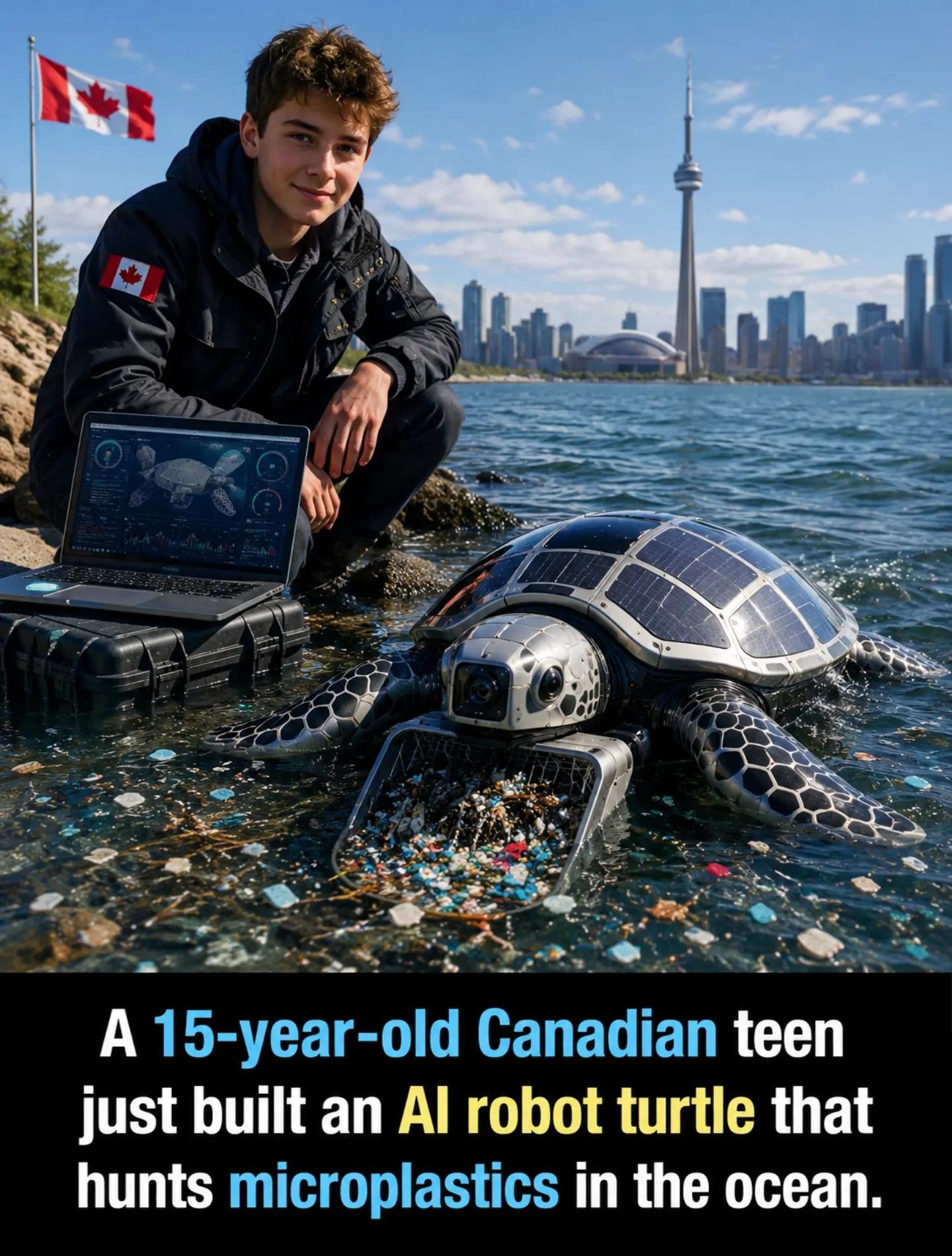
AI Robot Turtle: A Teen's Innovative Solution to Ocean Microplastics
The AI robot turtle, a cutting-edge invention by a 15-year-old Canadian teen, is designed to tackle one of the most pressing environmental issues of our time: microplastics in the ocean. This remarkable project demonstrates the potential of innovative technology in environmental cleanup efforts.
Why This Matters
Microplastics, tiny plastic particles less than five millimeters in size, pose a significant threat to marine life and ecosystems. They originate from various sources, including the breakdown of larger plastic items, microbeads in personal care products, and synthetic fibers from clothing. These minute particles are often ingested by marine organisms, entering the food chain and ultimately affecting human health. The AI robot turtle represents a proactive approach to combating this global problem, showcasing how youth-driven innovation can address complex environmental challenges.
The AI Robot Turtle: Design and Functionality
Technology and Innovation
The AI robot turtle is a testament to the power of artificial intelligence and robotics in environmental conservation. Equipped with advanced sensors and algorithms, the robot is designed to identify and collect microplastics from the ocean. Its turtle-like design allows it to navigate through water and rocky shorelines efficiently, mimicking the natural behavior of sea turtles.
Environmental Impact
The robot's primary function is to detect and collect microplastics, which are notoriously difficult to remove due to their small size. By targeting these particles, the AI robot turtle contributes to the reduction of plastic pollution in the ocean, thereby protecting marine life and preserving ecosystems. The invention highlights the role of technology in achieving sustainable development goals, particularly in environmental conservation.
Operational Efficiency
The robot’s operation is managed through a user-friendly interface, as seen on the teen's laptop. This interface likely allows for real-time monitoring, data collection, and remote control, making the cleanup process more efficient and less labor-intensive. The integration of AI ensures that the robot can adapt to different environments and optimize its performance over time.
Practical Tips for Building and Deploying an AI Robot Turtle
1. Starting with Research and Design
To build a similar robot, start by conducting thorough research on microplastics and their impact on the environment. Understand the challenges involved in detecting and collecting these tiny particles. The design phase should focus on creating a robotic framework that can effectively navigate through water and rocky terrain.
2. Selecting the Right Technology
Choose appropriate sensors and algorithms for detecting microplastics. Consider using machine learning to improve the robot's accuracy in identifying and collecting plastic particles. Additionally, ensure that the robot is equipped with durable materials to withstand harsh marine conditions.
3. Testing and Iteration
Prototype your robot and conduct extensive field tests to evaluate its performance. Gather data on its efficiency in detecting and collecting microplastics, and make necessary adjustments based on the results. Iteration is key to refining the robot's capabilities and ensuring its effectiveness in real-world scenarios.
4. Collaboration and Support
Engage with local environmental organizations and educational institutions to gain support and resources. Collaboration can provide valuable insights, funding, and access to advanced technology. Additionally, seek mentorship from experts in robotics and environmental science to enhance your project’s impact.
Important Takeaways
The AI robot turtle project underscores several important points:
- Youth Innovation: Young individuals can drive significant change through innovative solutions.
- Technology in Conservation: AI and robotics can play a pivotal role in environmental conservation efforts.
- Community and Collaboration: Successful projects often rely on collaboration and support from various stakeholders.
Conclusion
The AI robot turtle is a groundbreaking invention that showcases the potential of technology in addressing environmental challenges. By targeting microplastics, this robot contributes to the conservation of marine ecosystems and highlights the importance of youth-driven innovation. As we continue to face environmental issues, such projects provide hope and inspiration, demonstrating that proactive solutions are within reach.
Watch the Reel
Questions readers ask
How does the AI robot turtle work to remove microplastics from the ocean?
The AI robot turtle uses advanced sensors and algorithms to detect and collect microplastics. It navigates through the water, identifying microplastic particles and gathering them for disposal, helping to reduce the amount of plastic in ocean environments.
What inspired the Canadian teen to create the AI robot turtle?
The teen was motivated by the alarming issue of microplastics in our oceans and the impact on marine life and ecosystems. The project combines a passion for technology and environmental stewardship, showcasing how young inventors can contribute to real-world solutions.
What are the potential impacts of microplastics on marine ecosystems?
Microplastics can be ingested by marine organisms, causing harm to their health and potentially entering the food chain. This can have a cascading negative effect on marine ecosystems and ultimately impact human health too, as these particles can make their way into the seafood we consume.
How does the AI robot turtle navigate and locate microplastics in the ocean?
The robot turtle is equipped with AI-driven algorithms that enable it to navigate through the water and identify microplastics based on their size, shape, and composition. The turtle's design allows it to efficiently collect these tiny plastic particles from the ocean floor and surface.
What role does AI play in the robot turtle's microplastics removal process?
AI is crucial for the robot turtle's functionality, as it powers the turtle's ability to detect, locate, and collect microplastics. The AI algorithms allow the turtle to distinguish between microplastics and other materials, ensuring that it effectively targets and removes these harmful particles from the ocean.
What are the future prospects for the Canadian teen's AI robot turtle project?
The AI robot turtle project has significant potential for expansion, including further development of the technology, collaboration with environmental organizations, and scaling up for broader ocean cleanup efforts. As the technology advances, it could help address the global issue of microplastics in a more efficient and effective way.
What can other young innovators learn from the Canadian teen's initiative?
The Canadian teen's initiative demonstrates the power of combining technological innovation with environmental concerns. Young innovators can learn the importance of identifying real-world problems, applying advanced technologies, and taking action to create tangible solutions to pressing environmental challenges.
Related deep dives
Similar reads based on topic and creator.




Recent articles
Fresh deep dives from the latest Reels we unpacked.




Comments
Be the first to comment.