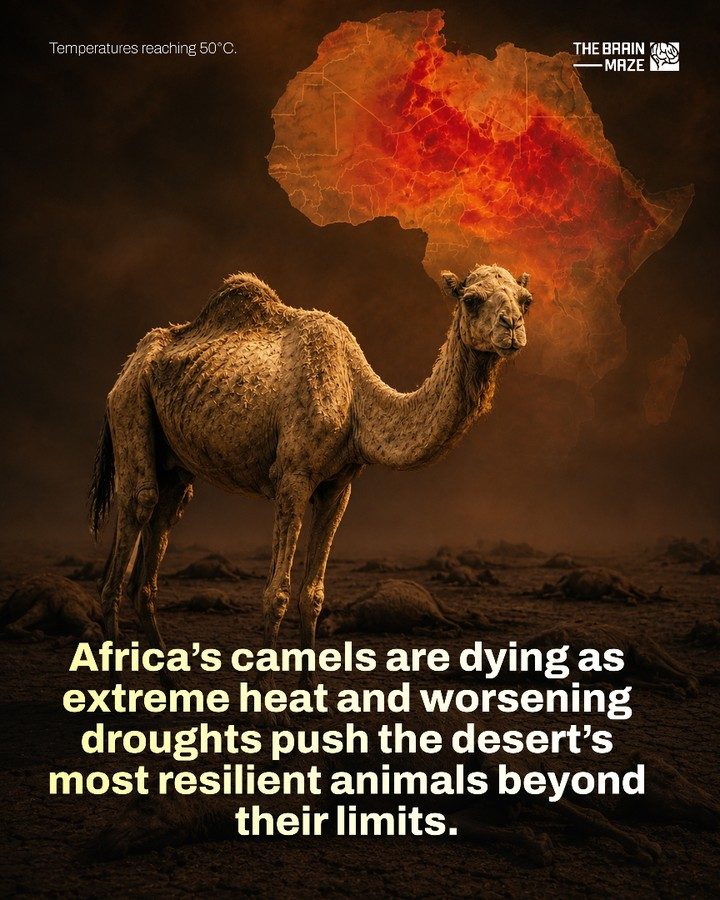
Extreme Heat and Camels
Climate change is drastically altering the livelihoods of camels across Africa’s Horn and North Africa, pushing these resilient creatures to their survival limits. The regions are experiencing unprecedented temperatures reaching 50°C, prolonged droughts, and severe water shortages, all of which are taking a significant toll on camel herds. These conditions lead to severe heat stress, dehydration, diseases, reduced milk production, reproductive problems, and even deaths, directly impacting the communities that rely on them.
Why This Matters
Camels have long been adapted to the harsh desert environments of Africa. Their unique physical traits—such as their humps, which store fat, and their ability to tolerate extreme temperatures and dehydration—have allowed them to thrive in conditions that would be lethal to many other animals. However, the recent escalation in extreme weather events is testing the limits of their resilience. Understanding the challenges camels face is crucial for the communities that depend on them for transportation, milk, meat, and even cultural significance.
The Impact of Extreme Heat
Heat Stress and Dehydration
Extreme temperatures are causing camels to experience severe heat stress. Camels can tolerate high temperatures, but the current conditions are pushing them beyond their natural limits. The prolonged exposure to extreme heat leads to dehydration, which can be fatal if not addressed promptly. Water shortages exacerbate this issue, leaving camels with limited resources to cope with the heat.
Disease and Mortality
The combination of heat stress and dehydration weakens the immune systems of camels, making them more susceptible to diseases. Common ailments such as respiratory and gastrointestinal infections become more prevalent, further straining the health of camel herds. The overall mortality rate has increased significantly, putting both the herds and the communities at risk.
Reduced Milk Production and Reproductive Problems
The severe conditions are also affecting the reproductive health of camels. High temperatures and malnutrition can lead to reduced fertility rates and increased miscarriages. Additionally, the stress and strain on lactating camels result in lower milk production, impacting the nutritional intake of camel calves and the milk supply for human consumption.
The Impact on Communities
Economic and Cultural Significance
For many communities in Africa’s Horn and North Africa, camels are more than just animals; they are a lifeline. They provide transportation, milk, and meat, and are an integral part of the local economy. The decline in camel health and numbers directly impacts the livelihoods of these communities, leading to food insecurity, economic hardship, and cultural disruption.
Adaptation and Mitigation Strategies
Communities and researchers are exploring various strategies to mitigate the impact of extreme heat on camels. Some of these strategies include providing additional water sources, improving veterinary care, and implementing breeding programs to enhance the resilience of future generations. However, the long-term sustainability of these efforts depends on addressing the root causes of climate change.
Practical Tips
Improving Water Access
Ensuring adequate water access for camels is crucial. Communities can invest in water storage systems and develop water management plans to cope with prolonged droughts. This may involve building wells, constructing water tanks, or improving rainwater harvesting techniques.
Veterinary Care and Monitoring
Regular veterinary check-ups and monitoring can help identify and treat diseases early. Communities should work with veterinarians to develop health management plans for their camel herds. This can include regular vaccinations, deworming, and treatment for common ailments.
Breeding and Genetic Diversity
Improving the genetic diversity of camel herds can enhance their resilience to extreme heat. Communities can adopt breeding programs that select for traits such as higher heat tolerance, better water efficiency, and increased disease resistance.
Community Education and Awareness
Educating the community about the importance of camel health and the impact of climate change can foster a sense of collective responsibility. Workshops, training sessions, and awareness campaigns can empower communities to take proactive measures to protect their camel herds.
Important Takeaways
- Camels, once resilient to extreme desert conditions, are now struggling due to unprecedented heat and drought.
- Extreme temperatures, dehydration, and disease are leading to increased mortality rates and reduced reproductive success.
- The decline in camel health has significant economic and cultural impacts on communities that depend on them.
- Adaptation strategies, such as improving water access, enhancing veterinary care, and promoting genetic diversity, are crucial for the survival of camel herds and the well-being of communities.
Conclusion
Climate change is pushing camels to their limits, and the consequences are far-reaching. From severe heat stress and dehydration to increased disease and mortality, the impact on camel herds is profound. This, in turn, affects the communities that rely on them for sustenance and cultural identity. By understanding the challenges and implementing practical adaptation strategies, communities can work towards mitigating the impact of extreme heat and ensuring the longevity of their camel herds.
Watch the Reel
Questions readers ask
How does extreme heat affect camels in Africa?
Extreme heat, particularly temperatures reaching 50°C, can cause severe heat stress in camels, leading to dehydration, diseases, and even death. These conditions push camels beyond their typical resilience, impacting their health and productivity.
What are the primary impacts of droughts on camel herds in Africa?
Droughts result in severe water shortages, which can lead to dehydration and reduced milk production in camels. This not only affects the camels' health but also the livelihoods of communities that depend on them for sustenance and transportation.
How does climate change alter the lives of camels in Africa's deserts?
Climate change brings unprecedented temperatures and prolonged droughts, significantly altering the desert environments that camels have long thrived in. These changes lead to various health issues in camels, including reproductive problems and increased mortality rates.
Why are camels struggling despite their natural resilience to heat?
While camels are adapted to harsh desert conditions, the extreme temperatures and prolonged droughts due to climate change are pushing them beyond their natural limits. These conditions cause heat stress and dehydration, making it difficult for camels to cope.
How do extreme temperatures impact the communities that rely on camels?
Communities in Africa's Horn and North Africa depend on camels for transportation and sustenance. Extreme temperatures and droughts lead to reduced milk production, reproductive problems, and deaths in camels, directly impacting the communities' livelihoods and food security.
What physical traits help camels tolerate extreme heat and dehydration?
Camels have unique physical traits such as humps that store fat, which can be converted into water and energy, and efficient kidneys that produce highly concentrated urine to minimize water loss. However, extreme heat and droughts challenge even these adaptations.
What can be done to help camels and the communities that rely on them during extreme heat and droughts?
Providing access to water, improving veterinary care, and implementing sustainable farming practices can help mitigate the impacts of extreme heat and droughts on camels. Additionally, community support and climate adaptation strategies can aid in preserving camel herds and the livelihoods that depend on them.
Related deep dives
Similar reads based on topic and creator.


Recent articles
Fresh deep dives from the latest Reels we unpacked.




Comments
Be the first to comment.