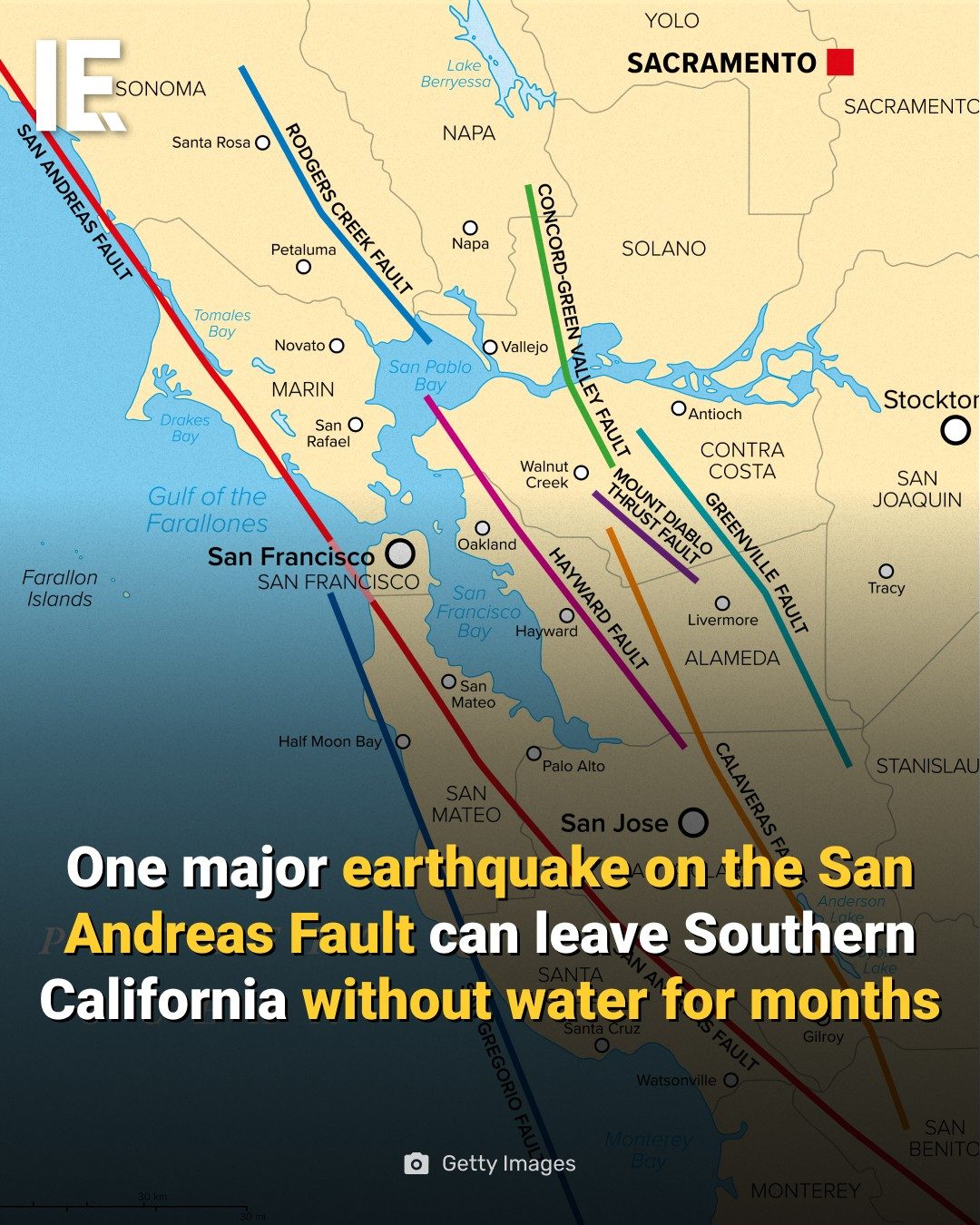
California Fault Lines and Water Infrastructure
California's intricate water infrastructure is a marvel of engineering, moving water from the wet northern regions to the arid south through a vast network of aqueducts and pipelines. However, this lifeline is at risk due to its proximity to major fault lines, notably the San Andreas Fault.
Context / Why this matters
The San Andreas Fault is one of the most significant seismic risks in California. It stretches roughly 800 miles through the state, from the Salton Sea in the south to Cape Mendocino in the north. A major earthquake along this fault could have catastrophic consequences, particularly for water infrastructure.
Water scarcity is already a pressing issue in California. The state's water supply is heavily dependent on a complex network of aqueducts and pipelines that transport water from the north to the south. This system is crucial for supporting the needs of tens of millions of people, as well as agriculture and industry. However, critical sections of this infrastructure cross directly over the San Andreas Fault, making them vulnerable to earthquakes.
Main discussion
The San Andreas Fault and Water Infrastructure
The San Andreas Fault poses a significant threat to California's water infrastructure. Critical sections of the state's aqueducts and pipelines cross directly over the fault line. In the event of a major earthquake, these crossings could be damaged or severed, cutting off water supply to millions of people in Southern California.
The most vulnerable section of the water system is the California Aqueduct, which runs alongside the San Andreas Fault for a considerable distance. This aqueduct is a vital component of the State Water Project, supplying water to over 27 million people and over 750,000 acres of farmland. A major rupture in this section of the aqueduct could have devastating effects on water supply in the region.
Potential Impact of a Major Earthquake
A major earthquake on the San Andreas Fault could leave Southern California without water for months. The American Society of Civil Engineers estimated that a major rupture could disrupt water delivery to Los Angeles for up to six months. This would have severe consequences for the region, affecting not only residential water supply but also agriculture, industry, and public health.
The map highlights key geographical features and cities, including Mount Diablo, Lake Berryessa, San Francisco, Santa Rosa, and Sacramento. These areas are all at risk from earthquakes along the fault lines.
Retrofitting and Mitigation Efforts
The vulnerability of California's water infrastructure to earthquakes has been known for decades. Some retrofitting work has been done to strengthen critical sections of the aqueducts and pipelines. However, engineers warn that the system remains dangerously exposed. Retrofitting efforts have focused on reinforcing vulnerable sections of the infrastructure, but the sheer scale of the task means that many areas remain at risk.
The San Andreas Fault is a complex and active seismic zone. The fault has produced some of the largest earthquakes in California's history, including the 1906 San Francisco earthquake, which had a magnitude of 7.9. The fault is expected to produce a major earthquake in the future, and the consequences for water infrastructure could be severe.
Historical Context and Future Risks
The problem of earthquake risk to water infrastructure has been known for decades. However, the sheer scale and complexity of the task of retrofitting the entire system mean that much work remains to be done. Engineers continue to monitor the fault lines and assess the risk to infrastructure, but the potential for a major earthquake remains a significant concern.
Practical tips
Stay Informed
Stay informed about the latest developments in earthquake preparedness and water infrastructure. Follow updates from reliable sources such as the U.S. Geological Survey (USGS) and local water authorities. Knowledge is power, and being informed can help you better prepare for potential disasters.
Prepare an Emergency Water Supply
Given the potential for water shortages, it's crucial to have an emergency water supply at home. The Federal Emergency Management Agency (FEMA) recommends storing at least one gallon of water per person per day for at least three days. This supply should be rotated regularly to ensure freshness.
Develop an Emergency Plan
Develop a family emergency plan that includes what to do in case of an earthquake. This plan should include evacuation routes, meeting points, and communication strategies. Practice the plan regularly to ensure everyone knows what to do in an emergency.
Secure Your Home
Secure your home against earthquake damage. Anchor heavy furniture to walls, secure water heaters and appliances, and strap down bookshelves and other tall furniture. These steps can help prevent injuries and property damage during an earthquake.
Know Your Local Water Sources
Familiarize yourself with local water sources and emergency water distribution points. In case of a major earthquake, these sources can be crucial for obtaining water if the main supply is disrupted.
Important takeaways
California's water infrastructure is a critical component of the state's economy and public health. However, its vulnerability to earthquakes along the San Andreas Fault poses a significant risk. Retrofitting efforts are ongoing, but much work remains to be done.
The potential impact of a major earthquake on the San Andreas Fault could be catastrophic, with the possibility of water shortages lasting for months. Staying informed, preparing an emergency water supply, developing an emergency plan, securing your home, and knowing your local water sources are all essential steps to mitigate the risks.
Conclusion
The San Andreas Fault and its potential impact on California's water infrastructure are critical issues that require ongoing attention and preparedness. By understanding the risks and taking proactive steps, we can better protect ourselves and our communities from the potential consequences of a major earthquake.
Watch the Reel
Questions readers ask
What is the main risk to California's water infrastructure?
The primary risk to California's water infrastructure is its proximity to major fault lines, especially the San Andreas Fault. A significant earthquake along this fault could cause substantial damage, such as severing critical sections of aqueducts and pipelines, leading to a potential disruption in water supply to millions of people and extensive farmlands.
How does the San Andreas Fault pose a threat to California's water infrastructure?
The San Andreas Fault poses a significant threat due to its length and seismic activity. Stretching about 800 miles, it runs through regions where critical water infrastructure is located. A major earthquake could directly impact these structures, causing severe damage or complete failure, exacerbating water scarcity issues.
What are the potential consequences of an earthquake on California's water supply?
An earthquake along the San Andreas Fault could have catastrophic consequences for California's water supply. It could disrupt or sever the aqueducts and pipelines that transport water to Southern California, leading to a significant water shortage for both urban and agricultural users. This would further strain an already limited water supply, affecting daily life and economic activities.
What makes California's water infrastructure vulnerable to earthquakes?
California's water infrastructure is vulnerable to earthquakes primarily because it runs through or near seismically active regions. Many of the aqueducts and pipelines are located close to major fault lines, making them susceptible to severe damage during a major earthquake. The intricate design and extensive network of these structures further increase the risk of widespread disruptions.
Which regions in California are most at risk due to their proximity to the San Andreas Fault?
The regions most at risk are those along or near the San Andreas Fault, which runs through the entire state, particularly areas in Southern California. These regions are heavily reliant on water transported from the northern part of the state, making them vulnerable to disruptions in the water supply due to earthquake damage to aqueducts and pipelines.
What steps can be taken to mitigate the risk to California's water infrastructure from earthquakes?
To mitigate the risk, robust earthquake engineering and retrofitting of existing infrastructure can be implemented. Regular maintenance and seismic upgrades of aqueducts and pipelines are crucial. Additionally, developing a comprehensive emergency response plan and enhancing California's earthquake preparedness can help minimize the impact of a major earthquake on the water supply.
Related deep dives
Similar reads based on topic and creator.



Recent articles
Fresh deep dives from the latest Reels we unpacked.




Comments
Be the first to comment.