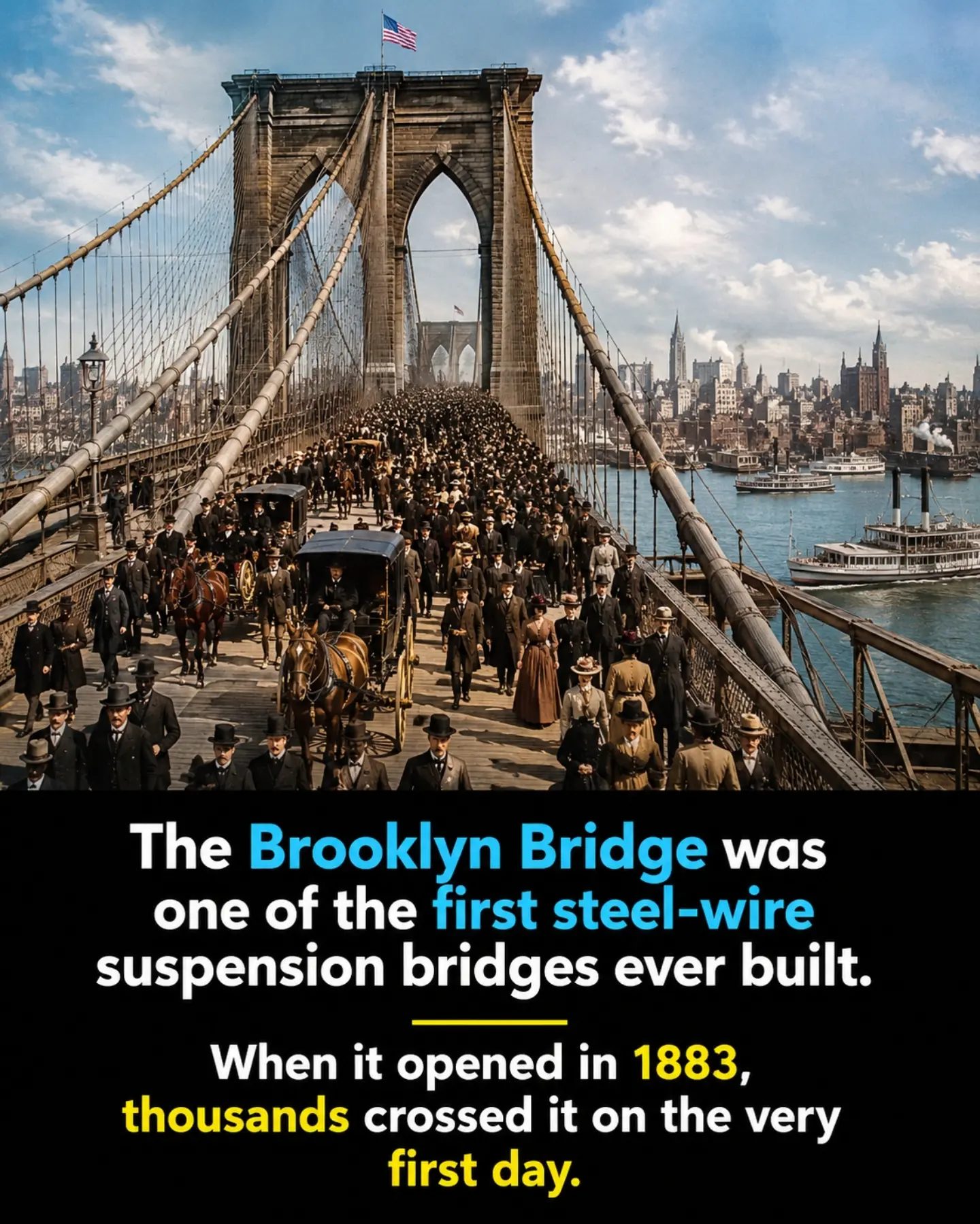
The Brooklyn Bridge: Architectural Marvel of the 19th Century
The Brooklyn Bridge, an architectural icon of 19th-century engineering, was one of the first steel-wire suspension bridges ever built. It opened in 1883, marking a monumental achievement in bridge construction technology. The significance of the Brooklyn Bridge extends beyond its engineering prowess; it played a pivotal role in connecting two major urban areas and transforming the urban landscape of New York City.
Context / Why this matters
Before the construction of the Brooklyn Bridge, the East River was a significant barrier between Manhattan and Brooklyn, making travel between the two areas cumbersome and time-consuming. The bridge not only shortened travel time but also symbolized the city's growth and ambition. Its opening in 1883 was a major event, drawing thousands of people who crossed it on the very first day, eager to experience this modern marvel.
The Construction Process
The construction of the Brooklyn Bridge began in 1869 and took fourteen years to complete. The project was led by the first chief engineer, John Augustus Roebling, who had previously designed several successful suspension bridges. Unfortunately, Roebling died in 1869 due to injuries sustained during the construction process, leaving his son, Washington Roebling, to take over as the chief engineer.
Technological Innovations
The Brooklyn Bridge introduced several technological innovations that set it apart from other bridges of the time. One of the most significant was the use of steel-wire cables, which provided greater strength and flexibility compared to the iron chains used in earlier suspension bridges.
Engineering Challenges
The construction of the Brooklyn Bridge faced numerous challenges. One of the most significant was the caisson disease, a condition caused by working in high-pressure environments, which affected many of the workers, including Washington Roebling himself. Despite these challenges, the bridge was completed and opened to the public on May 24, 1883.
The Bridge's Impact on New York City
The opening of the Brooklyn Bridge had a profound impact on New York City. It facilitated the movement of people and goods between Manhattan and Brooklyn, which were then separate cities. The bridge became a vital link, reducing travel times and fostering economic growth.
Urban Development
The bridge's opening led to rapid urban development on both sides of the East River. Areas that were once sparsely populated became bustling neighborhoods, attracting businesses and residents. The bridge also played a crucial role in the eventual consolidation of Brooklyn and New York City in 1898.
Cultural Significance
Beyond its practical benefits, the Brooklyn Bridge has become a cultural icon, representing the city's resilience and innovation. It has been featured in countless films, television shows, and works of art, cementing its place in the collective imagination of New Yorkers and visitors alike.
Practical Tips for Visiting the Brooklyn Bridge
For those planning to visit the Brooklyn Bridge, there are several practical tips to enhance the experience:
-
Best Times to Visit: The best times to visit the bridge are early morning or late evening. During these times, the crowds are smaller, and the lighting is particularly beautiful, especially during sunset.
-
Walking the Bridge: Walking across the bridge is a spectacular experience. The pedestrian walkway offers stunning views of the Manhattan skyline and the East River. Be prepared for stairs and elevation changes.
-
Biking: Biking across the bridge is also a popular option. There are bike lanes on both sides of the bridge, providing a scenic and invigorating ride.
-
Public Transportation: The bridge is easily accessible via public transportation. The closest subway stations are City Hall and Chambers Street in Manhattan, and Brooklyn Bridge-City Hall and High Street in Brooklyn.
-
Nearby Attractions: After crossing the bridge, visitors can explore nearby attractions such as the Brooklyn Bridge Park, the Statue of Liberty, and the One World Observatory.
Important Takeaways
The Brooklyn Bridge stands as a testament to the engineering and architectural advancements of the 19th century. Its construction was a monumental task, fraught with challenges and setbacks, yet it culminated in a structure that has stood the test of time. The bridge's impact on New York City's development and its enduring cultural significance make it a must-visit landmark.
Conclusion
The Brooklyn Bridge has rightly earned its place as an iconic symbol of New York City. From its groundbreaking design and construction to its enduring impact on the city's growth and development, the bridge continues to captivate visitors with its grandeur and historical significance. Whether you're a history buff, an architecture enthusiast, or simply someone looking to experience a piece of New York's rich heritage, the Brooklyn Bridge is a destination that offers a unique and unforgettable experience.
Watch the Reel
Questions readers ask
What was the significance of the Brooklyn Bridge's opening in 1883 for New York City?
The opening of the Brooklyn Bridge in 1883 was a turning point for New York City as it connected Manhattan and Brooklyn, reducing travel time and fostering urban development. It also stood as a testament to the city's growing infrastructure and ambition. Furthermore, it marked a significant advancement in 19th-century engineering.
How did the Brooklyn Bridge impact travel between Manhattan and Brooklyn in the 19th century?
Before the bridge, the East River posed a significant obstacle, making travel between the two boroughs difficult and time-consuming. The opening of the Brooklyn Bridge drastically shortened travel times, making it easier and quicker for people to cross between Manhattan and Brooklyn.
What engineering innovations was the Brooklyn Bridge known for in the 19th century?
The Brooklyn Bridge was renowned for being one of the first steel-wire suspension bridges ever constructed. This innovative design allowed it to span a longer distance and support heavier loads than previous bridge designs, showcasing a monumental achievement in bridge construction technology.
Were there any notable events on the Brooklyn Bridge's opening day in 1883?
The opening day of the Brooklyn Bridge in 1883 was marked by a celebratory atmosphere, with thousands of people participating in the first crossing. The event highlighted the bridge's importance in uniting the two boroughs and kickstarted a new era of urban connectivity and development across New York City.
What kinds of historical images or photos can be found from the 1883 opening of the Brooklyn Bridge?
Vintage photos and historical images from the 1883 opening of the Brooklyn Bridge often depict large crowds gathered for the event, as well as detailed views of the bridge's architectural marvels. These images provide a vivid glimpse into the historical significance and the festivities surrounding the bridge's inauguration.
How did the opening of the Brooklyn Bridge contribute to the growth of New York City during the 19th century?
The opening of the Brooklyn Bridge facilitated greater integration and mobility between Manhattan and Brooklyn, encouraging population growth, commercial activity, and residential development. It also spurred further infrastructure projects, making New York City more cohesive and dynamic.
What was the first crossing of the Brooklyn Bridge like in 1883?
The first crossing of the Brooklyn Bridge was a momentous event that attracted a large number of pedestrians, many of whom walked across the bridge to experience this new connection between Manhattan and Brooklyn. The scene was filled with excitement and a sense of unity, marking the beginning of a new chapter for the city.
Related deep dives
Similar reads based on topic and creator.




Recent articles
Fresh deep dives from the latest Reels we unpacked.




Comments
Be the first to comment.