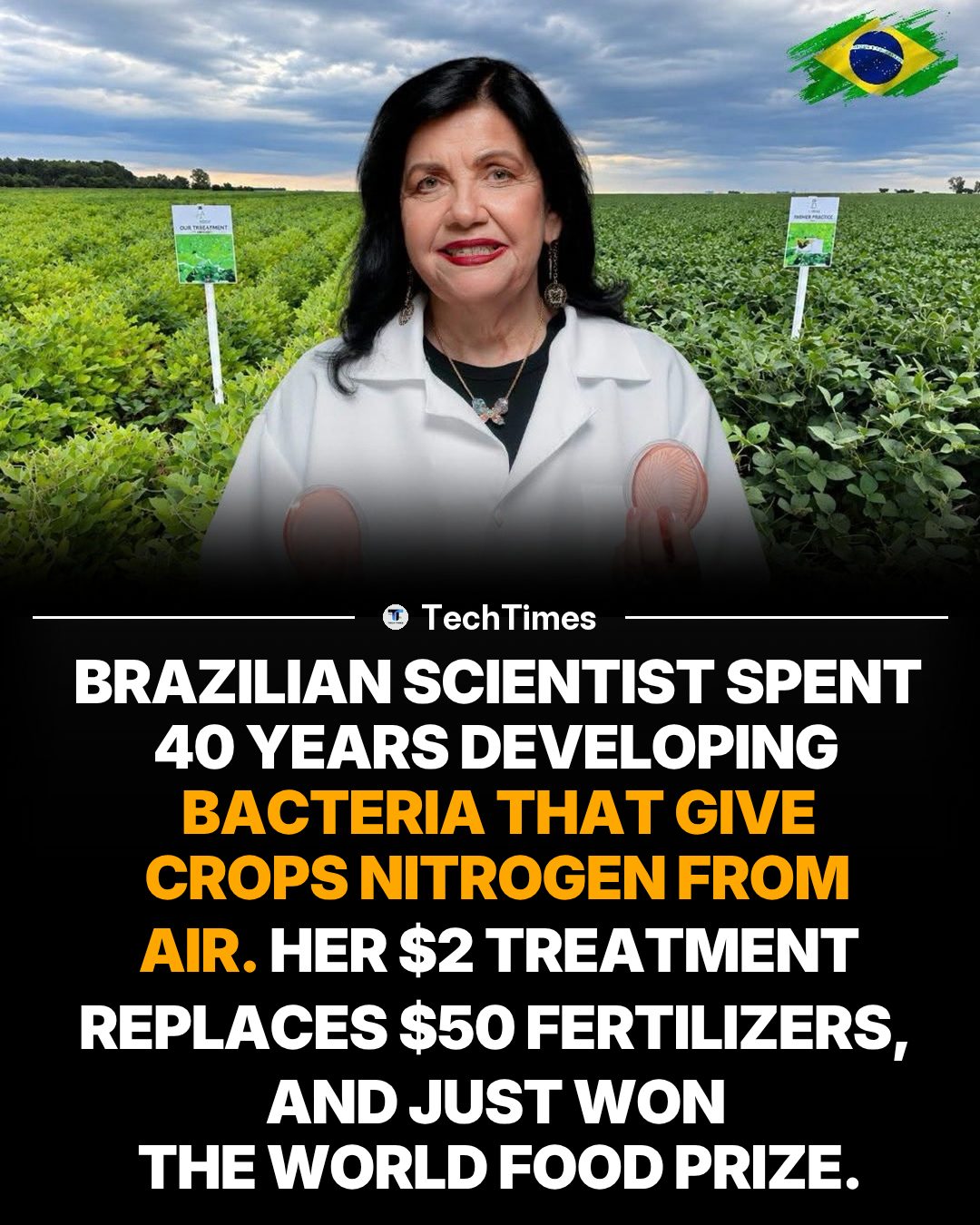
Brazil's pioneered a method of providing nitrogen to crops with a bacteria it developed and produced using sustainable practices. It replaces synthetic fertilizers and is valued at just $2. The breakthrough comes amidst a worldwide agricultural crisis.
The $2 Nitrogen Fix
Brazilian scientist vivian has created a bacteria which fixes nitrogen in crops. The nitrogen-fixing bacteria, dubbed Merino bacteria, transfers nitrogen from the air to the crops replacing nitrogen fertilizers. This process reduces the need for artificial fertilizers. The nitrogen-fixing bacteria is cultivated in a lab setting. The bacteria is developed in a lab which is then added to the crops. Vivian has spent 40 years developing the bacterial strain. The bacteria has been designed to colonize the root of crops. This ensures that crops are supplied with a constant supply of nitrogen. What's the bottom line of this cost-saving bacteria? The cost of the nitrogen-fixing bacteria for crops is said to be $2. The current cost of nitrogen fertilizers is $50. This reduces the cost substantially. This breakthrough by a Brazilian scientist does not come as a surprise. Brazil has been named among the world's most innovative countries in 2022. Furthermore, Turkey has also grown rapidly in the field of innovation. This has been noted by the World Intellectual Property Organization. Recently, Brazilian scientists have been awarded the World Food Prize. The remedy is designed to address world hunger. The bacterial strain is developed in the lab and is ready for release.
How Brazil's Nitrogen Fix Fits in the Food Crisis
The nitrogen-fixing bacteria that the Brazilian scientist has developed comes at a timely note. Global agricultural yields could drop by 20% by the end of the decade. This is due to climate change. This makes it critical to find new ways to grow crops under harsh conditions. This nitrogen-fixing bacteria might have the potential to help solve the climate crisis. This is because agricultural crops, especially grains, are affected by climate change. A variety of crops could benefit from the treatment. Climate change is anticipated to push more than 100 million people into severe poverty. More than 100 million people are at the brink of destitution due to climate change. Global agricultural yields could drop by 20% by the end of the decade. This is due to climate change. This can have a range of severe implications for people worldwide. The bacterial strain that Vivian has developed is the perfect solution to this problem.
Crop Care: They Are All Secret
There have been concerns raised as to how the bacteria work. Vivian has spent 40 years developing the bacterial strain. This makes it a well-guarded trade secret. This is crucial for the successful application of the treatment. The bacterial strain is designed to be affordable and accessible. The Brazilian scientist has developed the bacteria in a lab which is then applied to the crops. This makes it easy to source. The bacteria are also safe for short-term and long-term use. For this reason, the bacterial strains have been patented. This will ensure that the nitrogen in the crops is evenly distributed. The patents are further designed to improve the nitrogen content in the crops. The nitrogen content in the crops is the most crucial factor for their successful growth.
How Does Brazil's New Bacteria Work?
The bacteria work on a number of crops. The nitrogen-fixing bacteria is grown in the lab. This cultivation method ensures that the bacteria are sterile. The bacteria are then applied to the crops. The bacteria are sprayed over the crops. This increases the nitrogen content in the crops. The bacteria are designed to colonize the roots of crops. This ensures a steady supply of nitrogen.
What crops does the nitrogen-fixing bacteria work on
The bacteria works on a variety of crops. The crops that the bacteria work on are soybeans, maize, and wheat. The bacteria increases the nitrogen content in the crops. The nitrogen content in the crops is increased through the plant's roots. The bacteria are capable of increasing nitrogen content in crops.
The World Food Prize
The World Food Prize is a prestigious award. The purpose of the World Food Prize is to honor individuals. They have made significant contributions to improving the quality, quantity, or availability of food. The World Food Prize is designed in a manner that it is awarded to individuals who have made contributions to improving the quantity, quality, or availability of food. This year, the World Food Prize was awarded to Vivian. This is in keeping with the theme. Vivian has developed a bacteria that works. The bacteria increases the nitrogen content in the crops. The increased nitrogen ensures that the crops are upscaled and grown on a larger scale. Vivian has won the World Food Prize for her contribution to the field of agriculture.
For Crop Farmers: A Step-by-Step Guide
- Application: The nitrogen-fixing bacteria can be applied to a variety of crops. The bacteria can be applied to a variety of crops. This makes it easy to treat a variety of crops. This breaks the cycle of using harmful fertilizers. The cycle of using fertilizers in crops is replaced by bacteria.
- Called Bacteria: The nitrogen-fixing bacteria is called Merino. The bacteria are designed to colonize the roots of crops. This ensures a steady nitrogen supply. This ensures a steady supply of nitrogen to the crops. The bacteria are also designed for long-term use. This prolongs the effect of the treatment.
- Patented: The bacteria have been patented for use in a variety of crops. The bacteria have been designed to be safe for long-term use. The bacteria are safe for long-term use. The bacterium is safe for long-term use. The bacteria are safe for short-term use. The bacteria are also effective for short-term use. There is a cementing change in the next step of agricultural practices. These bacteria can help make the farming process more effective and sustainable. The bacteria can revolutionize the agricultural sector. The bacteria that has been developed can revolutionize the agricultural sector. The bacteria have the potential to revolutionize the agricultural sector. Vivian has developed a bacterium that can revolutionize agriculture. Vivian has developed a bacterium that can provide a solution to global food security. Vivian has developed a bacterium that can revolutionize the agricultural sector. The bacteria can be a game changer. The bacteria can be a turning point in agricultural practices.
Watch the Reel
Questions readers ask
How exactly does the nitrogen-fixing bacteria work?
The Merino bacteria, developed by Brazilian scientist Vivian, takes nitrogen from the air and transfers it to crops. This process mimics what certain plants like legumes do naturally, but it has been engineered to work with a broader range of crops. The bacteria is applied to the roots of plants, ensuring a constant nitrogen supply.
Why is this bacteria so much cheaper than synthetic fertilizers?
The cost difference is substantial because the bacteria is cultivated in a lab and then applied to crops, which is far less resource-intensive than the industrial processes used to produce synthetic fertilizers. Additionally, the bacteria is designed to be self-sustaining once it's established in the crop's root system, reducing the need for repeated applications.
How does this discovery fit into the current global food crisis?
This discovery is particularly timely given that global agricultural yields are projected to drop by 20% in the next decade due to climate change. The nitrogen-fixing bacteria could help crops grow more efficiently under harsh conditions, potentially mitigating some of the impacts of climate change on food production.
Can farmers anywhere access this technology, or is it limited to Brazil?
The article doesn't specify the availability outside of Brazil, but it mentions that the bacteria is designed to be affordable and accessible. Given Brazil's history of innovation and the global significance of the discovery, it's likely that there will be efforts to make it widely available, but details on international distribution aren't provided.
What kind of crops can benefit from this bacteria?
While the article doesn't list specific crops, it mentions that a variety of crops could benefit from the treatment. This suggests that the bacteria is not limited to certain types of plants and could potentially be used in a wide range of agricultural applications.
How does the patenting of the bacterial strain affect its use?
Patenting ensures that the bacteria's unique properties are protected, which can help maintain its quality and effectiveness. It also suggests that there might be controlled distribution to ensure even application and to prevent misuse. However, patenting could potentially limit access for some farmers, depending on licensing agreements.
Recent articles
Fresh deep dives from the latest Reels we unpacked.




Comments
Be the first to comment.