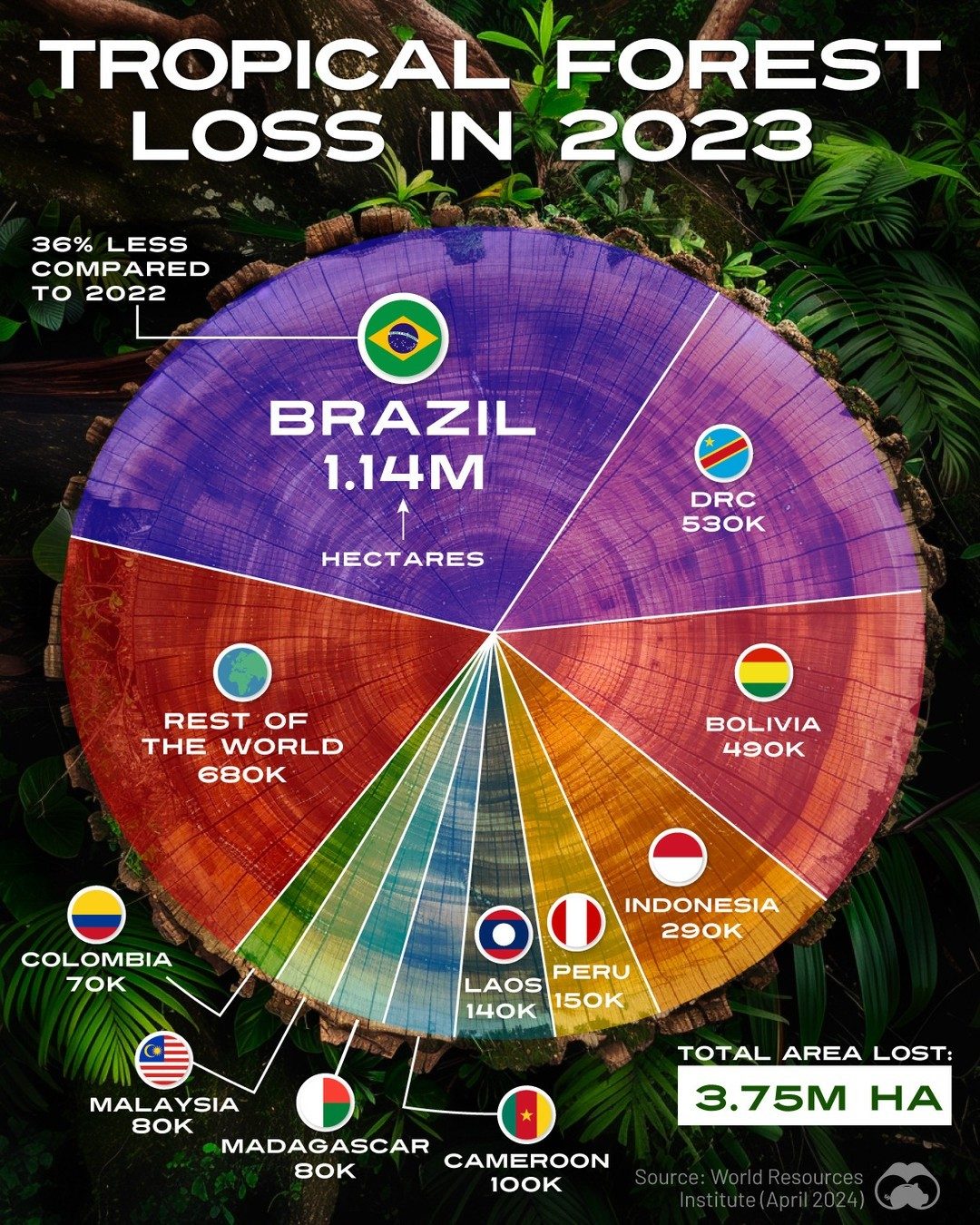
Tropical Forest Loss in 2023
Tropical forests are vital for maintaining biodiversity, regulating climate, and supporting human livelihoods. Understanding the current levels of deforestation is crucial, especially with the global goal of reversing deforestation by 2030 set by 145 countries. In 2023, the world took an encouraging step by reducing tropical forest loss by 36% compared to 2022. This significant reduction, however, does not mean the path to achieving the 2030 goal is assured. The total area lost in 2023 was 3.75 million hectares, emphasizing the ongoing challenge.
Why This Matters
Deforestation not only impacts local ecosystems but also has global repercussions, including changes in weather patterns, loss of biodiversity, and increased carbon emissions. Tropical forests act as the lungs of the Earth, absorbing significant amounts of carbon dioxide. The destruction of these forests contributes to climate change, making deforestation a critical issue that affects us all. Understanding the countries most affected and the scale of the problem can help in targeting efforts more effectively.
Main Discussion
Tropical Forest Loss by Country
Brazil, Colombia, and the Democratic Republic of Congo (DRC) are the top three countries contributing to the forest loss in 2023. Brazil lost the largest area, at 1.14 million hectares, despite the significant reduction in forest loss. Other countries with substantial losses include:
- Colombia: 680,000 hectares
- DRC: 530,000 hectares
- Bolivia: 490,000 hectares
- Indonesia: 290,000 hectares
These countries, along with others like Malaysia, Madagascar, Cameroon, Laos, and Peru, collectively account for the significant area of tropical forest lost in 2023.
Significant Reductions
The 36% reduction in forest loss is a notable achievement, primarily driven by efforts in Brazil. Brazil's success in reducing deforestation highlights the potential for other countries to follow suit with targeted policies and enforcement. The reduction in Brazil can be attributed to stricter environmental regulations, increased monitoring, and better protection of indigenous lands, which are often under threat from deforestation.
Global Efforts and Challenges
While the reduction in forest loss is encouraging, the world still faces an uphill battle. The total area lost in 2023, 3.75 million hectares, underscores the scale of the problem. The global community has set a target to reverse deforestation by 2030, but achieving this will require sustained and intensified efforts. Countries need to implement and enforce strong environmental policies, protect indigenous lands, and promote sustainable development practices.
The Role of International Cooperation
International cooperation is essential in tackling deforestation. Efforts like the Paris Agreement and the New York Declaration on Forests provide frameworks for global cooperation. These initiatives emphasize the importance of joint efforts to protect forests and mitigate climate change. However, translating these agreements into concrete actions requires continuous monitoring, accountability, and support for countries facing significant challenges.
Practical Tips
For Governments
- Implement Strict Policies: Enforce stringent environmental regulations and penalties for deforestation.
- Protected Areas: Establish and protect more areas, especially those with high biodiversity.
- Indigenous Rights: Recognize and protect the rights of indigenous communities who are often the best guardians of the forest.
For Individuals
- Sustainable Consumption: Choose products that are sustainably sourced.
- Support Conservation Efforts: Contribute to organizations working to protect forests.
- Reduce Carbon Footprint: Minimize activities that contribute to carbon emissions, such as reducing vehicle use and energy consumption.
For Businesses
- Sustainable Practices: Adopt sustainable supply chain practices and ensure that products do not contribute to deforestation.
- Certifications: Seek certifications like the Forest Stewardship Council (FSC) to ensure sustainable practices.
- Corporate Social Responsibility (CSR): Invest in reforestation and conservation projects as part of CSR initiatives.
Important Takeaways
Deforestation is a complex issue that requires a multi-faceted approach. The progress made in 2023, particularly in Brazil, shows that significant reductions are possible with the right policies and enforcement. However, the global challenge remains daunting, with 3.75 million hectares lost in 2023. International cooperation, strict policies, and individual and corporate responsibility are crucial in achieving the 2030 target.
Conclusion
Tropical forest loss in 2023 highlights both the progress made and the significant challenges that lie ahead. The 36% reduction in forest loss is a positive step, but the 3.75 million hectares lost underscore the ongoing threat. With the global goal of reversing deforestation by 2030, concerted efforts from governments, individuals, and businesses are essential. By working together, we can protect these vital ecosystems and mitigate the impacts of climate change.
Watch the Reel
Questions readers ask
What does the 36% reduction in tropical forest loss in 2023 mean for global deforestation efforts?
The 36% reduction in tropical forest loss from 2022 to 2023 indicates a positive shift in global deforestation trends. However, it also highlights the substantial work remaining to meet the 2030 deforestation reversal goal, as 3.75 million hectares were still lost in 2023.
What specific measures contributed to Brazil's significant reduction in tropical forest loss in 2023?
Brazil's success in reducing deforestation can be attributed to enhanced enforcement of environmental regulations, increased surveillance, and strengthened partnerships between government agencies and local communities.
How does Brazil's 2023 deforestation performance compare to other countries like Indonesia?
Brazil's 36% reduction in deforestation sets a positive example for other countries. While Indonesia also has seen improvements, Brazil's progress is notable, especially given its historical challenges with deforestation.
Why is it important to track the total area of tropical forest lost each year?
Tracking the total area of tropical forest lost is crucial for assessing progress towards the 2030 deforestation reversal goal. This data helps policymakers understand the effectiveness of current strategies and make informed decisions about future conservation efforts.
What are some key strategies for reducing tropical forest loss, as demonstrated by Brazil's success in 2023?
Effective strategies include strengthening law enforcement, using advanced monitoring technologies, engaging local communities in conservation efforts, and promoting sustainable agriculture practices. These methods have shown promise in reducing deforestation rates.
What are the broader impacts of tropical forest loss beyond local ecosystems?
Tropical forest loss has global repercussions, including changes in weather patterns, loss of biodiversity, and increased carbon emissions. These factors collectively contribute to climate change and environmental degradation on a global scale.
How can the success of deforestation reduction strategies in Brazil be replicated in other parts of the world?
By sharing best practices, providing international support, and fostering collaboration between countries, the successful strategies implemented in Brazil can serve as a model for other regions facing similar challenges with deforestation.
Related deep dives
Similar reads based on topic and creator.


Recent articles
Fresh deep dives from the latest Reels we unpacked.




Comments
Be the first to comment.