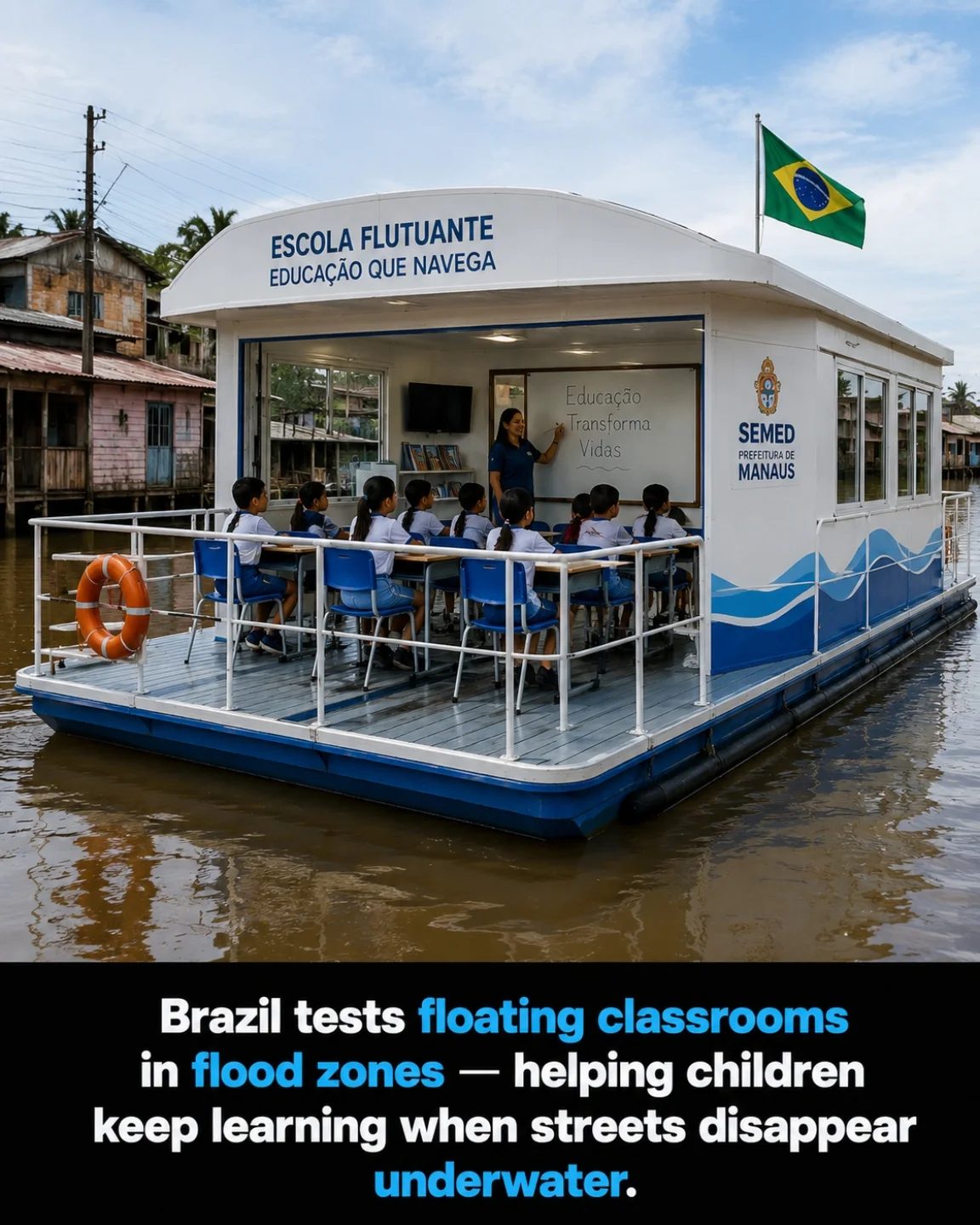
Floating Classrooms in Brazil: An Innovative Solution for Flood-Prone Areas
In the heart of the Amazon, amidst the waters that surround Manaus, there exists a unique educational solution: the floating classroom. Designed to overcome the challenges of flood-prone areas, these classroom boats ensure that children can continue their learning journey even when streets are underwater.
Why This Matters
Flooding is a recurring problem in many parts of the world, and Brazil's Amazon region is no exception. When streets are submerged, traditional schools often become inaccessible, disrupting the education of thousands of children. The floating classroom model bridges this gap, ensuring continuity in education despite environmental challenges. This model is particularly relevant in regions where infrastructure development lags behind, making it a vital innovation for communities facing similar issues.
The Floating Classroom Model
Design and Structure
Floating classrooms are essentially boats equipped with classrooms. They are designed to navigate through flooded areas, providing a stable learning environment. The classrooms are equipped with desks, chairs, and educational materials, much like any other school. The key difference is their mobility and adaptability to different water levels.
The ESCOLA FLUTUANTE EDUCAÇÃO QUE NAVEGA
One of the most notable examples is the ESCOLA FLUTUANTE EDUCAÇÃO QUE NAVEGA, which translates to "Floating School Education That Navigates." This initiative in Brazil showcases how floating classrooms can be effectively integrated into the educational system. The floating school serves as a beacon of hope for children in flood-affected areas, providing them with the opportunity to learn and grow in a stable environment despite the surrounding chaos.
Educational Benefits
Floating classrooms offer more than just a physical space for learning. They bring a sense of normalcy to children's lives amidst the disruption caused by floods. By continuing their education, these children can maintain a routine and focus on their future, which is crucial for their overall development. The stability of having a regular school environment can also have a positive impact on their mental health and overall well-being.
Practical Tips for Implementing Floating Classrooms
Implementing a floating classroom program requires careful planning and consideration of various factors. Here are some practical tips for those looking to initiate a similar project:
Community Engagement
Engaging with the local community is crucial. Understanding their needs, challenges, and expectations can help tailor the program to be more effective. Community involvement can also ensure that the program is sustainable and well-received.
Funding and Resources
Securing funding and resources is another key aspect. Partnerships with local and international organizations can provide the necessary financial support. Additionally, collaborating with educational institutions can help in resource management and curriculum development.
Logistical Planning
Logistical planning is essential for the smooth operation of floating classrooms. This includes ensuring the availability of boats, safety measures, and the transportation of educational materials. Regular maintenance of the boats and classrooms is also necessary to keep them functional.
Teacher Training
Teachers play a pivotal role in the success of floating classrooms. Training programs should be conducted to equip teachers with the skills needed to teach in a unique environment. This includes handling the challenges posed by the water-based classroom and ensuring the safety of students.
Important Takeaways
Floating classrooms represent a groundbreaking solution to the challenges of providing education in flood-prone areas. They are more than just a physical space for learning; they are a symbol of resilience and continuity in the face of natural disasters.
By providing a stable learning environment, floating classrooms ensure that children can continue their education without interruption. This not only helps in their academic development but also supports their emotional well-being and future prospects.
Conclusion
Innovative solutions like floating classrooms in Brazil demonstrate the power of adaptability and resilience in the face of environmental challenges. By embracing such models, we can ensure that education remains a priority, even in the most challenging circumstances. As we look to the future, it is essential to continue exploring and implementing such creative solutions to bridge the gaps in education and provide opportunities for growth and development to all children.
Watch the Reel
Questions readers ask
How do floating classrooms in Brazil help students during flood season?
Floating classrooms in Brazil provide a mobile learning environment that allows students to continue their studies even when traditional schools are inaccessible due to flooding. These boats are equipped with necessary resources to ensure a stable and uninterrupted learning experience during floods.
Where are these floating classrooms primarily located?
These floating classrooms are primarily located in the Amazon region of Brazil, particularly around Manaus, where flooding is a recurring issue. These areas are characterized by their unique environmental challenges, making floating classrooms an essential solution for children in the region.
What makes floating classrooms an innovative solution for flood-prone areas?
These floating classrooms are innovative because they adapt to the environmental challenges posed by flooding. By bringing the classroom to the students, these boats ensure that learning can continue despite the disruption caused by submerged streets and inaccessible schools.
How do students benefit from learning on boats in the Amazon?
Students benefit from learning on boats in the Amazon as it provides them with a consistent learning environment during flood seasons. This innovative solution ensures that students do not miss out on their studies, thus maintaining academic progress and fostering a sense of normalcy in challenging conditions.
Are there videos showcasing the floating classrooms in Brazil?
Yes, there are videos available that provide a visual understanding of the floating classrooms and their impact on the community. These videos showcase the design and functionality of the boats, as well as the experiences of the students and teachers, offering a clearer picture of how these innovative solutions work in practice.
How do the boats navigate through flooded areas to reach students?
The boats are designed to navigate through flooded areas by utilizing shallow draft and sturdy construction. They are equipped with engines that can handle the challenging water conditions, ensuring that they can reach students safely and efficiently, even when traditional transportation is not possible.
What are the essential resources provided in the Brazilian floating classrooms?
The floating classrooms in Brazil are equipped with basic supplies, such as textbooks, notebooks, and other learning materials. Some boats also have essential amenities like desks, chairs, and even basic sanitation facilities, ensuring that students have a conducive environment for learning despite the surrounding floods.
Related deep dives
Similar reads based on topic and creator.




Recent articles
Fresh deep dives from the latest Reels we unpacked.




Comments
Be the first to comment.