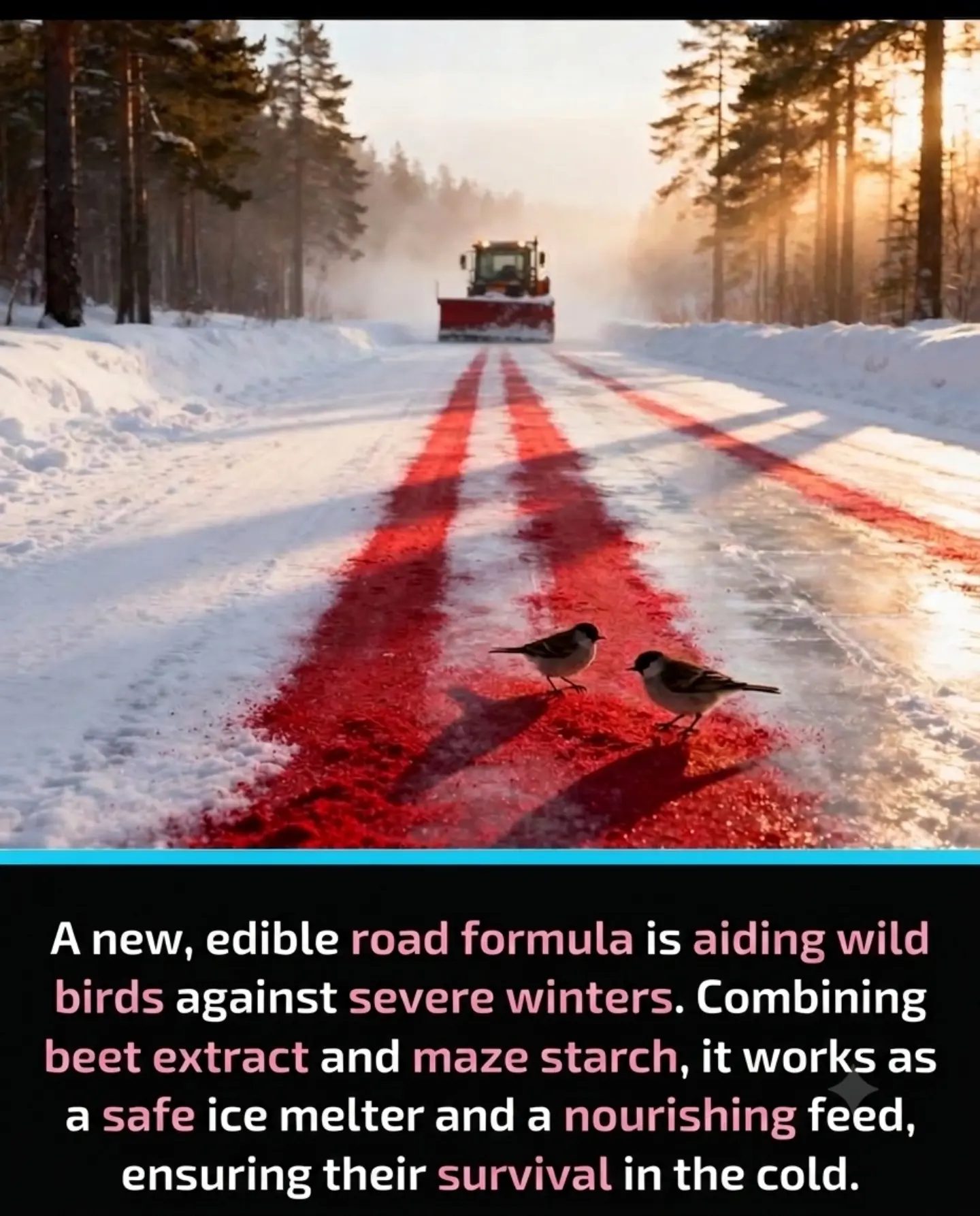
Bird-Friendly Ice Melt
Birds face significant challenges during winter, particularly in regions with heavy snowfall. Traditional road de-icing methods, such as salt, pose risks to wildlife, but innovative solutions are emerging to create safer, more eco-friendly alternatives. One such innovation is a new edible road formula designed to aid wild birds during severe winters.
Context / Why This Matters
Innovative winter road maintenance is crucial for both public safety and environmental sustainability. Traditional de-icing methods, which often involve salt, can cause significant harm to both the environment and wildlife. Birds, in particular, are at risk from ingesting road salt, which can be toxic to them. The new edible road formula offers a promising solution to these challenges by combining functionality and environmental safety.
The Role of Beet Extract and Maize Starch
The new edible road formula is made from beet extract and maize starch. This combination serves a dual purpose: it acts as a safe ice melter and a nourishing feed for wild birds. Beet extract, particularly sugar beet juice, has been used in winter road maintenance for its ability to lower the freezing point of water, making it an effective de-icer. When mixed with brine, the sugar in beet extract helps the salt stick to the ice, enhancing its de-icing capabilities.
Beet Extract and Maize Starch in De-Icing
Beet extract, particularly beet molasses, is a key component in the new edible road formula. Cities often mix beet molasses with brine because the sugar in beet extract lowers the freezing point of water, making it an effective de-icer. This mixture helps the salt stick to the ice, improving its overall effectiveness. While using beet juice in de-icing reduces the amount of salt needed, regular road salt remains dangerous to birds if ingested, and encouraging wildlife to eat in the middle of active traffic can be a safety concern.
Environmental and Wildlife Benefits
The use of beet extract and maize starch in de-icing offers several environmental and wildlife benefits. Firstly, it reduces the amount of traditional salt used on roads, which can contaminate soil and waterways. This not only protects the ecosystem but also ensures that birds have a safer and more nutritious food source during winter. Secondly, the formula provides birds with a nourishing feed, helping them survive the harsh winter conditions.
Practical Tips for Eco-Friendly Winter Road Maintenance
When considering eco-friendly winter road solutions, keep the following tips in mind:
Incorporate Safe, Natural Ingredients
Incorporating natural, non-toxic ingredients like beet extract and maize starch can improve the safety and sustainability of your de-icing methods. These ingredients not only act as effective de-icers but also provide additional benefits to wildlife.
Reduce Salt Usage
Reducing the amount of salt used in de-icing is essential for protecting the environment and wildlife. By incorporating beet extract, you can lower the freezing point of water and enhance the effectiveness of the salt, thereby reducing the overall amount needed.
Encourage Wildlife-Friendly Practices
Practices that encourage wildlife to come close to active traffic areas can be harmful. Instead, focus on methods that provide benefits to wildlife without endangering them. For example, spreading the edible de-icing formula in areas where birds can forage safely, away from traffic, can be a beneficial practice.
Important Takeaways
Using beet extract and maize starch in de-icing offers a novel and effective solution to the challenges posed by traditional de-icing methods. This innovative approach not only helps maintain safe road conditions but also provides a nourishing feed for wild birds, thereby protecting both the environment and wildlife.
Conclusion
The development of an edible road formula made from beet extract and maize starch represents a significant advancement in eco-friendly winter road maintenance. By incorporating natural, non-toxic ingredients, reducing salt usage, and promoting wildlife-friendly practices, we can create a safer and more sustainable approach to de-icing. This new formula offers a promising solution to the challenges posed by traditional de-icing methods, benefiting both the environment and wildlife.
Watch the Reel
Questions readers ask
What makes the new ice melt bird-friendly?
The new ice melt is bird-friendly because it is made from edible ingredients: beet extract and maize starch. These components are non-toxic to birds, unlike traditional road salt, which can be harmful if ingested by wildlife.
How does the beet extract and maize starch ice melt compare to traditional salt for winter road safety?
The beet extract and maize starch ice melt provides a safer, eco-friendly alternative to traditional road salt. It effectively lowers the freezing point of water, helping to melt ice and snow on roads, while also being safe for birds and the environment.
Why is it important to consider birds when choosing an ice melt?
Birds in snowy regions can ingest road salt, which can be toxic and deadly. By choosing a bird-friendly ice melt, we can help protect local bird populations and support their survival during harsh winters.
Can the new ice melt be used in all winter weather conditions?
The beet extract and maize starch ice melt is designed to be effective in a range of winter weather conditions. It works to melt ice and snow on roads, providing better traction and improving winter road safety, much like traditional salt, but with added benefits for birds and the environment.
Is the new ice melt more expensive than traditional salt?
The cost of the new ice melt may be higher than traditional salt initially, but it's important to consider the long-term benefits. By investing in a bird-friendly, eco-friendly de-icer, you are contributing to the protection of local bird populations and promoting environmental sustainability.
How can I advocate for the use of bird-friendly ice melt in my community?
To advocate for the use of bird-friendly ice melt in your community, you can reach out to local authorities and road maintenance departments. Share information about the benefits of the beet extract and maize starch ice melt, and encourage them to consider switching to this eco-friendly and bird-safe de-icing method.
What are the environmental benefits of using the new ice melt?
The new ice melt made from beet extract and maize starch offers several environmental benefits. It is biodegradable, non-toxic, and does not pose the same risks to soil and water sources as traditional road salt. Additionally, it helps to protect local bird populations, promoting a healthier and more sustainable ecosystem.
Related deep dives
Similar reads based on topic and creator.




Recent articles
Fresh deep dives from the latest Reels we unpacked.




Comments
Be the first to comment.