Urban Wildlife Shelters
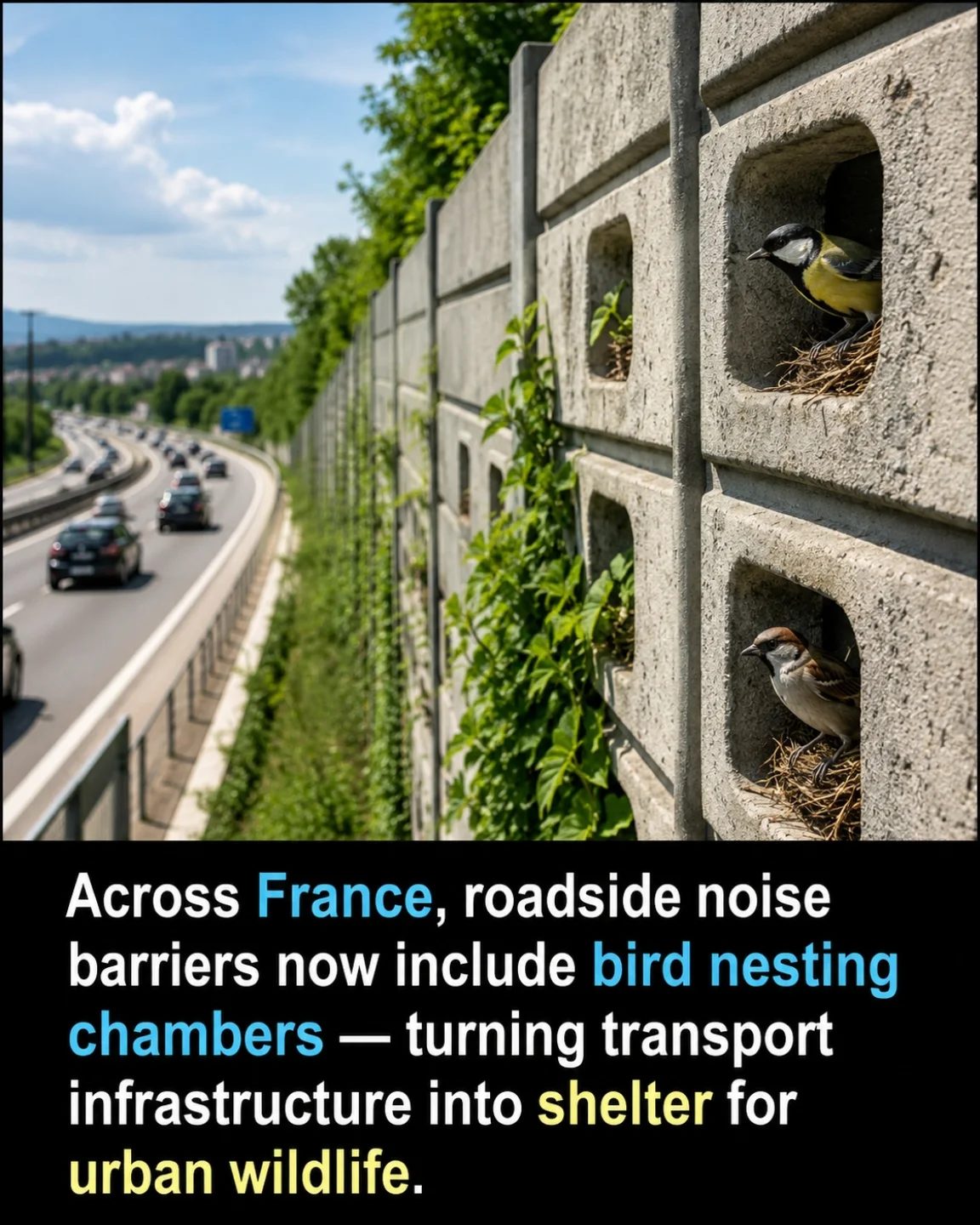
Across France, roadside noise barriers are being repurposed to support urban wildlife. This innovative approach transforms the infrastructure along busy highways into sheltered habitats for birds. The integration of bird nesting chambers into these barriers showcases a clever way to make use of existing infrastructure, while also supporting biodiversity.
Context / Why this matters
Urban areas often present significant challenges for wildlife, including habitat loss and increased noise pollution. Traditional roadside noise barriers, while useful for reducing sound levels for nearby residents, can also create barriers for wildlife movement and habitat. However, by incorporating nesting chambers into these structures, France is finding a way to mitigate some of the negative impacts of urban development. This initiative not only helps to preserve local bird populations but also demonstrates a commitment to sustainable and environmentally conscious infrastructure design.
Main discussion
The Design and Function of Bird Nesting Chambers
The bird nesting chambers integrated into the roadside noise barriers are designed to provide safe and protected spaces for birds to build their nests and raise their young. These chambers are typically small, enclosed boxes that mimic the natural cavities birds seek out in trees and other structures. The design ensures that the birds have a secure and sheltered environment, protected from predators and the elements.
Benefits for Urban Wildlife
The presence of these nesting chambers along busy highways offers several benefits for urban wildlife. Firstly, it provides additional nesting sites, which can be scarce in urban environments due to the lack of natural habitats. Secondly, the chambers help to mitigate the negative impacts of noise pollution, which can disrupt bird communication and behavior.
Successful Implementation in France
France's approach to integrating bird nesting chambers into roadside noise barriers has proven to be successful. The initiative showcases how existing infrastructure can be adapted to support urban wildlife, without significantly increasing costs or altering the primary function of the infrastructure. This model can serve as an example for other cities and countries looking to integrate wildlife-friendly design into their urban planning.
Practical tips
For Urban Planners and Engineers
Urban planners and engineers can take several steps to incorporate wildlife-friendly design into their projects. Firstly, consider the needs of local wildlife when designing new infrastructure. Secondly, look for opportunities to repurpose existing infrastructure, such as noise barriers, to support wildlife. Finally, collaborate with local wildlife organizations and experts to ensure that the design meets the needs of local species.
For Wildlife Enthusiasts
Wildlife enthusiasts can help support these initiatives by raising awareness and advocating for wildlife-friendly design in their communities. They can also volunteer with local wildlife organizations to help monitor and maintain nesting chambers and other wildlife habitats.
For Developers
Development projects can often be seen as disruptive to wildlife and the environment, but there are many ways to mitigate these impacts. Incorporating wildlife-friendly design elements, such as bird nesting chambers, can help to offset the negative impacts of development on wildlife. Moreover, these features can also enhance the aesthetic value of the project, making it more attractive to residents and visitors.
Important takeaways
The integration of bird nesting chambers into roadside noise barriers in France demonstrates a practical and effective way to support urban wildlife. This initiative highlights the importance of considering wildlife needs in urban planning and infrastructure design. By repurposing existing infrastructure to support wildlife, cities can help to mitigate the negative impacts of urban development on local ecosystems.
Conclusion
Transforming roadside noise barriers into wildlife shelters is a creative and effective solution for supporting urban wildlife. This approach not only provides additional nesting sites for birds but also helps to mitigate the negative impacts of urban development on local ecosystems. By incorporating wildlife-friendly design into infrastructure projects, cities can help to preserve biodiversity and create more sustainable and environmentally conscious urban environments.
Watch the Reel
Questions readers ask
What are bird-friendly roadside barriers and where can they be found?
Bird-friendly roadside barriers are noise barriers integrated with nesting chambers for birds. These structures can be found along highways in France, where they serve to support urban bird populations by providing safe and sheltered habitats.
How do nesting chambers in roadside barriers support local bird populations?
Nesting chambers in roadside barriers provide urban birds with safe spaces to build nests and raise their young. This helps to mitigate habitat loss and supports the growth of local bird populations in areas heavily impacted by urban development.
What are the benefits of integrating bird nesting chambers into noise barriers?
Integrating bird nesting chambers into noise barriers offers a dual benefit. They help to reduce noise pollution for nearby residents while also providing much-needed habitats for urban birds, thereby promoting biodiversity in urban areas.
How does this initiative address the challenges faced by urban wildlife?
This initiative addresses several challenges faced by urban wildlife, such as habitat loss and increased noise pollution. By transforming existing infrastructure into shelters for birds, these barriers help to support wildlife and make urban areas more hospitable for local species.
Can similar bird-friendly infrastructure be implemented in other countries?
Yes, the concept of bird-friendly infrastructure can be adopted in other countries. By incorporating nesting chambers into roadside barriers and other urban structures, similar benefits can be achieved in supporting local bird populations and promoting biodiversity.
What types of birds benefit from these roadside nesting chambers in France?
The nesting chambers are designed to cater to a variety of urban bird species that thrive in these sheltered environments. Common species that may benefit include swallows, swifts, and various species of tits and finches, which are known to adapt well to urban settings.
Related deep dives
Similar reads based on topic and creator.



Recent articles
Fresh deep dives from the latest Reels we unpacked.




Comments
Be the first to comment.