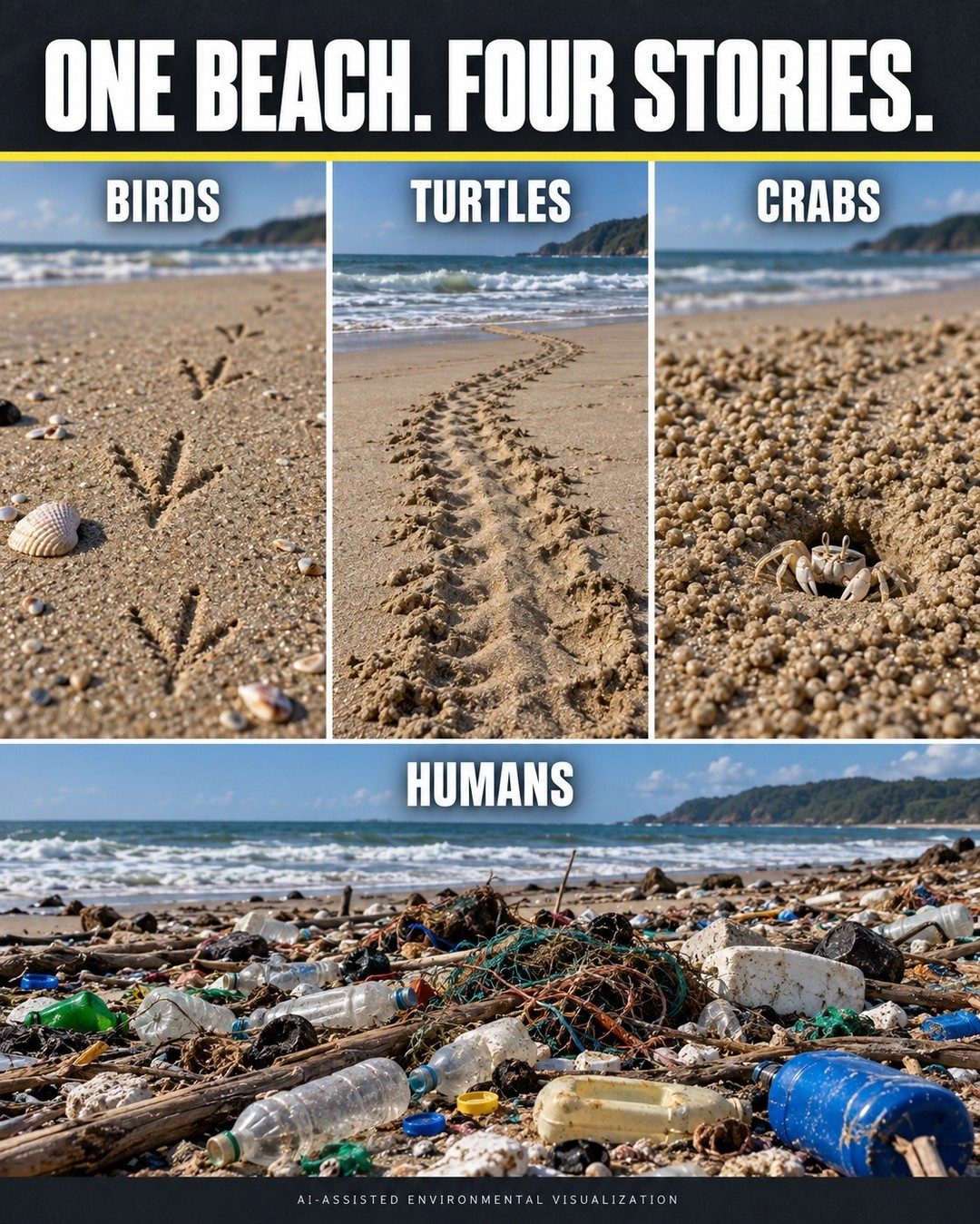
One beach, many worlds
The same shoreline can be home to birds, turtles, crabs, and humans. In fact, each species harbors a different relationship with the environment. From nesting grounds for birds to habitats for crabs, this intersection of diverse lives is shaped by the elements of the beach. EarthSignal Creative's message is clear: these beaches harbor diverse ecosystems, and human activities profoundly impact these environments. The shoreline may be the same, but the perspectives—four distinct viewpoints—of the species that inhabit it are what differentiate it. The shoreline is more than a linear boundary between land and sea. For birds, it can be a nesting ground. For sea turtles, it serves as a pathway. Birds and turtles form unique ecosystems in their respective habitats at sea. For crabs, it is their habitat, where they burrow and find sustenance. But for humans, the shoreline is often a place where waste ultimately accumulates. Plastic bottles, fishing rope, and packaging, they all end up reshaping the environment of every species. This isn't a beach you may have noticed if you've walked or drove by, littered with human waste. This beach isn't supposed to exist. The shoreline, when marked by human trash, is like a foreign body in the natural ecosystem.
Trash and its ripple effects
The beach is a delicate ecosystem, and human activities pose immense threats. Marine life consumption of plastic by accident is a concern that surfaced recently, much to everyone's concern. Microplastics and larger plastic items can physically harm or kill animals that ingest them. Worse, plastic debris can entangle sea creatures, impeding their movement and causing injury or death. For this reason, human activity may appear to have no direct impact on the beach ecosystem. But, we know it does. It's immediate, direct, and often deadly. The beach is a habitat for crabs, and crabs are important to its ecosystem. They feed on plant debris and other organic matter, helping to recycle nutrients into the soil. The degradation of crab habitats by human activities can disrupt this process, leading to disruptions in the nutrient cycle and potential impacts on other species in the ecosystem. It's a domino effect. Important to humans, too, because crabs play a role in keeping beaches clean. With human waste comes a loss of natural habitat, and more species of crabs and their habitats are endangered. But the decline of crabs in a beach ecosystem can have far-reaching consequences beyond the immediate loss of a single species. The shrimp are also among many marine animals that exhibit adaptations. Human waste is the real culprit here, as it does not break down as well in water as it does on other parts of earth.
Visualization as a tool
Only through “AI-assisted environmental visualization” can we observe the complexity of the shoreline. It offers a window into how different species interact with the beach. The same shoreline that provides a path for sea turtles also collects the waste we discard, reshaping the ecosystem and making it harder for these animals to thrive. The shoreline becomes, then, not a linear boundary, but a maze of human waste. The plastic bottles, fishing rope, and discarded packaging are not just litter but a real force to observe the complexity of the environment. The artificial intelligence (AI) tool is a sort of proxy for what is truly happening in the environment. These visualizations can make it easier to understand the challenges that different species face. Much like we need them to keep us awake in a job we don't enjoy, it amplifies human perception of the ‘hidden’ dangers in a place we enjoy. But the AI also serves as a cautionary tale. Just as much as AI can help us visualize the problem, the solution is far from achievable.
The human factor
Human activity threatens the beach's delicate ecosystem, harming its residents. For example, sea turtles face challenges while nesting, migrating, and foraging on these beaches. Plastic pollution can pose a threat, both directly and indirectly. Direct threats, such as ingestion or entanglement, are immediate and deadly. Humans produce waste, and it ends up on the beaches in the form of trash. It becomes a perpetual cycle. Plastic waste accumulates on the beach, harms local species, and endangers humans. This negative cycle—started by humans—can continue indefinitely, unless someone takes action. Saving the environment isn't just a question of raising awareness. It's a challenge that demands a radical transformation in behavior, the rejection of a throw-away culture, and a commitment to more sustainable lifestyles.
Watch the Reel
Related deep dives
Similar reads based on topic and creator.
Recent articles
Fresh deep dives from the latest Reels we unpacked.
Comments
Be the first to comment.