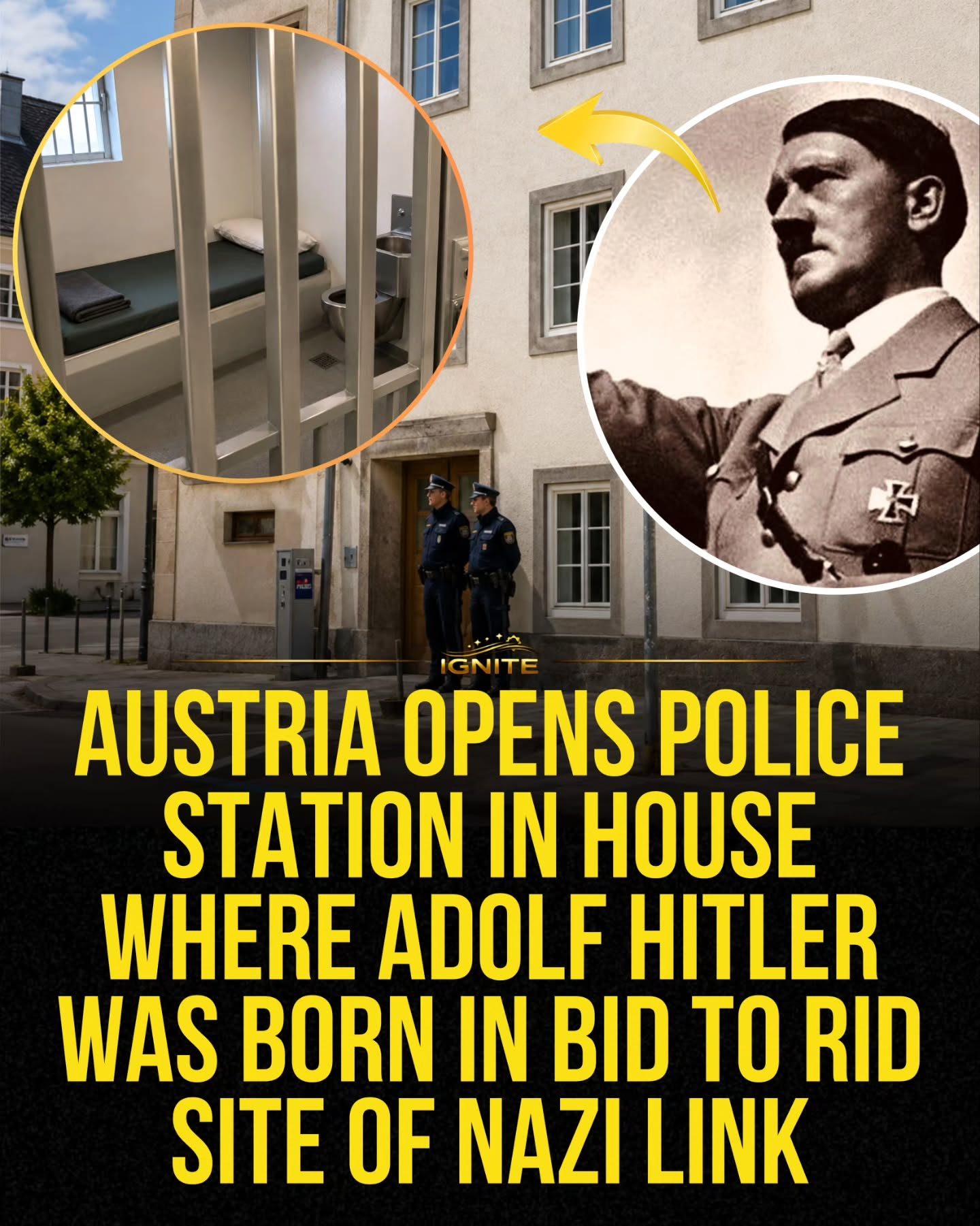
Austria's Historic Move: Opening a Police Station in Hitler's Birthplace
In a significant historical move, Austria has opened a police station in the house where Adolf Hitler was born. This decision aims to transform a site long associated with Nazism into a symbol of law enforcement and public service.
Why This Matters
The building in Braunau am Inn, Austria, where Hitler was born, has been a subject of controversy and debate for decades. By repurposing this historic site into a police station, Austria is taking a bold step to reclaim its narrative and distance itself from its dark past. This move is part of a broader effort to ensure that the site is no longer a place of pilgrimage for neo-Nazis or a memorial to Hitler's legacy.
The Historical Context
The house in Braunau am Inn has a complex history. It was purchased by the Austrian government in 2016 with the intention of demolishing it. However, the plan faced significant opposition, and the final decision was to repurpose it for public use. The government's goal is to ensure that the site no longer serves as a focal point for Nazi sympathizers while also providing a public service.
The Symbolism of the Move
The conversion of Hitler's birthplace into a police station is rich with symbolism. Police stations are traditionally places of order, justice, and the protection of citizens. By placing a police station in this location, Austria sends a clear message: the values of Nazism are diametrically opposed to those of a democratic society.
Public Reaction and Political Implications
The decision to open a police station in Hitler's birthplace has sparked a range of reactions. While many see it as a positive step towards de-racializing the site, others question the efficacy of the move. Critics argue that the location might still attract unwanted attention, while supporters believe it's a necessary part of confronting the country's past and preventing future hate.
Legal and Regulatory Framework
The move involves significant legal and regulatory considerations. Any historical site, especially one with such a sensitive history, requires meticulous planning and adherence to state laws. The Austrian government has had to navigate complex legal frameworks to ensure that the transformation of the building is compliant with historical preservation laws and public safety regulations.
Economic and Social Impact
From an economic standpoint, repurposing the building into a police station can have both positive and negative impacts. On one hand, the police station will create job opportunities and contribute to the local economy. On the other, it might not attract tourism due to its historical significance, which could be seen as a benefit to some and a loss to others.
Furthermore, the move can have significant social implications. The local community's perception of the site will likely evolve over time. As the building becomes a place of public service, it could foster a sense of community and security among residents.
Practical Tips
For Visitors
Visits to the police station in Braunau am Inn will be different from visiting a typical tourist attraction. Here are some practical tips:
- Respect: Visitors should be mindful of the site's history and the current function of the building. It is essential to respect the privacy and work of the police officers stationed there.
- Plan Your Visit: Check the official website or contact the local authorities for information on visiting hours, as they may differ from typical tourist sites.
- Photography: Refrain from taking photographs inside the police station without permission. Always ask for consent if you're unsure.
For Researchers and Historians
The police station's historic significance makes it an interesting subject for researchers and historians. Here are some tips for conducting research:
- Documentation: Ensure you have all necessary permissions and documentation before conducting any research. This includes access to historical records and permissions to visit the site.
- Contextual Understanding: Understand the broader context of the site's history. This includes not only Hitler's birthplace but also the historical and social context of Nazi Germany and Austria's role in World War II.
For Local Communities
For the local communities, engaging with the new police station can have several benefits, including enhanced public safety:
- Community Engagement: Engage with the police station through community programs and public events. This can help build trust and foster a sense of community.
- Reporting: If you notice any suspicious activities or need assistance, do not hesitate to reach out to the police station.
Important Takeaways
Austria's decision to open a police station in the house where Adolf Hitler was born is a bold and symbolic move. It represents a significant shift in how the country addresses its past and aims to redefine the site's narrative. While it may not be without controversy, the move underscores Austria's commitment to denying the glorification of Nazism and promoting public service and security.
Conclusion
The opening of a police station in Hitler's birthplace in Braunau am Inn, Austria, marks a pivotal moment in the country's history. By transforming a site long associated with Nazism into a symbol of law enforcement and public service, Austria is taking a proactive stance against hate and rebellion.
Watch the Reel
Questions readers ask
Why did Austria choose to turn Hitler's birthplace into a police station?
Austria repurposed Hitler's birthplace to transform a historic site associated with Nazism into a symbol of law enforcement and public service. This move aims to create a more welcoming space and distance the country from its dark past.
Where is the new police station located?
The new police station is located in Braunau am Inn, Austria, in the house where Adolf Hitler was born. Braunau am Inn is a town near the German border.
What was the building used for before it became a police station?
Before being converted into a police station, the building was left unused for several years, with plans for its use being debated. Previously, it housed various offices and even a library, but it was never a public attraction.
Has this move been met with controversy?
Yes, the decision to repurpose Hitler's birthplace has sparked debate. Some argue it is a fitting way to reclaim the site from its dark history, while others believe it trivializes the site's historical significance.
What is the goal of this transformation?
The primary goal is to ensure that the site is no longer a place of pilgrimage for neo-Nazis or a memorial to Hitler's legacy. Additionally, the move aims to create a positive, public use for the historic building.
Are there plans to commemorate the site's history?
While the focus is on creating a public service space, there are discussions about commemorating the site's history in a way that does not glorify the past. This could include informative plaques or exhibits within the police station.
How does this move fit into Austria's broader efforts?
This move is part of a broader effort by Austria to repurpose historic buildings and reclaim spaces associated with its dark past. The goal is to create a narrative that focuses on progress and public service, rather than the country's troubled history.
Related deep dives
Similar reads based on topic and creator.




Recent articles
Fresh deep dives from the latest Reels we unpacked.



Comments
Be the first to comment.