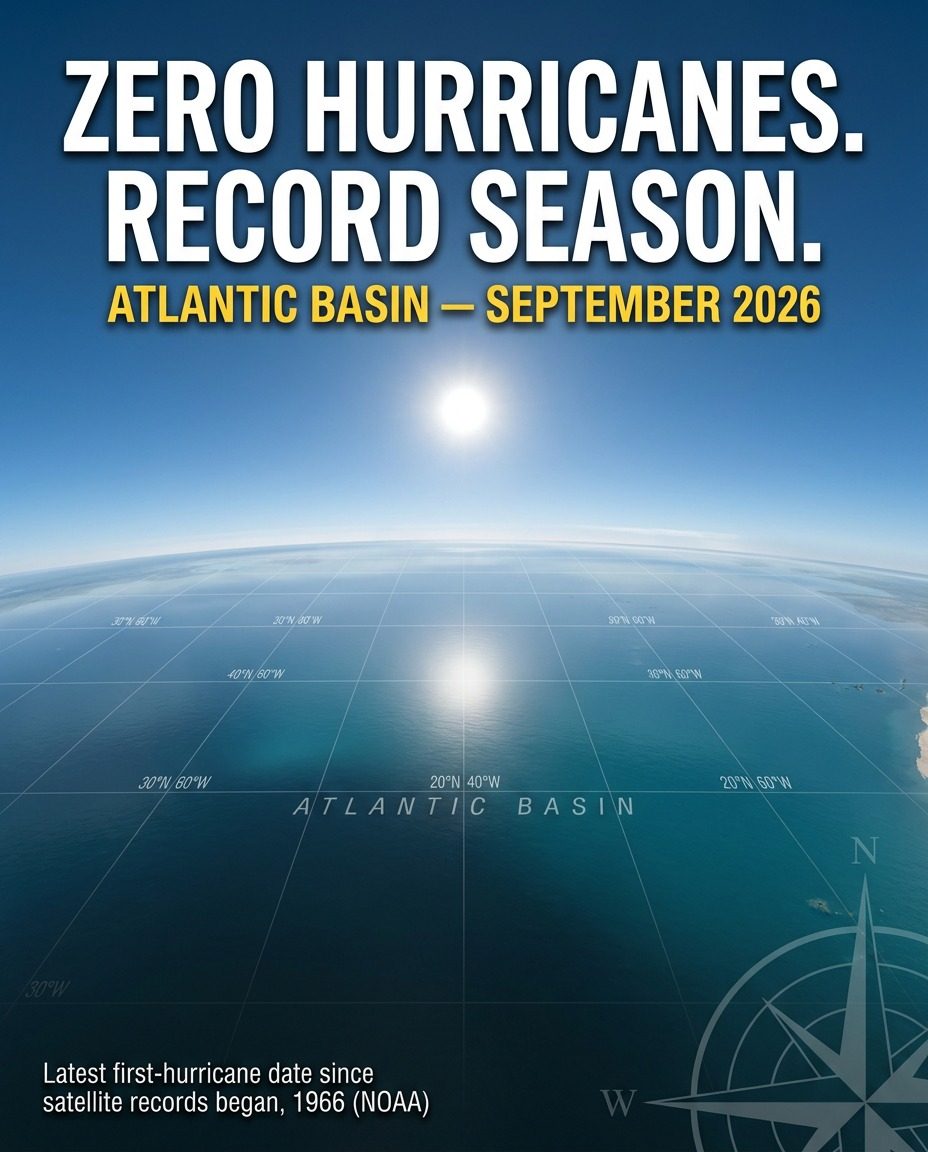
2026 Hurricane Season Defies Expectations
Hurricane Season 2026 has shown an abrupt divergence from historical trends. September in the Atlantic Basin is typically a hub for intensified tropical storms, but this 2026 has not seen a single hurricane, marking a rare and unexpected milestone. This lull defies predictions and leaves scientists puzzled. This comes as a record hurricane season with zero hurricanes counted. Although this year began with projections of above-average activity, the season has seen no named storms at all. By mid-September, storms typically make an appearance, but 2026 is defying these timelines. The Atlantic basin, the largest body of water in the world, stretches approximately 30°N to 60°N latitude and 90°W to 50°W longitude. Typically, this is where warm ocean water sparks intense cyclonic systems. This year, has no foundation for the storms we have seen in the past.
A Year of Unprecedented Weather Patterns
The 2026 hurricane season carries significant weight in weather history, as it's the latest first-hurricane date since satellite records began in 1966. According to the National Oceanic and Atmospheric Administration (NOAA), such a delay in the first hurricane formation is exceedingly unusual. This is reflected in the latest first-hurricane date since satellite records began, 1966. This milestone emphasizes the unpredictability of hurricane seasons, and how environmental factors have played an unpredictable role. The calm might be due to various factors, ranging from atmospheric conditions to changes in ocean currents. Weather enthusiasts will note that the lack of hurricanes contradicts the expectations set by a relatively warm Atlantic. Large-scale climate patterns, such as La Niña and atmospheric pressure influences, also contribute to the season's peculiar trajectory.
Scientific and Environmental Implications
The unusual hurricane patterns have significant implications for climate research. Scientists will study this season to better understand the mechanisms behind hurricane formation and intensification. These periods of inactivity might offer new insights into the dynamics of tropical storm development. They will study how ocean temperatures, atmospheric pressure, and other factors interact to produce or suppress hurricane development. Furthermore, the absence of hurricanes has direct implications for coastal communities. Typically, hurricane seasons pose significant threats to these regions, with potential damage and loss of life. However, this year has resulted in a quieter September.
The Role of Advanced Weather Tracking
This year’s hurricane season might be a testament to the power of advanced forecasting technologies. NOAA’s tools and models are responsible for making very accurate predictions. In light of this year's unprecedented calm, the conversation must pivot to the effectiveness of these tools. NOAA uses models to track the origins and movements of storms, greatly enhancing our ability to prepare for and mitigate these disasters. The accuracy of these weather models will be closely scrutinized in the coming months. The tools they use have been refined over decades, and understanding why they correctly predicted the calm might offer insights. Through examining the mechanisms, scientists might glean new insights into managing future hurricane seasons. These insights could offer a tailored response to climate shifts.
Watch the Reel
Related deep dives
Similar reads based on topic and creator.


Recent articles
Fresh deep dives from the latest Reels we unpacked.

Comments
Be the first to comment.