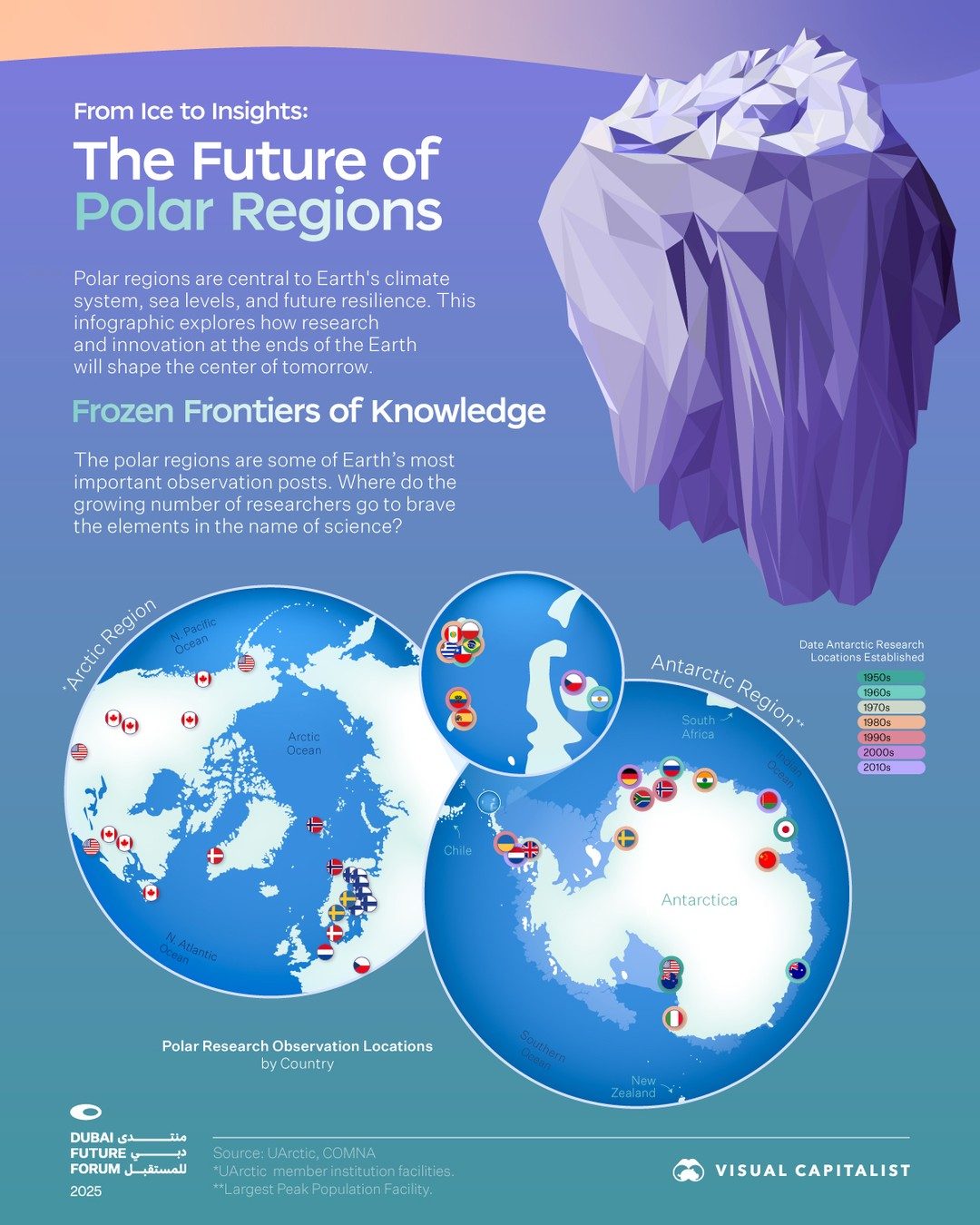
Polar Regions and Climate Change
Investments in polar research have surged to nearly $4 billion from 2016 to 2022, focusing predominantly on the Arctic. These funds have been pivotal in advancing our understanding of the polar regions and highlighting the urgent threats posed by climate change, particularly glacier loss. This research is transforming how we perceive and address environmental changes in these critical areas.
Context / Why this matters
The polar regions, encompassing the Arctic and Antarctic, play a crucial role in regulating Earth's climate. They act as vast refrigerators, helping to maintain global temperatures by reflecting sunlight and influencing ocean currents. However, recent studies reveal alarming trends: glaciers in these regions have been losing mass at an accelerating rate, contributing significantly to sea-level rise and climate instability.
Main discussion
Glacier Mass Change
One of the most striking findings from recent research is the global glacier mass change. Glaciers, which store about 70% of the world's fresh water, have been losing thickness rapidly. The graph illustrating global glacier mass change over time shows a consistent downward trend. This loss is not uniform; some regions are experiencing more significant ice melt than others. The Arctic, for instance, is warming at a rate more than twice as fast as the global average, leading to substantial glacier retreat and permafrost thaw.
Arctic Research and Innovation
The Arctic has become a focal point for innovative research and technological advancements. Local Emirates and universities are at the forefront of this effort, leading projects that offer a more connected and comprehensive picture of polar science. Initiatives like Planet Pulse, a global quantum sensor network, exemplify how advanced machine intelligence can monitor air, land, and sea environments in real time. This network provides instant environmental data analysis and disaster prediction, enhancing our ability to respond to climate-related events.
Funding and Collaboration
Funding for Arctic research comes from various countries, including the United States, Russia, and Norway. This international collaboration is essential for addressing the complex challenges posed by climate change. Research projects funded by these countries focus on understanding the impacts of glacier loss, permafrost thaw, and changes in marine ecosystems. The funding data highlights the scale and diversity of research initiatives, from large-scale climate modeling to localized studies on specific ecosystems.
Antarctica: A Different Challenge
While the Arctic offers a clearer picture due to more cohesive research efforts, Antarctica presents a different challenge. Its fragmented, government-run communities make tracking funding and research data more difficult. However, recent collaborations and technological advancements are beginning to bridge this gap, providing more integrated insights into the continent's environmental changes.
Practical tips
Stay Informed
Staying informed about the latest research and developments in polar regions is crucial. Follow reputable sources and organizations that specialize in climate science and polar research. Understanding the latest findings can help individuals and communities prepare for the impacts of climate change.
Support Research
Supporting research initiatives in the polar regions can make a significant difference. Whether through direct funding, volunteering, or advocating for increased investment, every contribution counts. Initiatives like Planet Pulse exemplify how advanced technologies can revolutionize our understanding and response to environmental changes.
Engage in Conservation Efforts
Engaging in conservation efforts can help mitigate the impacts of climate change. This includes reducing carbon footprints, promoting sustainable practices, and supporting policies that protect polar ecosystems. Every action, no matter how small, contributes to a larger effort to safeguard these critical regions.
Important takeaways
The Pivotal Role of Research
Research in the polar regions is pivotal for understanding and addressing climate change. The investments and innovations in this field are transforming our knowledge of these environments and their role in global climate resilience. The findings underscore the urgent need for continued research and international collaboration.
The Urgent Threat of Glacier Loss
Glacier loss is a pressing concern that requires immediate attention. The rapid thinning of glaciers in the Arctic and Antarctic contributes to sea-level rise and climate instability. Understanding the extent and causes of this loss is essential for developing effective mitigation strategies.
The Importance of Technological Innovation
Technological innovation plays a crucial role in polar research. Advanced machine intelligence and global sensor networks, such as Planet Pulse, provide real-time data analysis and disaster prediction, enhancing our ability to respond to environmental changes.
Conclusion
The polar regions are at the forefront of climate change impacts, with glacier loss and environmental changes posing significant threats. The recent surge in research investments and technological innovations offers hope in addressing these challenges. By staying informed, supporting research, and engaging in conservation efforts, we can contribute to a more resilient and sustainable future for our planet.
Watch the Reel
Questions readers ask
Why is so much money being invested in Arctic research?
The significant investment in Arctic research is driven by the urgent need to understand and mitigate environmental threats, particularly glacier loss. With glaciers melting at an accelerating rate, which contributes to sea-level rise and global climate instability, these funds are crucial for advancing our knowledge and response strategies.
How does glacier loss in the Arctic affect the rest of the world?
Glacier loss in the Arctic contributes to sea-level rise, which can lead to increased coastal flooding and erosion worldwide. Additionally, the melting of glaciers can disrupt global weather patterns and ocean currents, further exacerbating climate instability.
What specific threats are Arctic research projects currently focusing on?
Arctic research projects are currently focusing on several key threats including glacier loss, sea-level rise, and the broader impacts of climate change. These projects aim to gather comprehensive data to inform policies and strategies to protect the Arctic and mitigate global impacts.
What role do the polar regions play in regulating Earth's climate?
The polar regions act as vast refrigerators, reflecting sunlight and influencing ocean currents. This helps to maintain global temperatures and climate stability. However, the rapid melting of glaciers in these regions is disrupting these processes, leading to broader climate instability.
What are some of the key findings from recent Arctic research?
Recent Arctic research has revealed alarming trends, including accelerating glacier loss and the significant contributions of these losses to sea-level rise. The research has also highlighted the urgency of addressing these environmental threats to mitigate their impacts on global climate stability.
Related deep dives
Similar reads based on topic and creator.


Recent articles
Fresh deep dives from the latest Reels we unpacked.




Comments
Be the first to comment.