Krakatau's Fury Revisited
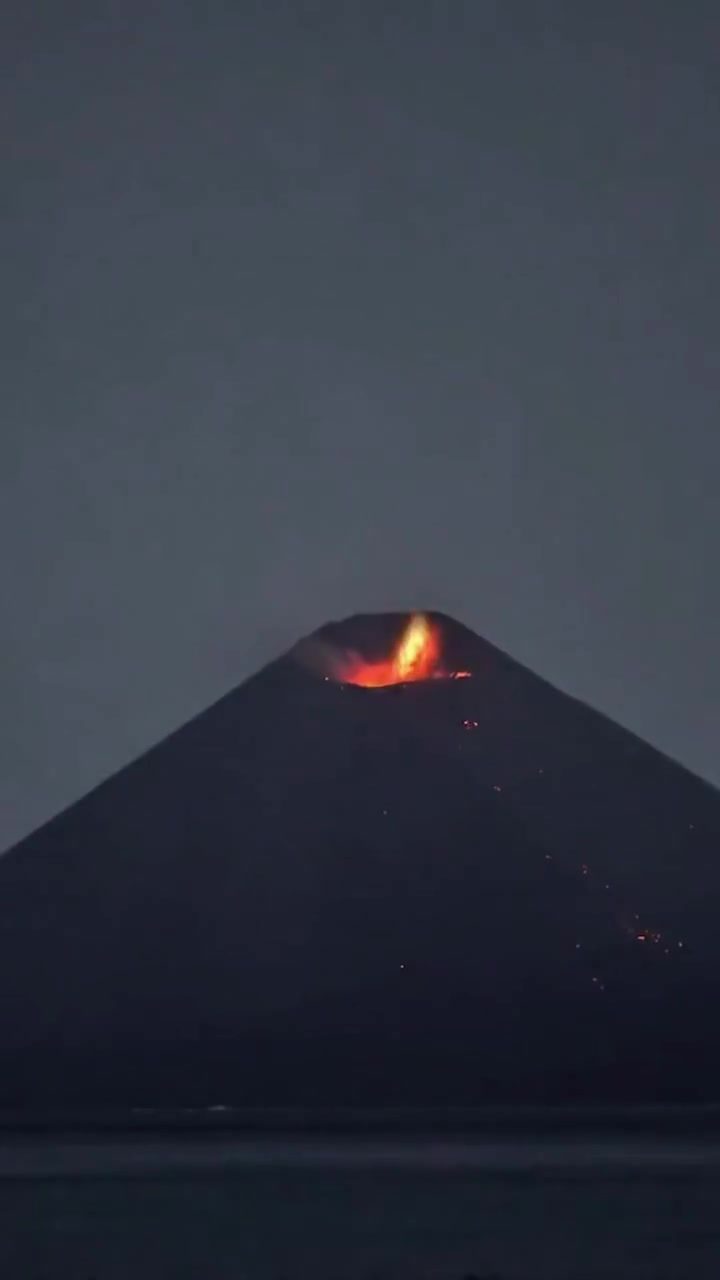
The Anak Krakatau volcano, rising from the remnants of its notorious predecessor, has once again shown its might. The dramatic nighttime footage of its 2018 eruption, captured in raw and vivid detail, reveals how geological forces can literally shake and reshape the earth in an instant. That year, a section of the volcano's flank plummeted into the sea, triggering a tsunami that struck the Sunda Strait without any warning. More than 400 lives were lost, a sobering reminder of nature's unyielding power. This time, authorities assure us, the situation is different. The PVMBG, the agency tasked with monitoring the volcano, has stated that, while the volcano is erupting, it hasn’t built up enough to pose the same risk of collapse. This shouldn’t be confused with complacency. and specific: authorities are monitoring the volcano and have kept coastal evacuation routes ready. The public is advised to stay clear of the crater, maintaining a distance of at least three kilometers. The authorities are taking the correct measures with blunt responses and plans in place.
The Evolution of a Volcano
The 2018 eruption isn't the first time Anak Krakatau has caused destruction. With a name that translates to "Child of Krakatau", it's a reminder that it's the successor to the infamous Krakatau. The latter, dormant for over 200 years, erupted catastrophically in 1888. The force of the explosion was equivalent to 200 megatons of TNT. The resulting tsunamis, pyroclastic flows, and ash fall devastated the region. This was titled as a destructive event of the century. Anak Krakatau is a stratovolcano, formed from strata of consolidated volcanic debris, the result of the 1888 eruption and its subsequent activities. It has been active, with periods of calm interspersed with violent eruptions. The cycle of eruption, collapse, and rebuilding is a constant reminder of the Earth's geological dynamism.
nature's unpredictable choreography
A volcano erupting at night it can be a breathtakingly beautiful yet terrifying sight. Molten lava flows down the side of the volcano, creating streams of orange and red against the dark sky. The ash plume rising from the peak is a stark reminder of the raw power at work. Sparks and fiery debris are thrown out, depicting a natural display of power. The volcanic debris, however, can pose a serious risk, as the 2018 eruption showed. Lava flows can destroy everything in their path, incinerating vegetation and altering landscapes. Ash plumes, while visually stunning, can cause significant health issues, particularly respiratory problems, especially if the ash contains hazardous compounds. Moreover, the volcanic activity can disrupt travel, as ash plumes can cause airspace closures. Volcanic eruptions can also alter the landscape, creating all manner of geological formations. This includes lava domes, which form when viscous lava piles up near the volcano's vent, and calderas, which are large depressions formed when the land collapses into an emptied magma chamber.
Watch the Reel
Related deep dives
Similar reads based on topic and creator.
Recent articles
Fresh deep dives from the latest Reels we unpacked.

Comments
Be the first to comment.