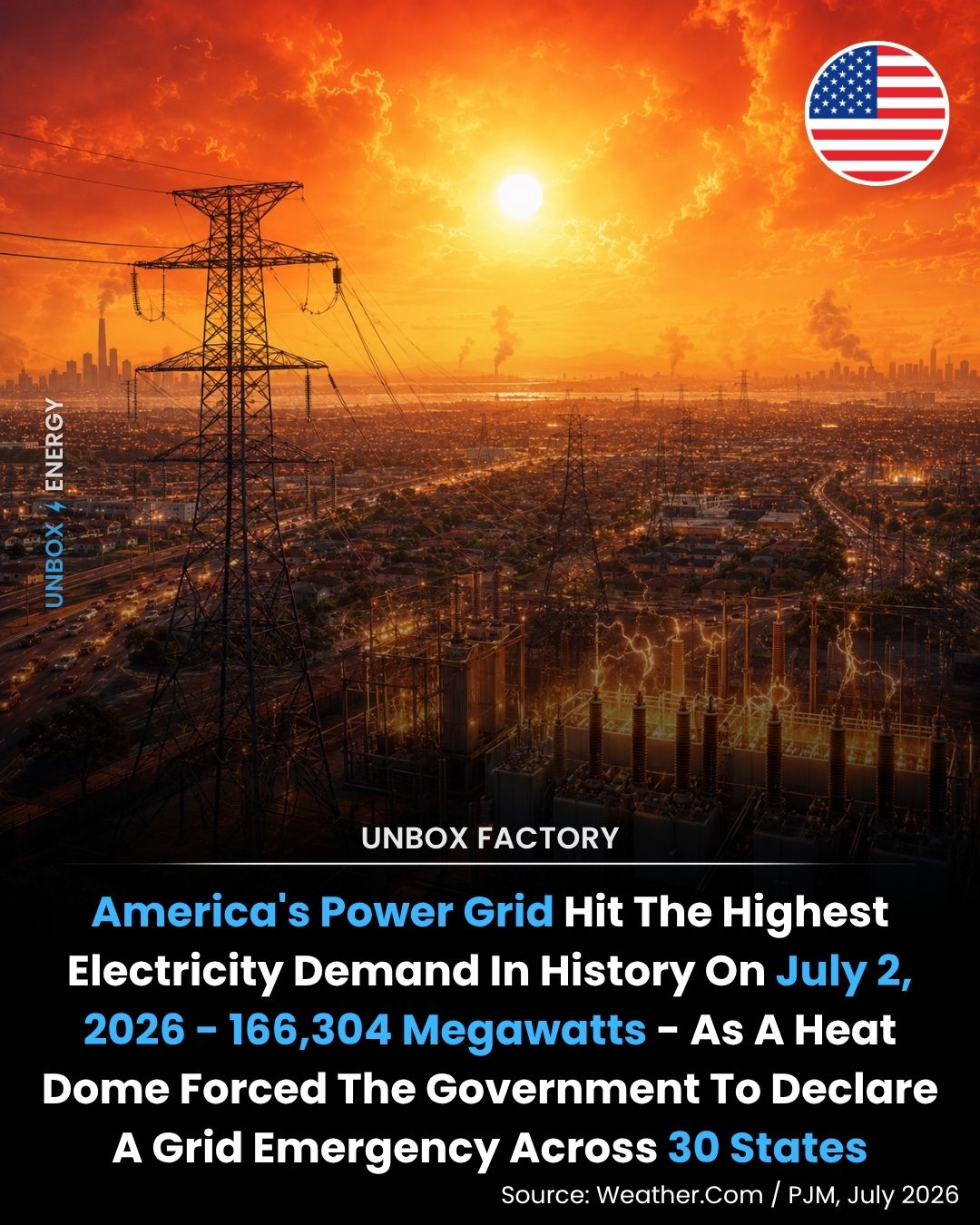
Power Grid Emergency
On July 2, 2026, America's power grid faced an unprecedented strain, setting a new record for electricity demand. The peak demand of 166,304 megawatts, according to Weather.Com and PJM, was driven by an intense heat dome that blanketed the country. This weather phenomenon pushed air-conditioning use to record levels, prompting emergency measures across 30 states. Let's dive into the details of this event and its implications for the future.
Context / Why this Matters
Extreme weather events have become more frequent and intense, posing significant challenges to power grids worldwide. The heat dome that affected 30 states in 2026 is a stark reminder of the vulnerability of power infrastructure to changing climatic conditions. Understanding the causes and impacts of this event can help stakeholders prepare for similar future scenarios and ensure the reliability of the power supply.
Main Discussion
The Heat Dome and Its Impact
A heat dome occurs when a high-pressure system traps hot air over a region, leading to prolonged periods of extreme heat. This phenomenon was responsible for the record-breaking electricity demand on July 2, 2026. As temperatures soared, air conditioning use surged, driving residential power consumption to unprecedented levels.
Air conditioning accounts for over 70% of residential peak power use during severe heatwaves. This reliance on air conditioning makes the power grid particularly vulnerable to extreme heat. The demand of 166,304 megawatts is enough to supply electricity to over 100 million homes simultaneously under average residential consumption, highlighting the sheer scale of the demand spike.
Emergency Measures and Grid Management
To manage the record demand, operators implemented emergency grid reliability measures across 30 states. These measures allowed operators to maximize power generation and prevent widespread blackouts. The proactive approach to grid management was crucial in maintaining the stability of the power supply during this critical period.
The Role of Data Centers and Electrification
A key factor driving future peak demand is the increasing number of data centers and the ongoing transition to electrification. Data centers, which are essential for modern computing and AI applications, require significant amounts of power. The trend of electrification, which involves switching from fossil fuels to electric power for various applications, also contributes to higher electricity demand. As these trends continue, it is essential to invest in grid infrastructure and implement advanced management strategies to ensure reliability.
Practical Tips
For Homeowners
- Upgrade to Energy-Efficient Appliances: Using energy-efficient air conditioning units and other appliances can significantly reduce power consumption.
- Install Smart Thermostats: These devices allow for more precise control over air conditioning, helping to minimize energy use during peak hours.
- Consider Solar Panels: Investing in solar power can offset some of the electricity demand and reduce reliance on the main grid, especially during peak hours.
For Utilities
- Invest in Grid Modernization: Upgrading the grid with more robust and flexible infrastructure can handle higher demand and better manage fluctuations.
- Implement Demand Response Programs: These programs incentivize consumers to reduce power usage during peak hours, helping to balance the load on the grid.
- Enhance Grid Monitoring Systems: Advanced monitoring and predictive analytics can provide earlier warnings of potential grid strain and allow for better management.
Important Takeaways
- Increasing Demand: Extreme weather events, particularly heat domes, can drive electricity demand to unprecedented levels.
- Emergency Measures: Proactive grid management and emergency measures are crucial for maintaining power supply stability during peak demand periods.
- Future Trends: The growth in data centers and electrification will continue to push future peak demand higher, necessitating robust and flexible grid infrastructure.
Conclusion
The power grid emergency of July 2, 2026, underscores the critical need for preparedness and resilience in the face of extreme weather events. As the demand for electricity continues to grow, driven by factors like rising temperatures and technological advancements, it is essential to invest in grid modernization, implement advanced management strategies, and encourage energy-efficient practices. By taking these steps, we can ensure a reliable power supply for the future.
Watch the Reel
Questions readers ask
What caused the record electricity demand on July 2, 2026?
The record electricity demand of 166,304 megawatts was primarily driven by an intense heat dome that swept across the United States. This weather event led to a surge in air conditioning use as people sought to escape the extreme heat, putting unprecedented strain on the power grid.
How many states were affected by the 2026 heat dome?
The July 2026 heat dome event impacted 30 states across America. This widespread influence resulted in significant power grid strain as the demand for electricity surged in response to the extreme heat.
What is a heat dome and how does it impact the power grid?
A heat dome is a weather phenomenon where a persistent high-pressure system traps warm air, leading to extreme heat. This intense heat increases the demand for electricity, particularly for air conditioning, which can overwhelm the power grid and its infrastructure, potentially leading to blackouts and other emergencies.
What emergency measures were taken during the July 2026 heatwave?
During the 2026 heatwave, emergency measures were implemented across the 30 affected states to manage the extreme demand on the power grid. These measures likely included rolling blackouts, urging residents to conserve energy, and power companies increasing their generation capacity to meet the unprecedented demand.
Can the power grid handle the increasing frequency of extreme weather events?
The July 2026 event highlighted the vulnerability of the power infrastructure to intense heatwaves. As the frequency and severity of extreme weather events increase, there is a growing need for infrastructure upgrades, increased generation capacity, and improved energy management strategies to ensure the grid can handle these challenges.
What is the significance of the 166,304 megawatts demand record?
The 166,304 megawatts demand record set on July 2, 2026, underscores the immense strain that extreme heatwaves can place on the power grid. This record serves as a stark reminder of the need to prepare for and mitigate the impacts of such events to ensure the reliability of the power supply.
Related deep dives
Similar reads based on topic and creator.


Recent articles
Fresh deep dives from the latest Reels we unpacked.




Comments
Be the first to comment.