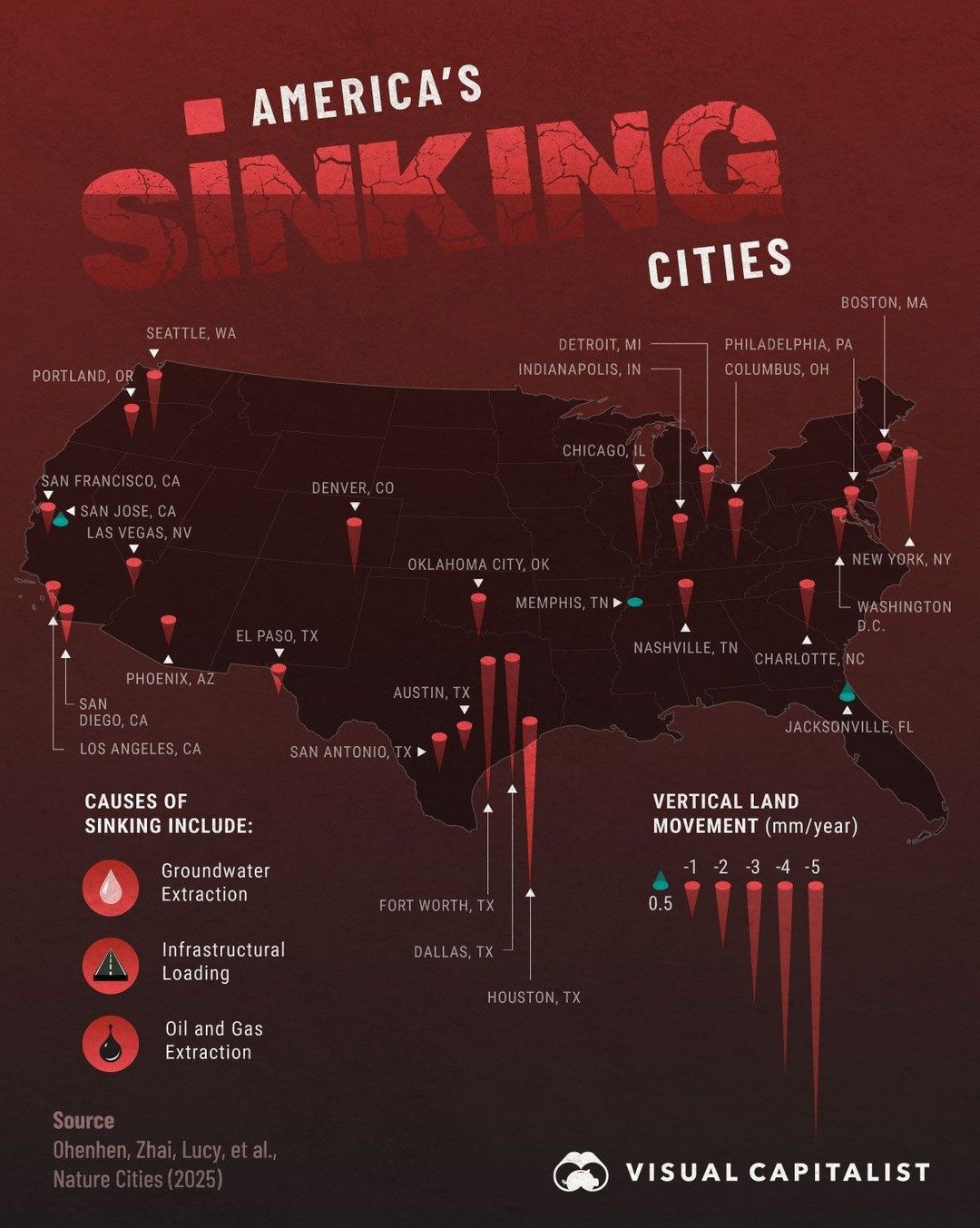
Land Subsidence in American Cities
Parts of the United States are experiencing significant land subsidence, primarily due to activities such as groundwater overuse and oil extraction. This phenomenon not only alters the landscape but also heightens the risk of flooding in affected areas. A recent study, "Land subsidence risk to infrastructure in US metropolises" published in 2025 by Ohenhen, Zhai, Lucy, and colleagues in the Nature Cities journal, provides a comprehensive analysis of this issue.
Why This Matters
Land subsidence, the gradual sinking of land, poses serious threats to urban infrastructure and public safety. Cities that are prone to subsidence face increased vulnerability to coastal and inland flooding. This makes understanding the causes and impacts of land subsidence crucial for urban planning and disaster management.
Identifying the Causes of Land Subsidence
Groundwater Extraction
One of the primary causes of land subsidence in many U.S. cities is the extraction of groundwater. As water is pumped from underground aquifers, the soil and rock above collapse, leading to sinking. This is especially problematic in areas where groundwater is the primary water source for drinking, agriculture, and industry.
Oil and Gas Extraction
Oil and gas extraction processes, including hydraulic fracturing (fracking) and traditional drilling, can also lead to land subsidence. The removal of these resources from underground reservoirs can cause the land surface to sink, especially in regions with extensive oil and gas activities.
Infrastructural Loading
The weight of buildings, roads, and other infrastructure can also contribute to land subsidence. In areas with soft or unstable soil, the added weight can cause the land to compress and sink over time. This is particularly relevant in rapidly developing urban areas where large-scale construction projects are common.
Cities at Risk
The study highlights 28 of the largest U.S. cities that are experiencing significant land subsidence. Some of the most affected cities include:
Texas
- Houston, TX: Known for its extensive oil and gas activities, Houston is particularly vulnerable to land subsidence, which exacerbates its already significant flood risk.
- Dallas, TX: This city faces both groundwater extraction and infrastructure-related subsidence issues.
- Fort Worth, TX: Similar to Dallas, Fort Worth's land subsidence is driven by a combination of groundwater extraction and infrastructural loading.
- San Antonio, TX: Groundwater extraction is a primary cause of subsidence in San Antonio.
East Coast
- Miami, FL: The combination of groundwater extraction and the weight of urban infrastructure has led to significant land subsidence, increasing the city's vulnerability to sea-level rise and storms.
- New Orleans, LA: Known for its low-lying topography, New Orleans' land subsidence is exacerbated by groundwater extraction and the weight of urban development.
- Washington, D.C.: The nation's capital is experiencing land subsidence due to groundwater extraction and infrastructural loading.
Pacific Coast
- Los Angeles, CA: This city faces land subsidence issues due to oil extraction and groundwater pumping.
- San Francisco, CA: While less affected than other cities, San Francisco still experiences subsidence, primarily due to groundwater extraction.
- San Diego, CA: Similar to other West Coast cities, San Diego faces subsidence from groundwater extraction and infrastructural loading.
Midwest
- Chicago, IL: The city's dense urban development and groundwater extraction contribute to land subsidence, impacting the stability of buildings and infrastructure.
- Indianapolis, IN: Groundwater extraction is the main cause of subsidence in Indianapolis, affecting the city's infrastructure and public safety.
Practical Tips for Mitigating Land Subsidence
Sustainable Water Management
Implementing sustainable water management practices can help reduce the dependence on groundwater extraction. This includes promoting water recycling, rainwater harvesting, and efficient irrigation practices.
Regulating Extraction Activities
Stricter regulations on oil and gas extraction activities can mitigate the impact of subsidence. This includes monitoring extraction rates, enforcing safety standards, and ensuring proper site rehabilitation after extraction.
Urban Planning and Design
Incorporating land subsidence considerations into urban planning and design can help mitigate risks. This includes selecting stable soil for construction, using lightweight building materials, and designing infrastructure to withstand subsidence.
Important Takeaways
Land subsidence is a critical issue affecting many U.S. cities, driven by factors such as groundwater extraction, oil and gas extraction, and infrastructural loading. This phenomenon increases the risk of flooding and poses significant challenges to urban infrastructure and public safety. The recent study provides valuable insights into the causes and impacts of land subsidence, highlighting the need for sustainable water management, stricter extraction regulations, and informed urban planning.
Conclusion
Addressing land subsidence requires a holistic approach that involves sustainable water management, stricter regulations on extraction activities, and informed urban planning. By understanding the causes and impacts of land subsidence, cities can develop strategies to mitigate risks and ensure the safety and resilience of their infrastructure. The findings from the 2025 Nature Cities study offer a roadmap for urban planners, policymakers, and communities to tackle this pressing issue and create more resilient cities.
Watch the Reel
Questions readers ask
What are the primary causes of land subsidence in American cities?
The primary causes of land subsidence in American cities are excessive groundwater extraction, oil and gas removal and soil settling. This is oftentimes due to infrastructure construction. These activities lead to a gradual sinking of the land, which can have significant impacts on urban areas.
How does land subsidence increase flooding risks in urban areas?
Land subsidence increases flooding risks by altering the natural topography of an area. When the land sinks, it changes the way water flows, often leading to more frequent and severe flooding, especially in low-lying areas. Additionally, the sinking land can cause damage to infrastructure such as roads, buildings, and drainage systems, further exacerbating flooding risks.
Which cities in the USA are most at risk from land subsidence?
Cities in the USA that are most at risk from land subsidence include: Houston, Texas (due to excessive groundwater pumping and oil extraction), New Orleans, Louisiana (due to subsidence and sea level rise), and San Joaquin Valley, California (due to intensive groundwater extraction for agriculture). Other areas with significant subsidence issues include portions of the Mississippi Delta and the Gulf Coast.
What are the key findings of the 2025 study on land subsidence in US metropolises?
The 2025 study titled 'Land subsidence risk to infrastructure in US metropolises' published in the journal *Nature Cities*, highlights the widespread nature of land subsidence in the USA. The study underscores the urgent need to address the issue and provide guidance for urban planning to mitigate risks. The research provides a comprehensive analysis of the causes and impacts of land subsidence.
How does oil and gas extraction contribute to land subsidence?
Oil and gas extraction can contribute to land subsidence through the removal of hydrocarbons and the subsequent compaction of the surrounding soil. This process can lead to significant vertical land movement, causing the land surface to sink. Additionally, the injection of water or other fluids during extraction processes, often used to enhance oil and gas recovery, can also induce subsidence.
Related deep dives
Similar reads based on topic and creator.


Recent articles
Fresh deep dives from the latest Reels we unpacked.




Comments
Be the first to comment.