The Amazon's Hidden Communities
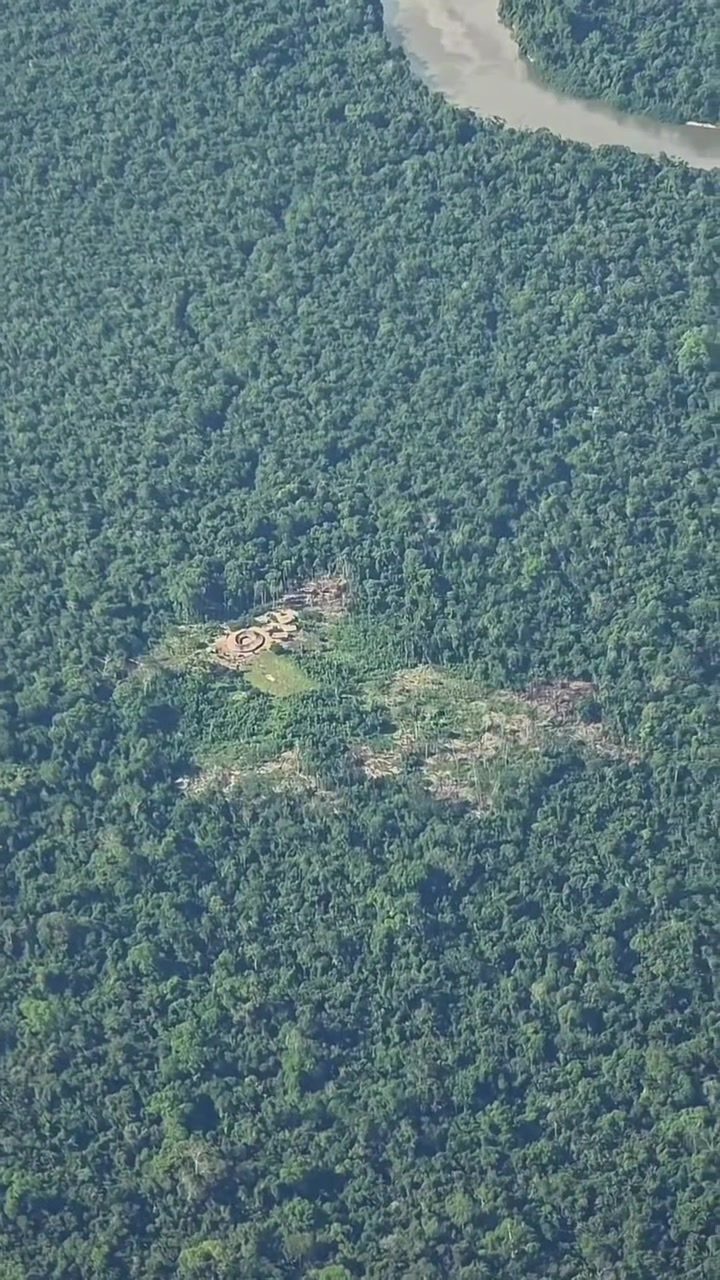
Deep in the Amazon rainforest, a remote community lives in voluntary isolation — a rare phenomenon in today's interconnected world. These people choose this lifestyle to preserve their culture and avoid risks to health or culture from contact with the outside world. They are not just remote, they are actively removed. They are incredibly committed to their traditions and their environment, yet their isolation comes with serious challenges and no guarantees. The Brazilian Amazon holds dozens of these isolated groups. It is estimated around 110 remaining groups still choose voluntary isolation. This is a drastic decline from the roughly 700 tribes that existed when Europeans first arrived in the New World. Many have been isolated for centuries, while others are recent offshoots from groups that had previous contact with the outside world. While population numbers are never disclosed, the uncertainty surrounding their existence adds to the complexity of their relationship with the world. The Amazon is a hostile environment and indigenous people have survived here for centuries. There are several theories why tribes choose isolation. Some of them are historical, as indigenous people had a healthy distrust of outsiders. Modern-day influences are believed to be dangers such as mining, logging, or cattle—where disease or destruction could be devastating. Clearings in the forest may indicate the presence of an isolated community. But they also pose risks—deforestation around an isolated community is catastrophic to their way of life. The Amazon is a delicate ecosystem. It is home to 10% of the world's known species yet holds 20% of the world’s fresh water and 90-147 billion metric tonnes of carbon. As the word’s largest carbon reservoir, the Amazon holds vast amounts of carbon. The carbon emissions from the destruction of that matter could have catastrophic effects on global warming. The isolated tribes survive as pointed the carbon sink. Protected status does not guarantee safety. Further isolating factors compound their vulnerability. Their territories lack infrastructure like roads and bridges, making access difficult and dangerous. The density of the rainforest makes aerial surveillance challenging. As a result, illegal logging, mining, and other activities threaten these communities.
The Role of Deforestation
Deforestation in the Amazon poses significant threats. Environmental degradation puts the isolated groups' survival in jeopardy. They rely on the rainforest's resources for their survival. Their homes, traditional medicines, hunting, gathering, and spiritual practices are all deeply tied to the forest. Deforestation irreparably damages their environment, putting their future at risk. The patterns of deforestation indicate probable illegal activities. Circular clearings hint at deliberate, organized destruction. Such clearing can also be mistaken indicators of certain indigenous practices. This duality underscores the delicate balance between preserving cultural heritage and safeguarding the environment. For instance, the destruction of a small tract of rainforest could mean the disappearance of medicinal plants. Animal habitats may be disrupted. The overall disruption and displacement of local flora and fauna could create long-term ecological changes that could impact human communities that live in the forest. The psychological impact on isolated groups when they encounter outsiders adds to the substantial environmental risks that deforestation poses. Contact can trigger stress. Vaccination campaigns and medical check-ups are essential, but they can disrupt the delicate balance of isolated peoples’ lives. The risks are high.
The Challenges of Protection
The challenges of protecting isolated communities are substantial. They face threats from illegal activities and environmental degradation. Legal frameworks and efforts for conservation fail to address the needs of isolated groups. They also lack the infrastructure to support sustainable practices. There is little support for the tribes’ efforts to defend their land and livelihood. The Brazilian government has taken some steps to protect these communities. They have established demarcated territories and implemented surveillance measures. Illegal activities such as logging and mining can be detected. However, enforcement and protection measures are inadequate. One reason for this is limited resources. Another is the vast area requiring monitoring. The Amazon spans 5.5 million square kilometers. The lack of awareness among the public and global community adds to the problem. There's a lack of coordination between government and Indigenous groups. The Brazilian communities are fighting to protect their lifestyle. Devoid of knowing their exact location, the risk of illegal activities is even higher.
Watch the Reel
Related deep dives
Similar reads based on topic and creator.

Recent articles
Fresh deep dives from the latest Reels we unpacked.

Comments
Be the first to comment.