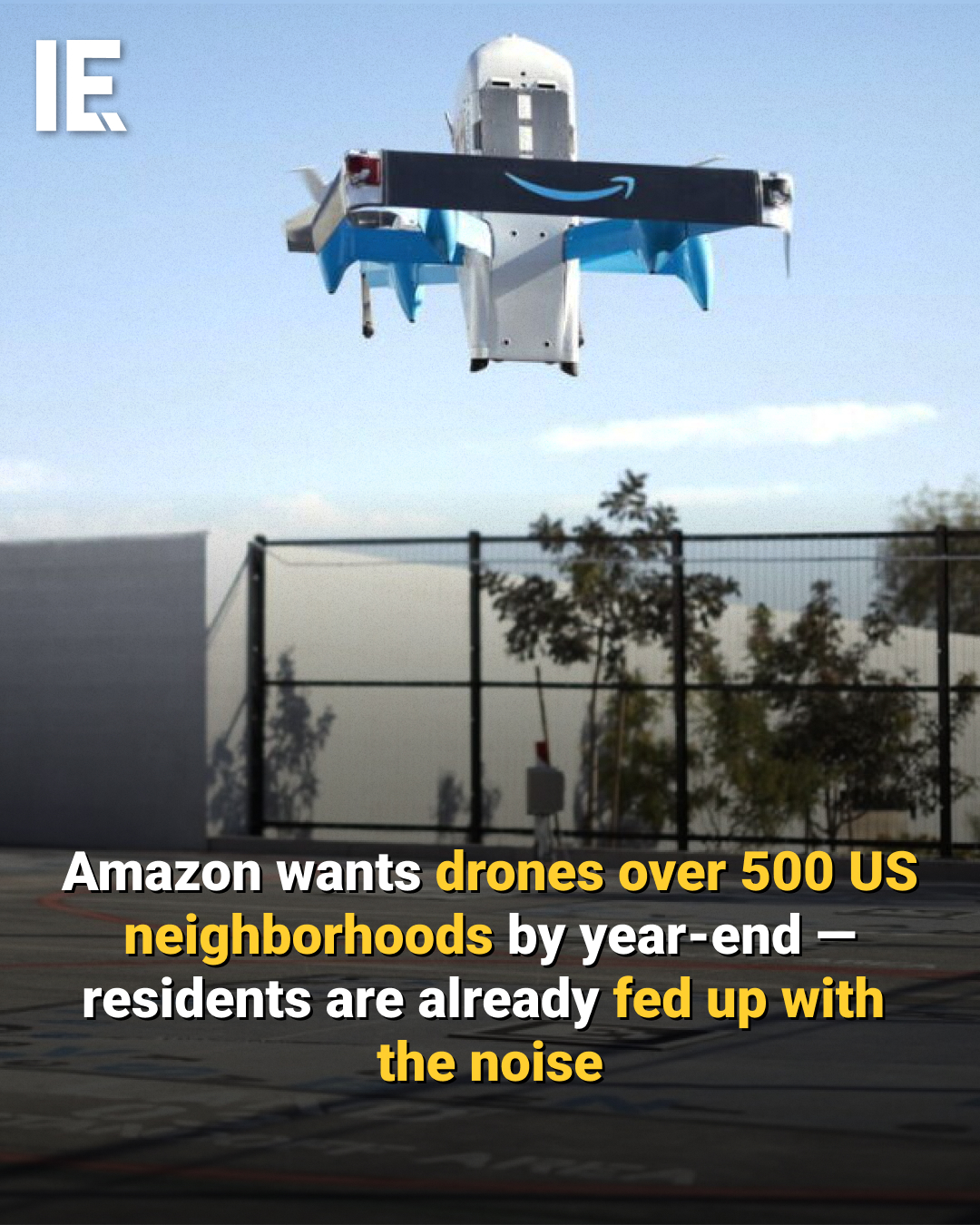
Amazon is preparing to bring drones to 500 United States neighborhoods by year-end — but there's growing resistance from residents. Already, thousands of drones could be zipping through the sky, aiming for quiet suburban backyards, each carrying a small delivery.
The Rise of Amazon's Delivery Drones
Amazon’s drone delivery initiative is part of a broader effort to revolutionize last-mile delivery. This idea isn’t new; the e-commerce giant announced its drone delivery program Prime Air back in 2013. The current initiative is more extensive, partly because of advancements in technology. Amazon’s drones fly autonomously, guided by GPS and computer vision. They follow pre-programmed flight paths and land softly in designated drop zones. The delivery process is streamlined. Once a drone reaches a delivery destination, it releases a package using a tethered cord. Amazon’s delivery drones are smaller than many iterations of drones people have seen before. They are designed to be lightweight — around five pounds (2.25 kilograms). Each craft has a payload capacity of approximately five pounds. Amazon’s drones have a range of around 15 miles (24.14 kilometers) on a full battery charge, which translates to a relatively short delivery time from fulfillment centers. They fly at heights of up to 400 feet (121.92 meters) and at speeds comparable to a typical gas-powered car. Amazon’s drone delivery initiative is distinctive due to its scale, planned for 500 neighborhoods across the United States.
Delivery Drones in an Urbanized World
Amazon’s drone delivery is both a product and a symptom of the "buy whenever" online shopping culture. The company’s drone program is aggressive compared to smaller, regional drone service providers who have been quietly testing drone delivery systems. Amazon’s plan to expand drone delivery raises the question of how our skies might look and sound in the near future. Amazon claims drone deliveries will minimize noise and environmental impact by reducing carbon emissions.
Engineered for Efficiency
Amazon's drones are designed to be swift, efficient, and unassuming. They focus on minimizing energy consumption for extended flight times on a full charge. The drone's battery delivers efficiency, but also limits range. The drones currently use safety features including advanced route-planning, obstacle detection, and collision avoidance. Also, the delivery drones are lightweight to make them easy to maneuver and land. The lightness of the drones allows for short flight times with minimal energy consumption on long expeditions.
Drone Design
Amazon’s drones are designed to hold packages — the hexagonal design and pallets help with ease of lifting, carrying, and lowering packages. The drones’ design has a hexagonal body and vertical landing platforms, including six propellers, each housing a small motor with a battery assembly for extended flight. Amazon’s drone delivery program is autonomous, which means the drones are designed to fly without direct human control. The drones use GPS and route planning technology, including obstacle detection and collision avoidance. The drone can land and deliver packages without remote control intervention.
Drone Limitations
An important limitation of Amazon’s drone delivery is its range. The drones have a 15-mile range on a single battery charge, limiting the distance they can travel. One of the biggest concerns expressed by residents is drone noise, particularly for the 500 neighborhoods identified. Noise pollution will be a significant concern since drones will fly overhead during deliveries.
Amazon vs. the Sky
Amazon’s proposed drone delivery will be a new layer of a sky already crowded with aircraft and other aerial vehicles. The launch of drone delivery raises questions about integrating Amazon’s delivery drones into the existing air traffic management systems. Federal Aviation Administration (FAA) regulations permit drones to fly at altitudes up to 400 feet (121.92 meters). This ceiling means Amazon's drones are flying in potentially crowded airspace shared with other drones.
The Air Traffic Question
The FAA master air traffic control system, NextGen, is designed to facilitate collaboration and integration of new air traffic management systems. For drone delivery, the FAA is tasked with integrating drones into this system, but this system was designed with conventional aircraft in mind. There will be a process of integration with existing air traffic systems, and this will result in new air traffic control protocols and runway system infrastructure. Drones will need a separate air traffic control system. Air traffic systems are designed to regulate the movement of drones and other aircraft in the same airspace, and ensure there is no mid-air collision.
Noise Pollution Concerns
Amazon’s drone delivery is part of a broader movement in the air cargo industry. Drone delivery is more efficient than traditional ground delivery, but the noise from drones is a major concern for residents. Residents are concerned about the noise from drones, particularly for the 500 neighborhoods identified. There's concern about the drone noise emitting from the drone components. Drones use propellers, and the sound emitted could be a source of noise pollution. The drone noise will be a significant concern. There are concerns from residents that the drone noise will be a nuisance, particularly for suburban neighborhoods.
Urban Design Drones
Although Amazon’s drone delivery service will be an addition to the delivery service, there are limitations. The drones are only designed for deliveries. This means the program will not be able to replace ground-based delivery services. The drones aren’t intended to replace ground-based delivery methods or large-scale delivery systems. This means the drones will only be able to deliver packages weighing up to five pounds. The drones aren’t designed to carry larger packages, so they will be limited in their delivery capabilities.
Resident Consent
Amazon’s drone delivery is at the planning stages but already, residents are pushing back. Residents are wary of the noise drones generate. This means that drone delivery may not be successful in neighborhoods where noise pollution from drones is a major concern. Amazon has not stated when it will begin piloting the program. Residents will be asked for input on how to minimize the impact on their neighborhoods of drones.
Watch the Reel
Questions readers ask
What are the key features of Amazon's delivery drones?
Amazon’s delivery drones are designed to be lightweight, around five pounds, with a payload capacity of approximately five pounds. They have a range of about 15 miles on a full battery charge, fly at heights up to 400 feet, and move at speeds comparable to a typical gas-powered car. They use GPS and computer vision for autonomous flight.
How do Amazon's drones handle the delivery process?
Amazon’s drones follow pre-programmed flight paths and land softly in designated drop zones. Once at the destination, they release the package using a tethered cord, ensuring a smooth and efficient delivery process.
How does Amazon plan to mitigate noise concerns from drone deliveries?
Amazon claims that their drone deliveries will minimize noise and environmental impact by reducing carbon emissions. The drones are designed to be lightweight and efficient, which helps in reducing the overall noise levels.
How does Amazon’s drone delivery program compare to other drone service providers?
Amazon’s drone delivery program is more extensive and aggressive compared to smaller, regional drone service providers. While others have been quietly testing drone delivery systems, Amazon is planning for 500 neighborhoods across the United States, making it a more significant player in the drone delivery market.
Related deep dives
Similar reads based on topic and creator.


Recent articles
Fresh deep dives from the latest Reels we unpacked.

Comments
Be the first to comment.