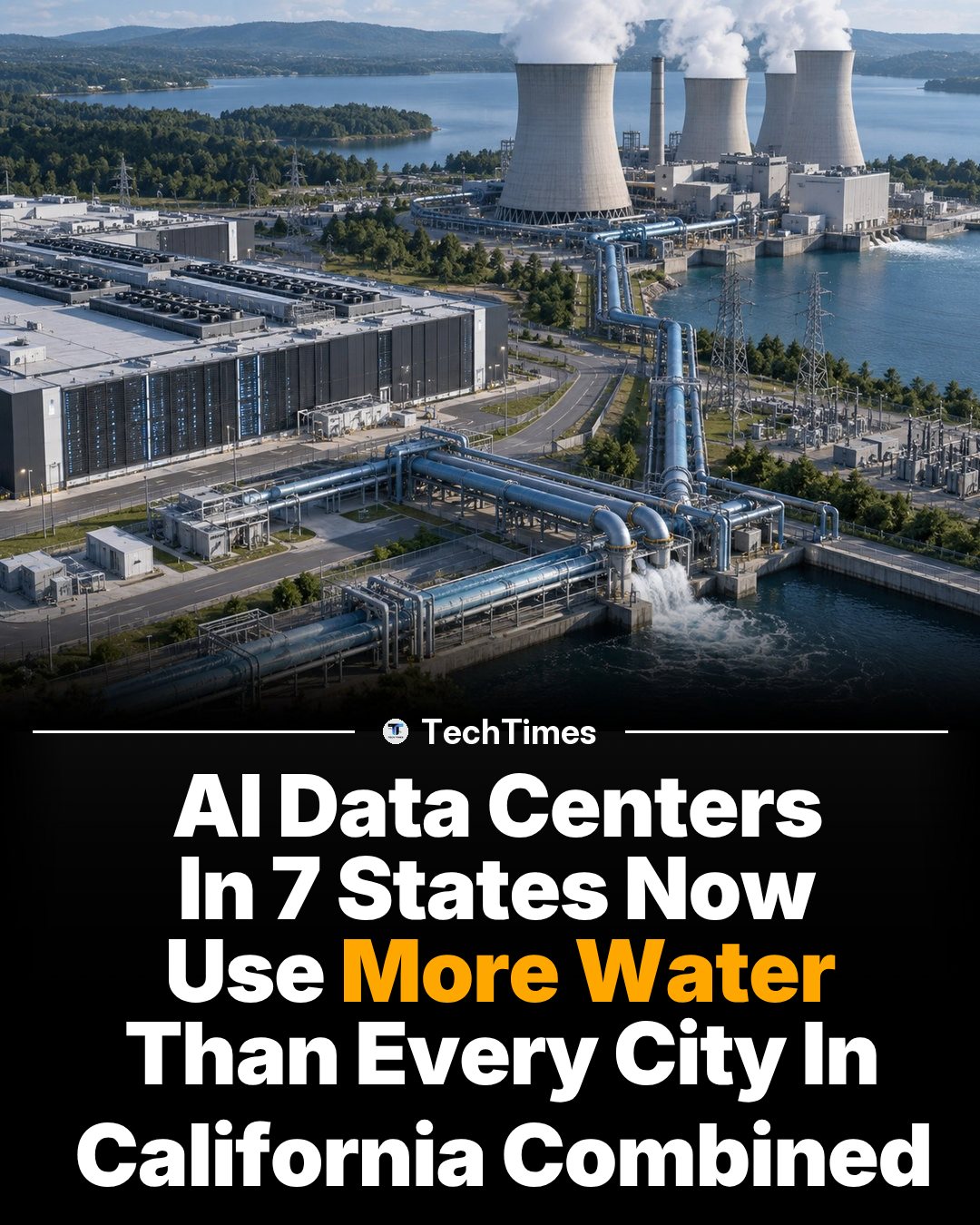
Data centers, the silent workhorses of the digital age, are increasingly under scrutiny for their monumental thirst. AI data centers in seven states now consume more water than all the cities in California combined. This staggering fact highlights a hidden cost of our technology-driven world: a rapidly growing demand for water to cool these data hubs.
The Hidden Water Cost of AI
Data centers are vast facilities packed with servers that power everything from streaming services to complex AI models. To keep these servers from overheating, data centers use enormous amounts of water for cooling. This water is primarily used in cooling towers, where it evaporates to remove heat from the servers. AI data centers, in particular, require even more cooling due to the intense processing demands of AI workloads. The scale of water consumption is startling. In seven states, the water used by AI data centers exceeds the combined usage of every city in water-stressed California. This includes both direct water use—such as the water that evaporates from cooling towers—and indirect use, like the water needed to generate the electricity that powers these centers. The environmental impact of this water usage is twofold. First, it exacerbates water scarcity in areas where water is already a precious resource. Second, it contributes to the carbon footprint of data centers, as the energy required to pump, treat, and heat the water adds to their overall greenhouse gas emissions.
A Growing Thirst in a Dry World
As AI continues to evolve, so does the demand for data centers. The increasing reliance on AI and machine learning models means more servers, more energy consumption, and, consequently, more water use. This trend is particularly concerning given the ongoing droughts and water shortages in many parts of the world. The tech industry's growing thirst for water is colliding with the reality of water scarcity in a climate-changed world. Data centers are often located in areas with abundant, cheap electricity, which is crucial for their operation. However, these areas might not have sufficient water resources. This geopolitical misalignment makes it challenging to balance the need for technological advancement with environmental sustainability. AI data centers’ water usage is a clear sign of a larger trend: the environmental impact of the digital age is more complex and far-reaching than we often realize. data center water usage is not a problem that can be solved in isolation, but rather requires a holistic approach to sustainable development.
Making Connections: Cooling Towers and Energy Use
Cooling towers are a critical component of data centers' water consumption. These structures use evaporative cooling to dissipate heat from the servers. Cooling towers work by circulating water through a system of pipes and nozzles, where it evaporates and cools the air. This process is highly water-intensive and contributes significantly to the overall water footprint of a data center. In the visual summary, the aerial view of a data center complex alongside cooling towers underscores the scale of water usage in these facilities. While the cooling towers are essential for maintaining the servers' optimal operating temperatures, their water consumption poses a significant environmental challenge. This is particularly relevant in regions where water is a scarce resource and energy demands are high.
Direct and Indirect Water Use
Direct water use in data centers refers to the water that is directly consumed for cooling purposes. This includes the water that evaporates from cooling towers and the water used in other cooling systems, such as chillers and air conditioners. Indirect water use, on the other hand, includes the water required to generate the electricity that powers the data centers. This includes the water used in power plant cooling systems and the water used in the generation of fossil fuels.
The Energy-Energy Tradeoff
The energy requirements of data centers are substantial, often exceeding the power consumption of small cities. This energy is primarily used to power the servers and the cooling systems that keep them from overheating. In many cases, this energy is generated by fossil fuel power plants, which require large amounts of water for cooling. This creates a feedback loop where the water used for cooling the servers indirectly contributes to the centers' overall water footprint, exacerbating the problem. Even renewable energy sources, such as nuclear power, require significant amounts of water for cooling. The image of cooling towers adjacent to a likely nuclear power plant highlights this connection. While renewable energy sources are crucial for reducing the carbon footprint of data centers, their water requirements pose a unique challenge in water-stressed regions. Addressing these trade-offs will be essential for the sustainable development of the AI industry.
Water Solutions
While the challenge is daunting, there are several approaches to mitigating the water consumption of data centers. These include using more energy-efficient servers, implementing advanced cooling technologies, and leveraging renewable energy sources. There is also potential in using seawater for cooling in coastal data centers, although this approach comes with its own set of environmental considerations. Another innovative approach is the use of waste heat from data centers for heating nearby buildings. District energy systems can capture and redistribute this waste heat, reducing the overall energy demand and water consumption. Additionally, data centers can be designed with water-efficient cooling systems, such as air-cooled chillers and evaporative condensers. Finally, data center operators can invest in water recycling and reuse technologies. These systems can capture and treat waste water, making it available for reuse. For example, captured rainwater can be used for cooling purposes, reducing the reliance on fresh water supplies.
Evaluating Water Footprints
For anyone looking to understand or mitigate the water footprint of their data centers, several practical steps can be taken. The first is to conduct a comprehensive water audit. This involves assessing the data center's water consumption, identifying areas of high water use, and implementing measures to reduce water consumption. Use cutting-edge cooling technologies. Traditional cooling systems, such as air-cooled chillers and evaporative condensers, can be replaced with more water-efficient alternatives. This includes North American Server Farms' liquid immersion cooling, where servers are submerged in a dielectric fluid that efficiently dissipates heat.
- Initiate water recycling programs: Personalize a targeted program to capture and treat waste water. This can include rainwater harvesting, grey water recycling, and wastewater treatment systems.
- Energy-efficient servers and equipment: Invest in energy-efficient servers and equipment. This can significantly reduce the energy requirements of the data center, thereby reducing the indirect water usage associated with electricity generation. To tackle water usage at the design phase, a data center could locate in a coastal area where seawater can be used for cooling—a strategy employed by Denmark and especially Microsoft’s Project Natick. By leveraging the abundance of seawater, the data center can reduce its reliance on freshwater resources. This approach, while promising, requires careful consideration of the environmental impact on marine ecosystems. Otherwise, a data center should be located in a region with abundant, sustainable water resources. Additionally, it could leverage renewable energy sources, such as hydropower or solar energy, to power its operations.
Water: The Tech Industry's Looming Challenge
As data centers continue to grow, so too will their thirst. The environmental cost of our digital age—including the staggering water consumption of AI data centers—is a real and unsolved problem. A more sustainable future will demand innovative solutions, greater accountability, and a deeper understanding of the environmental trade-offs at the heart of the tech industry. Elevating the discussion around water usage in data centers is the first step in a long journey. The tech industry must now reckon with its hidden thirst and commit to charting a more sustainable path forward.
Watch the Reel
Questions readers ask
How much water does a single AI data center typically consume?
The article doesn't provide a specific figure for a single AI data center, but it highlights that these centers collectively consume more water than all the cities in California combined. This gives an idea of just how massive their consumption is, though precise numbers would require access to industry-specific data.
Which states are these AI data centers located in, and why were they chosen?
The article mentions that the AI data centers are located across seven states, but it doesn't specify which ones. These locations are likely chosen for their access to cheap electricity, which is crucial for powering the data centers, even if it means sacrificing water resources.
Why are AI data centers in particular more thirsty than regular data centers?
AI data centers require more cooling due to the intense processing demands of AI workloads. This means they need more water for evaporative cooling, which uses water to dissipate heat from the servers. The cooling towers used in these centers are highly water-intensive, contributing to their overall high water consumption.
How does the water usage of AI data centers contribute to their carbon footprint?
The water usage in AI data centers contributes to their carbon footprint in a couple of ways. First, the energy required to pump, treat, and heat the water adds to their overall greenhouse gas emissions. Second, the water itself is often sourced from areas facing water scarcity, which can lead to additional environmental impacts, such as the depletion of local water sources.
What measures can be taken to reduce the water consumption of AI data centers?
The article doesn't provide specific measures, but it's clear that a holistic approach is needed. This could involve developing more efficient cooling technologies, using recycled water, or locating data centers in areas with more abundant water resources. It's also important to consider the overall environmental impact of these centers, including their carbon footprint.
Related deep dives
Similar reads based on topic and creator.


Recent articles
Fresh deep dives from the latest Reels we unpacked.




Comments
Be the first to comment.