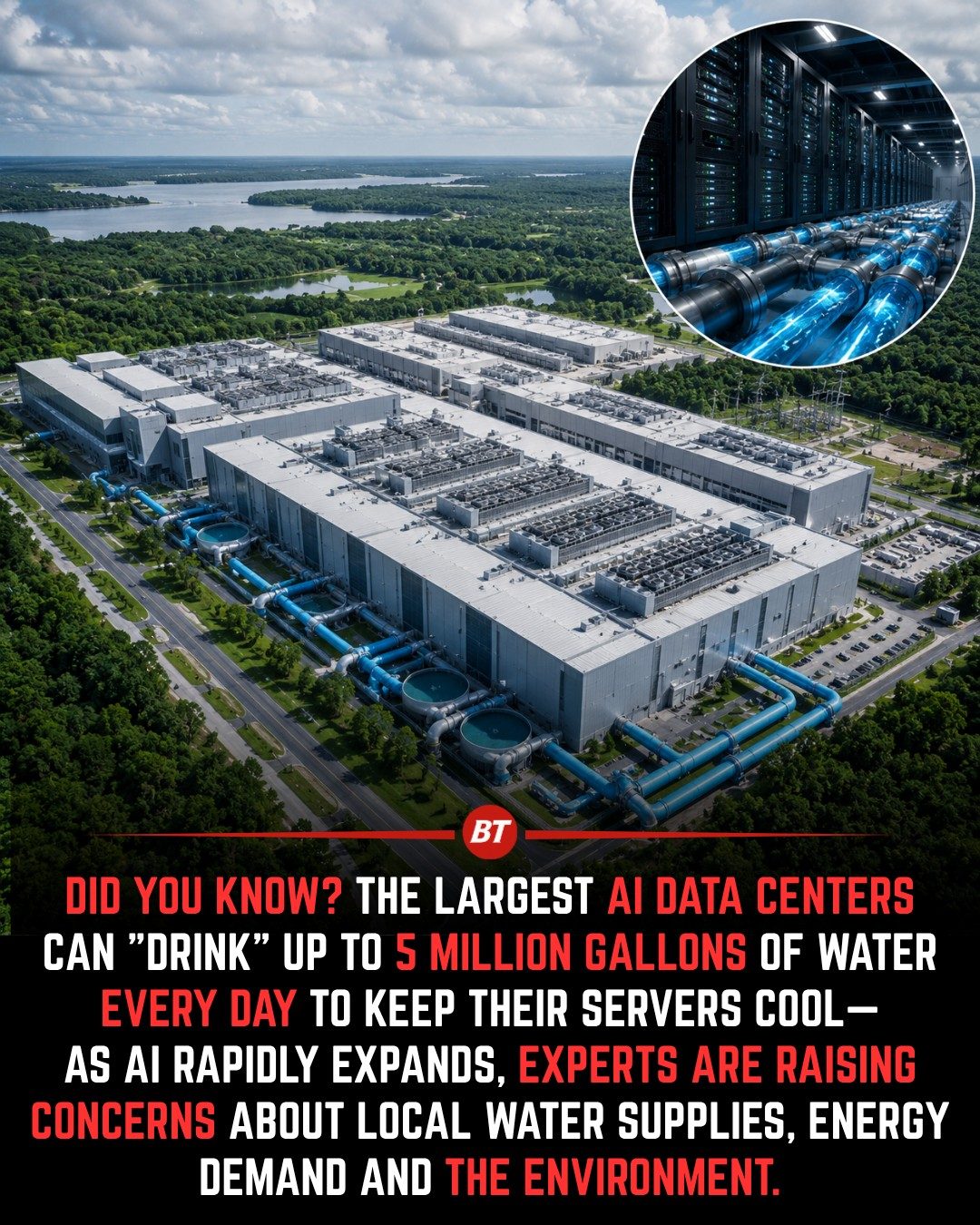
AI Data Center Water Usage
Data centers are the backbone of modern AI, housing the powerful processors that run algorithms and store vast amounts of data. However, the immense computing power required for AI comes with a significant environmental cost, particularly in terms of water usage. The largest AI data centers can consume up to 5 million gallons of water daily to keep their servers cool, raising growing concerns about local water supplies, electricity demand, and environmental sustainability.
Why This Matters
The rapid expansion of AI has led to an increase in the number and size of data centers worldwide. These facilities are essential for training and running modern AI models, which require enormous amounts of computing power. However, the environmental impact of these centers is a growing concern. Data centers generate tremendous amounts of heat, and cooling this equipment is essential to prevent overheating and maintain efficiency. Many data centers rely on water-based cooling systems, which can consume vast amounts of water, particularly during hot weather. At the same time, these centers require vast amounts of electricity, prompting experts to study their combined impact on water resources, power grids, and carbon emissions.
Main Discussion
The Role of Water in Data Center Cooling
Data centers use water-based cooling systems to manage the heat generated by their servers. Water absorbs heat from the equipment before being cooled and recirculated or evaporated through cooling towers. This process is essential for maintaining the efficiency and longevity of the servers, but it comes at a high water cost. During hot weather, water consumption can increase significantly, straining local water supplies.
The Impact on Local Water Supplies
The significant water consumption of data centers raises concerns about local water supplies, particularly in regions where water is scarce. As AI adoption accelerates worldwide, the demand for data center infrastructure is expected to increase, exacerbating the strain on water resources. Researchers estimate that global AI-related water consumption could increase substantially over the coming years, prompting governments, technology companies, and environmental researchers to explore solutions to mitigate this impact.
Energy Demand and Carbon Emissions
In addition to water usage, data centers also require vast amounts of electricity to power their servers and cooling systems. This high energy demand contributes to carbon emissions, further exacerbating the environmental impact of AI. As data centers expand to meet the growing demand for AI services, their combined impact on power grids and carbon emissions is a significant concern for policymakers and environmental researchers.
Innovations in Data Center Cooling
To address these concerns, newer data centers are investing in more sustainable cooling technologies. Air cooling, direct liquid cooling, and recycled water systems are becoming more common. Air cooling uses fans to circulate air through the data center, while direct liquid cooling pumps coolant directly onto the servers' heat-producing components. Recycled water systems capture and treat waste water for reuse in cooling processes. These innovations can significantly reduce both water consumption and carbon emissions, making data centers more environmentally sustainable.
Renewable Energy and Water-Sustainable Locations
In addition to improving cooling technologies, many data centers are also exploring the use of renewable energy sources such as solar, wind, and hydroelectric power. By powering their facilities with renewable energy, data centers can reduce their carbon footprint and contribute to a more sustainable future. Furthermore, locating new data centers in regions with more sustainable water resources can help mitigate the impact on local water supplies.
Data centers located in regions with abundant water resources, such as near coasts or rivers, can use seawater or river water for cooling, reducing their reliance on local water supplies. However, these solutions come with their own set of challenges, such as the potential impact on marine life or the need for extensive infrastructure to transport water over long distances.
Practical Tips
For Data Center Operators
- Implement Water-Saving Technologies: Invest in air cooling, direct liquid cooling, and recycled water systems to reduce water consumption.
- Use Renewable Energy: Transition to renewable energy sources to lower carbon emissions.
- Locate Strategically: Build new facilities in regions with sustainable water resources to reduce the strain on local supplies.
- Monitor and Optimize: Regularly monitor water and energy usage and optimize cooling systems to maximize efficiency.
For Policymakers and Environmental Researchers
- Promote Sustainability Incentives: Encourage data center operators to adopt sustainable practices through incentives and regulations.
- Support Research and Development: Fund research into more efficient cooling technologies and renewable energy sources.
- Educate the Public: Raise awareness about the environmental impact of data centers and the importance of sustainable practices.
Important Takeaways
- Substantial Water Consumption: The largest AI data centers can consume up to 5 million gallons of water daily to cool their servers.
- Environmental Impact: The rapid expansion of AI raises concerns about local water supplies, energy demand, and carbon emissions.
- Innovative Solutions: Newer data centers are investing in air cooling, direct liquid cooling, recycled water systems, and renewable energy to reduce their environmental impact.
- Sustainable Locations: Locating data centers in regions with more sustainable water resources can help mitigate the impact on local supplies.
Conclusion
As AI continues to transform industries and improve our daily lives, it is crucial to address the environmental challenges posed by data centers. By implementing sustainable cooling technologies, transitioning to renewable energy sources, and strategically locating new facilities, data center operators can reduce their environmental impact and contribute to a more sustainable future. Policymakers and environmental researchers also play a vital role in promoting sustainable practices and supporting innovation in this critical area.
Watch the Reel
Questions readers ask
How much water do AI data centers typically consume for cooling?
Large AI data centers can consume up to 5 million gallons of water daily to maintain optimal operating temperatures for their servers. This significant water usage is primarily due to the immense heat generated by the powerful processors required for AI computations.
What methods are used to cool AI data centers?
AI data centers employ various cooling methods, including water-based systems, where water is circulated to absorb heat from servers. Other methods include air conditioning, evaporative cooling, and advanced techniques like immersion cooling, which submerges servers in a non-conductive liquid to dissipate heat efficiently.
How does the expansion of AI data centers affect local water supplies?
The rapid growth of AI data centers can strain local water supplies, particularly in regions with limited water resources. This increased demand can exacerbate water scarcity issues and impact local communities that rely on the same water sources for daily needs and agriculture.
What is the relationship between AI data centers and electricity demand?
AI data centers require vast amounts of electricity to power their servers and cooling systems, leading to increased electricity demand. The combined energy consumption for computing and cooling can significantly impact power grids, especially during peak usage times and in hot weather conditions.
What are some sustainable AI technologies being explored to reduce water consumption?
Industry experts are exploring several sustainable technologies to reduce water consumption in AI data centers. These include improving cooling efficiency, employing renewable energy sources, and adopting innovative cooling methods like immersion cooling and free air cooling, which utilizes outside air to cool servers when ambient temperatures are low.
How can data centers mitigate their environmental impact?
Data centers can mitigate their environmental impact by implementing water recycling systems, using renewable energy sources, and optimizing cooling technologies. Additionally, data centers can adopt energy-efficient hardware and software solutions that reduce overall power and water consumption, contributing to a more sustainable AI infrastructure.
Related deep dives
Similar reads based on topic and creator.




Recent articles
Fresh deep dives from the latest Reels we unpacked.



Comments
Be the first to comment.