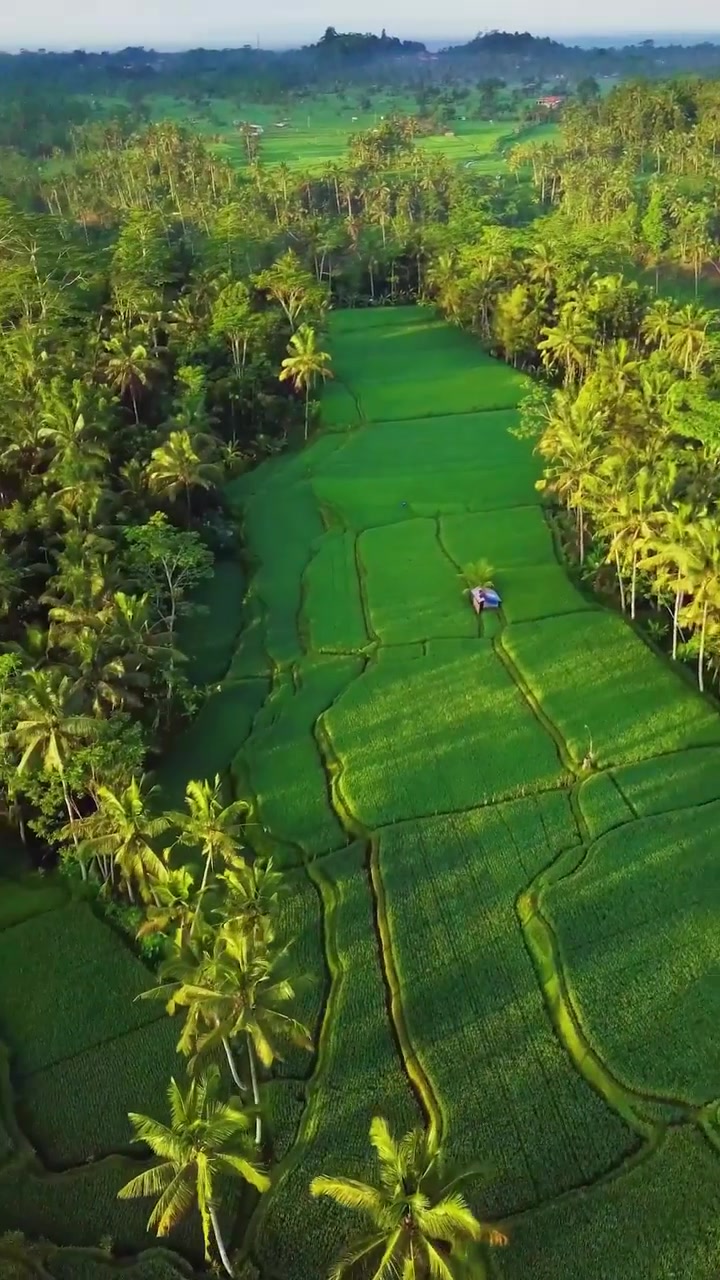
Terraced fields from above
In the heart of a tropical paradise, a miles-long vista of emerald green unfurls in perfect, concentric steps. This is no miracle of nature, though geological wonders have a hand in the conversation. These are terraced rice fields, a painstakingly engineered marvel that supplies food for millions worldwide. Created over centuries, the slender pathways between pools of water and grain are like an intricate landscape puzzle — one in which humans and nature cooperate for a sustainable solution. At first glance, rice terraces appear as a lush green expanse, nearly indistinguishable from natural mountain slopes. However, the closer you look, the more you see how intricately the fields and matching canals are laid out. This method perpetuates a delicate balance between man's needs and nature's design. The physical size is extreme. The puzzle stretches for miles, forming an intricate patchwork. Rice terraces are a testament to human logic intertwined with nature's organic energy.
Why it matters — the global graft of extended landscapes
Landing on these landscapes is like a time machine, transporting viewers back to a world where agriculture was a communal endeavor: as significant as a role with justice. Today, only a handful of these terraced regions are left intact. But their preservation is pivotal. They should be studied to incorporate the same genius into modern sustainable agriculture. As larger ecosystems face climate change and growing population sizes, rice terraces can offer insights into maintaining sustainable practices in other parts of the world. The rice terraces’ preservation is a story of resilience, showcasing human innovation and adaptability. Beyond their agricultural significance, rice terraces hold immense historical and cultural value. They stand as reminders of the ingenuity and perseverance of early civilizations. The terraces reflect a deep understanding of ecological systems, showcasing how ancient communities harmonized with their natural surroundings. By preserving these sites, future generations can learn from these ancient practices, ensuring that the legacy of sustainable and harmonious living is not lost.
Terraced rice fields make the mundane magical
The art of building rice terraces
In order to create these terraces, farmers needed to be part landscaper and part engineer. The terraced fields are laid out to capture water, particularly rainwater and irrigation, and distribute it evenly across the fields. This method allows farmers to grow rice in areas that were previously unsuitable for agriculture. Farmers designed the terraces to have a slight gradient, which helps in water drainage and prevents waterlogging. The terraces are typically two to five meters wide, with a height of around 50 cm to ensure the soil is well-aerated and nutrient rich. To build terraced rice fields, farmers check that the terraces are level and stable. For the irrigation system, they build a series of water channels and reservoirs to store water, which can later be used for irrigation. The terraced fields can be built on steep slopes or flat lands, depending on the location, but water management is always the essential part of the equation.
Rice and more
While rice is the primary crop grown in these terraced fields, many other crops can thrive in this environment. Farmers typically plant rice in the lower terraces, where water distribution is more consistent, while crops like vegetables, fruits, and even flowers are grown in the upper terraces. This diversification helps in maintaining soil fertility and reducing the risk of crop failure. The biodiversity of the terraced fields supports a variety of wildlife, creating a healthy ecosystem that benefits both the crops and the surrounding environment. To maintain the terraced fields, farmers use traditional methods, including manual weeding, natural fertilizers, and pest control. Farmers also practice crop rotation and intercropping to maintain soil health and fertility. The terraced fields are not only a source of food but also a way of life for the farmers and their communities. The preservation of these fields is essential for maintaining cultural heritage and promoting sustainable agriculture.
The peacemaking purpose
The terraced fields are not only a source of food, but also a way of life for the farmers and their communities. The preservation of these fields is essential for maintaining cultural heritage and promoting sustainable agriculture. But they can also teach us a thing or two about making peace. Rice terraces are often found in regions with a history of conflict, and their preservation can contribute to building peace and fostering social cohesion. In these regions, rice farming communities have often faced political and social challenges, including displacement, land grabbing, and conflict. The preservation of rice terraces can help address these issues by promoting sustainable livelihoods and fostering a sense of community among farmers. By working together to maintain and protect these fields, farmers can build strong, resilient communities that can weather political and social storms. Rice terraces can also provide a source of income for local communities, helping to reduce poverty and promote economic development. The preservation of these fields is essential for maintaining the cultural, historical, and environmental value of these regions.
Evaluating the traditions and trends of landscapes
To have a modern-day agricultural system akin to rice terrace landscapes, we have some work to do. As urbanization increases, many of these terraced fields are being converted into residential and commercial areas, leading to the destruction of these valuable landscapes. Climate change also poses a significant threat to these fields, with extreme weather events and changing precipitation patterns affecting crop yields and water availability. Preservation efforts are underway in many regions, but they face significant challenges, including funding and political support. Some agricultural practices that mimic the principles of rice terrace systems have been explored in various parts of the world, showing promising results. Techniques like mixed farming, diversified cropping, and agroforestry can help maintain soil health and biodiversity while providing a sustainable livelihood for farmers. Incorporating traditional knowledge with modern technology can also enhance agricultural productivity and resilience. As we continue to explore these practices, the importance of preserving rice terraces becomes even more apparent. They serve as a living laboratory for sustainable agriculture.
Practical angle — for those interested in these landscapes
Many countries have designated these fields as UNESCO World Heritage Sites. The Philippines' Banaue Rice Terraces and the Ifugao Rice Terraces is the most famous example. It's steeped in rich history and an amazing sight to see. Visitors will never forget the glistening fields, running in every direction. However, the most pristine method is to book a day tour with a local guide who can explain the history and significance. This way, people will get the real experience and a deep dive into the culture. The fields are a must-see for any serious traveler, and their beauty can be captured through photographs and videos. The fields are also a popular destination for tourists, with many countries offering guided tours and trekking experiences. Many visitors enjoy the breathtaking views and the cultural experience. Some tourists come to see how rice is cultivated. When visiting, you should follow sustainable tourism practices to help preserve these fields for future generations. The key is to minimize your impact on the environment and support local communities. Participate in activities that promote sustainable tourism, such as eco-friendly lodging and local food tasting.
A day in the fields
Make sure you book a trip during the right time of year. When the terraces are in full bloom, the vibrant greenery is breathtaking. The best time to visit is during the rice harvesting season, when the terraces are lush and green. This period usually falls between May and October, depending on the region. When you visit these fields, wear comfortable shoes and clothing suitable for hikes. The terrain can be uneven and steep. You are likely to encounter some challenges if you are not wearing the right gear. Also, bring weather-appropriate clothing, as the weather can change quickly. You should carry enough food and water to sustain you throughout the day, as well as a first-aid kit.
Watch the Reel
Questions readers ask
What exactly are tropical rice terraces and how were they created?
Tropical rice terraces are vast, intricately designed fields shaped like steps, stretching for miles. They were created by farmers who acted as both landscapers and engineers, designing the terraces to capture and distribute water efficiently. This allowed rice to be grown in areas that were previously unsuitable for agriculture. The terraces have a slight gradient to prevent waterlogging and ensure the soil remains well-aerated and nutrient-rich.
How do rice terraces demonstrate the harmony between humans and nature?
Rice terraces showcase a delicate balance between human needs and nature's design. They are engineered to capture and distribute water effectively, making use of natural resources like rainwater and irrigation. This cooperation between humans and nature has allowed for sustainable agriculture in areas that might otherwise be unsuitable for farming, maintaining a harmonious relationship with the environment.
Why are rice terraces important for sustainable agriculture today?
Rice terraces serve as a model for sustainable agriculture. They offer insights into how to maintain agricultural practices in the face of climate change and growing populations. By studying these ancient systems, we can incorporate their genius into modern farming methods, ensuring that we can feed the world while preserving the environment.
What historical and cultural significance do rice terraces hold?
Rice terraces are more than just agricultural marvels; they hold immense historical and cultural value. They stand as reminders of the ingenuity and perseverance of early civilizations, showcasing a deep understanding of ecological systems. By preserving these sites, we can learn from ancient practices and ensure that the legacy of sustainable and harmonious living is not lost.
How are rice terraces built, and what role does water management play in their design?
To build rice terraces, farmers ensure the terraces are level and stable, and construct a series of water channels and reservoirs for irrigation. The terraces are designed with a slight gradient to facilitate water drainage and prevent waterlogging. The terraced fields are typically two to five meters wide, with a height of around 50 cm to ensure the soil is well-aerated and nutrient-rich.
How does the preservation of rice terraces benefit future generations?
Preserving rice terraces allows future generations to learn from ancient sustainable practices. These terraces offer valuable lessons in ecological harmony and resilient agriculture, which can be applied to modern challenges like climate change and food security. By studying these sites, we can ensure that the knowledge of harmonious living with nature is passed down.
Related deep dives
Similar reads based on topic and creator.




Recent articles
Fresh deep dives from the latest Reels we unpacked.




Comments
Be the first to comment.