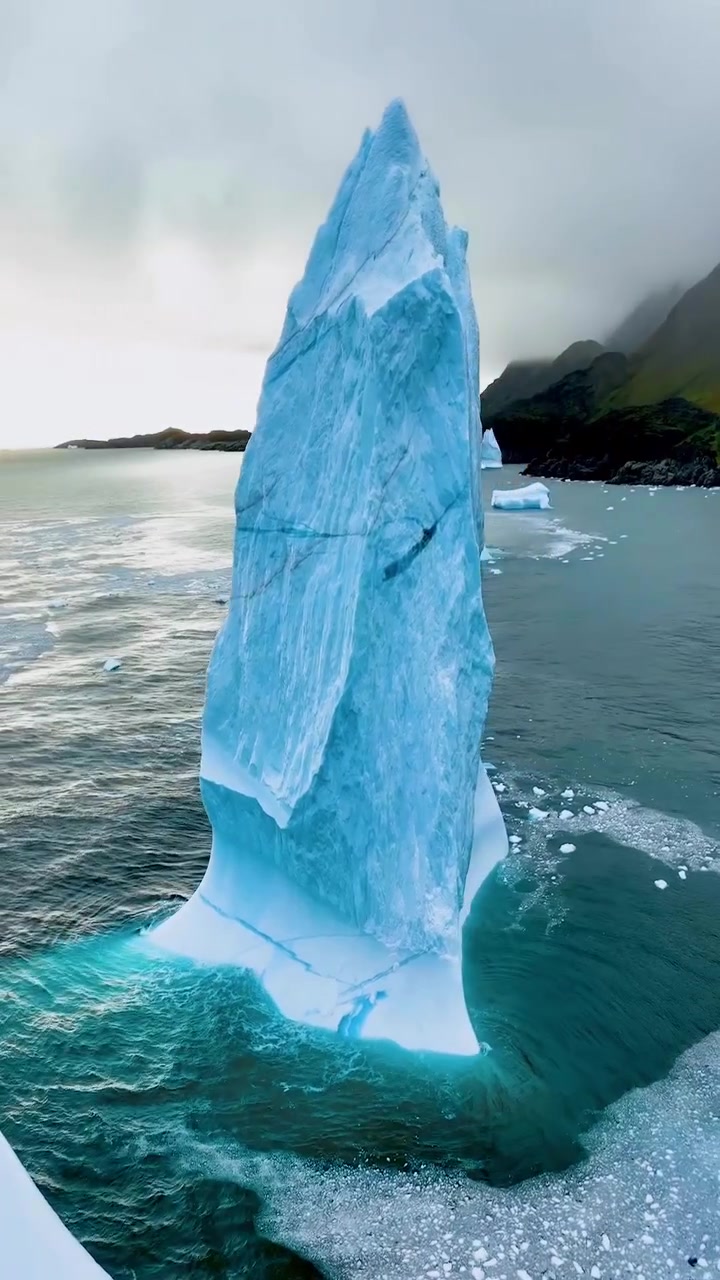
A single, massive iceberg floats in the vast expanse of the open ocean, its surface a mesmerizing blue. The iceberg's size and unique shape are striking, going beyond typical expectations of floating ice. Icebergs are floating bodies of ice that have broken off from glaciers or ice shelves. They come in a variety of sizes, each shaped by the forces of erosion and time. This particular iceberg is remarkable for both its striking blue color and its unusual form, differentiated by intricate details and a unique shape that make it stand out.
The Arctic Ocean in miniature
This iceberg is a snapshot of the Arctic in miniature, the blue color of the ice resulting from sunlight entering the ice and being absorbed by the red, orange, and yellow wavelengths. The blue light bounces around and eventually exits the ice, lending the iceberg its distinctive hue. The intricate details and unique shape of this iceberg are a testament to the natural forces that have sculpted it over time. The ocean's constant motion and the forces of wind and erosion combine to create the iceberg's distinctive features. These icebergs have birthed the genre of iceberg landscapes. However, this iceberg is more than just a frozen mass. The iceberg’s intricate details and geometric forms, ranging from deep crevices to jagged edges and translucent blue layers, encapsulate the timeless interaction between the freezing north and the dynamic ocean.
The Arctic Ocean’s expanding role in climate science
Icebergs are one of the quintessential symbols of climate change, contributing to the stark, urgent transformations shaping the Arctic ecosystem. This iceberg exemplifies the Arctic Ocean’s emerging role as a frontier for climate science, where researchers investigate the intricate effects of melting ice. Approximately 100 research vessels are continually deployed to monitor the region's challenges and study the ocean’s extensive impact on global climate patterns. Recurrent expeditions also gather sensory data on temperature and salinity. The iceberg’s gradual dissociation and disintegration contribute to crucial marine processes. The consequences of melting icebergs ripple far beyond the Arctic, extending to global climate patterns and sea-level rise. The primary issue stems from the fact that melting icebergs release freshwater into the ocean, which disrupts ocean circulation and marine ecosystems. These disruptions have the potential to carry the ripple effects further, influencing weather patterns, biodiversity, and coastal communities. This iceberg highlights the urgent need for a balanced, holistic assessment of the Arctic’s complexities and a laborious examination of the broader implications of climate change on the region. This iceberg is a silent sentinel, a testament to the intricate relationship between the polar regions and the rest of the planet.
Birds-eye perspectives
There is something uniquely powerful about viewing an iceberg from a bird’s-eye view. This aerial perspective reveals the iceberg’s imposing dimensions and serene beauty like no other angle can. Large icebergs have a towering presence, rising dramatically from the ocean’s surface. Capturing this perspective from above—the crucial element that elevates this image to the level of art—allows viewers to truly grasp the scale and beauty of the natural world. From above, the iceberg's striking coloration reflects the ocean's depth and clarity.
Engineering marvels of nature
Icebergs are naturally occurring marvels, with structural stability and permanence rivaling any human-engineered construction. The iceberg’s form, carved by centuries of wind, water, and temperature variances, reflects the grandeur and intricate craftsmanship of nature. The strength of the materials involved and the complexity of the engineering processes that shaped the glaciers behind them is remarkable. Layered with blue ice and intricate cracks, this iceberg maintains a sense of timelessness and stability despite the constant movement of the ocean. But structural integrity is not the only advantageous feature of these natural wonders. Icebergs are an essential component in the distribution of nutrients into the ocean. The addition of freshwater from icebergs can foster the creation of phytoplankton, which forms the foundation of the oceanic food web.
Flipping the script
Icebergs such as this one may potentially inhabit life and new dynamics. Once these icebergs get grounded near the seafloor, the ocean currents can cause them to capsize, thus changing the features of their landscape. However, this process is not straightforward and tends to occur after many years. When such a drastic transformation does happen, it creates new intricate patterns and distinctive cracks in the iceberg, influencing its dynamic relationship with the ocean around it. Despite the physical impact of environmental changes, marine life continues to thrive within these waters, laying the groundwork for a new ecosystem. Birds and sea mammals once dependent on the glaciers can find shelter in the newly established regions. Since icebergs are integral to the health and progress of marine ecosystems, a complete comprehension of this relationship is essential.
Equip yourself against the elements
Taking a trip to see icebergs up close might be easier than it looks. Recognize the safety precautions necessary for any iceberg expedition. Icebergs are inherently unpredictable. They drift with ocean currents and can move unexpectedly and unpredictably, presenting a hazards to vessels, wildlife, and personnel in the area. Buoyancy, dynamic shifts in currents, and ice structures are key factors to every trekking adventure. Prepare for the differences between a snow-covered wilderness and the open ocean. Finally, be sure to research any potential consequences of climate change in the region and inform others about what you learn and see.
- Get the right gear: Dress in layers, making use of moisture-wicking fabrics. A sturdy life vest and waterproof coating are musts.
- Seek out experienced guides: There are reputed iceberg voyaging companies that know Arctic Ocean landscapes like the backs of their hands.
- Stay safe: Constantly gauge the movement of the icebergs with patience. Stay clear of the iceberg’s edges, as there is always a possibility of ice fracturing or capsizing.
Watch the Reel
Questions readers ask
What causes the blue color of the iceberg?
The iceberg's blue color results from sunlight entering the ice and being absorbed by the red, orange, and yellow wavelengths. The blue light bounces around and eventually exits the ice, giving it a distinctive blue hue. This process is similar to how the sky appears blue, but it's happening within the ice itself.
Is this iceberg a typical example of an Arctic iceberg?
Not quite. While the iceberg in the article is remarkable for its size, color, and shape, it is not a typical example. Icebergs come in various sizes and shapes, and this one is particularly unique due to its intricate details and unusual form.
How do icebergs form and what shapes them?
Icebergs form when chunks of ice break off from glaciers or ice shelves, a process known as calving. The forces of erosion, wind, and the ocean's constant motion shape them over time, creating the distinctive features and unique shapes seen in icebergs. This particular iceberg's form is a testament to these natural forces.
How do icebergs contribute to climate science research?
Icebergs are key indicators of climate change. Researchers monitor icebergs to understand the effects of melting ice on the Arctic ecosystem and global climate patterns. Approximately 100 research vessels are deployed to study the ocean’s impact on climate, gather data on temperature and salinity, and observe the disintegration of icebergs, which contributes to crucial marine processes.
What are the environmental impacts of melting icebergs?
Melting icebergs release freshwater into the ocean, which disrupts ocean circulation and marine ecosystems. This can lead to changes in weather patterns, biodiversity loss, and impacts on coastal communities. The process highlights the interconnectedness of the Arctic with the rest of the planet, making it a critical area for climate research.
Related deep dives
Similar reads based on topic and creator.




Recent articles
Fresh deep dives from the latest Reels we unpacked.




Comments
Be the first to comment.