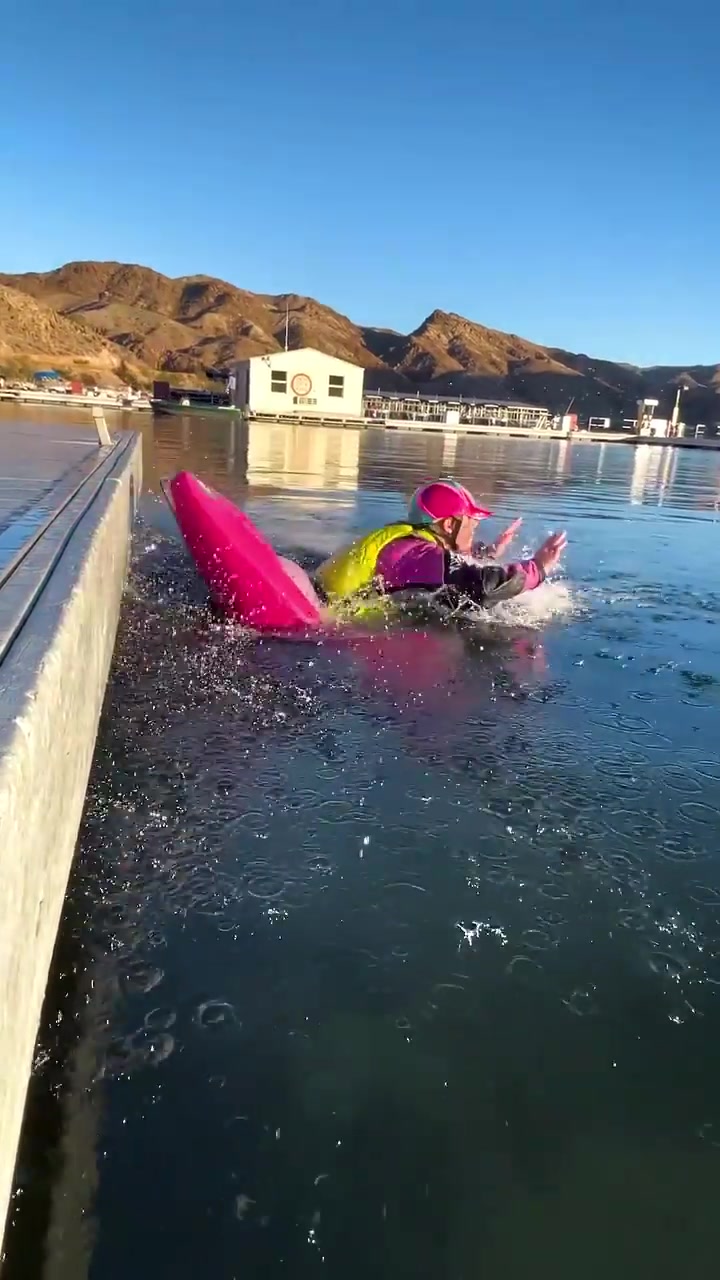
The Willow Beach Flip Gone Wrong
Positioned at the edge of the Black Canyon region of the Colorado River, Willow Beach beckons to water sports enthusiasts, with 235 miles of shoreline. Adventurous Miss (a.k.a @adventurous.miss) brought her physical prowess to Willow Beach — one of the most unique scenery and wildlife locations — to overlook her kayak trick. But as the kayaker attempts a flip, things go sideways, and the head of the kayak flips towards the user's face, swinging the vessel, and the person ends up in the river. Often, the kayak floats away, the kayaker swims to retrieve it.
Kayak Flips
Kayak flips or rolls are advanced maneuvers often practiced in whitewater kayaking — requiring kayaks with a spray skirt, attached to the waist, to prevent water from entering. These flips are part of the freestyle kayaking discipline, allowing kayaks to spin 360 degrees around their long axis. Freestyle kayaking has grown in popularity with the development of specially designed boats and these tricks performed in 90-degree angles. Freestyle kayakers often practice these tricks in calm water. Kayak flips aren't just about showmanship. They're a crucial safety skill for kayakers, enabling them to right their kayak in case of a capsize in rough waters. Flipping a kayak involves a combination of body movements and paddle techniques. The kayaker typically leans back slightly and uses a swift, sweeping motion with the paddle to initiate the flip. The kayak then rolls over, and the kayaker must quickly reposition themselves and the paddle to right the kayak. The kayaker must then swim back to shore.
The Risk of White Water Kayaking
The wake of the river is a mix of adrenaline, splashing water and unexpected twists. The American Whitewater Association estimates that roughly 110 kayak-related deaths occur annually in the United States. White water kayaking is exhilarating, but the water's force and the inherently unstable nature of a kayak make it an inherently risky sport. Kayak flips or rolls aren't just a way to show off; these maneuvers are a vital safety skill for kayakers, allowing them to right their kayak in case of a capsize in rough waters. However, performing these tricks in moving water, especially rapids, can be dangerous.
The Technique
The kayaker's aim is to execute a flat spin rather than a twist. Flat spin means the kayak rotates around a horizontal axis pointing downwards. This is usually done by applying force -Paddling technique is critical for initiating and completing the kayak flip. The kayaker
- Positioning is crucial during a flip. Kayakers learn to lean back and use their core to maintain stability
- As a result of the force, the kayak flips over, with the kayaker landing in a prone position, ready to paddle away.
Spray Skirts in Action
A spray skirt is a vital piece of equipment for kayakers, particularly when attempting a flip. The skirt is worn to prevent water from entering the kayak through the cockpit opening. This ensures that the kayaker remains dry and the kayak stays buoyant during flips. The kayaker puts on the spray skirt over their waist and secures it to the kayak's cockpit. When a flip occurs, the skirt contracts but remains attached, creating a watertight seal. At the end of the flip, the kayaker can easily release the skirt and quickly re-enter the kayak.
Kayak Flips: The Practical Angle
Why attempt a kayak flip? The answer is not just about thrill-seeking; it’s a vital safety skill. Here’s how to get started:
- Start with a Dry Practice: Before attempting a kayak flip in open water, practice on dry land. Learn the movements and techniques to execute a flip often, which will help you to know where the kayak flips can go wrong, as well as being a good way to avoid anxiety.
- Wear a Helmet: Safety first. A properly fitted helmet protects your head from potential impacts during practice.
- Wear a Spray Skirt: This is essentially a rubber skirt that is attached to the kayak and worn over the kayaker’s waist. It prevents water from entering the cockpit, keeping the kayaker dry and the kayak more stable.
- Learn the Basic Moves: Practice leaning back slightly and using a swift, sweeping motion with the paddle to initiate the flip.
- Practice in Calm Water: Before trying out any tricks in moving water, it's best to practice in calm, still water so you can work on your technique without worrying about the current or other obstacles.
- Stay Safe: If you're planning to attempt kayak flips, it's crucial to have someone nearby who can bring you any immediate necessities, such as water, sunscreen or medical supplies.
- Listen to Your Body: It’s easy to get caught up in the excitement of kayaking, but if you’re feeling tired or sore, take a break. Pushing yourself too hard can lead to injury. As you see, the kayak flip can be a very useful technique to execute. But if you're just starting, be sure to take lessons and practice under the supervision of experienced kayakers.
Watch the Reel
Questions readers ask
What exactly is a spray skirt and why is it important for kayaking, especially when attempting a flip?
A spray skirt is a piece of gear that kayakers wear to keep water out of their kayak. It attaches to the kayak's cockpit and the kayaker's waist, creating a barrier that prevents water from entering the vessel. This is crucial during flips or rolls, as it helps maintain buoyancy and keeps the kayaker dry, which is essential for safety and comfort.
How dangerous is whitewater kayaking, and what are the main risks involved?
Whitewater kayaking is inherently risky due to the force of the water and the unstable nature of the kayak. The American Whitewater Association reports around 110 kayak-related deaths annually in the U.S. The main risks include capsizing, getting trapped under the kayak, or being swept away by strong currents. Performing advanced maneuvers like flips in moving water can exacerbate these dangers.
What is the difference between a flat spin and a twist in kayaking?
A flat spin in kayaking involves rotating the kayak around a horizontal axis pointing downwards, keeping the kayak relatively level. This is the desired movement for many kayak flips. A twist, on the other hand, involves more of a side-to-side or diagonal rotation, which can be less stable and more difficult to control, especially in moving water.
Can beginners attempt kayak flips, or is this an advanced skill?
Kayak flips are generally considered an advanced skill and are not recommended for beginners. They require a good understanding of paddle techniques, body positioning, and the ability to handle the kayak in various situations. Beginners should focus on mastering basic paddling skills and safety techniques before attempting more complex maneuvers.
What should a kayaker do if their kayak flips in moving water?
If a kayak flips in moving water, the kayaker should first focus on staying calm and trying to right the kayak using proper techniques. If the kayak is not recoverable, the kayaker should prioritize their own safety by swimming to the nearest shore or safe spot, while trying to keep hold of the kayak if possible. It's crucial to have proper safety gear and know how to use it in such situations.
Are there specific types of kayaks designed for freestyle kayaking and performing tricks like flips?
Yes, there are specially designed kayaks for freestyle kayaking that are more maneuverable and stable for performing tricks. These kayaks are typically shorter, have a more rounded hull, and are built with materials that enhance their durability and performance in rough waters.
How can kayakers practice flips safely before attempting them in moving water?
Kayakers can practice flips safely by starting in calm water, where the risks are minimized. They should focus on mastering the body movements and paddle techniques required for a successful flip. Gradually, as their skills improve, they can move to more challenging conditions, always ensuring they have the necessary safety gear and knowledge.
Related deep dives
Similar reads based on topic and creator.


Recent articles
Fresh deep dives from the latest Reels we unpacked.




Comments
Be the first to comment.