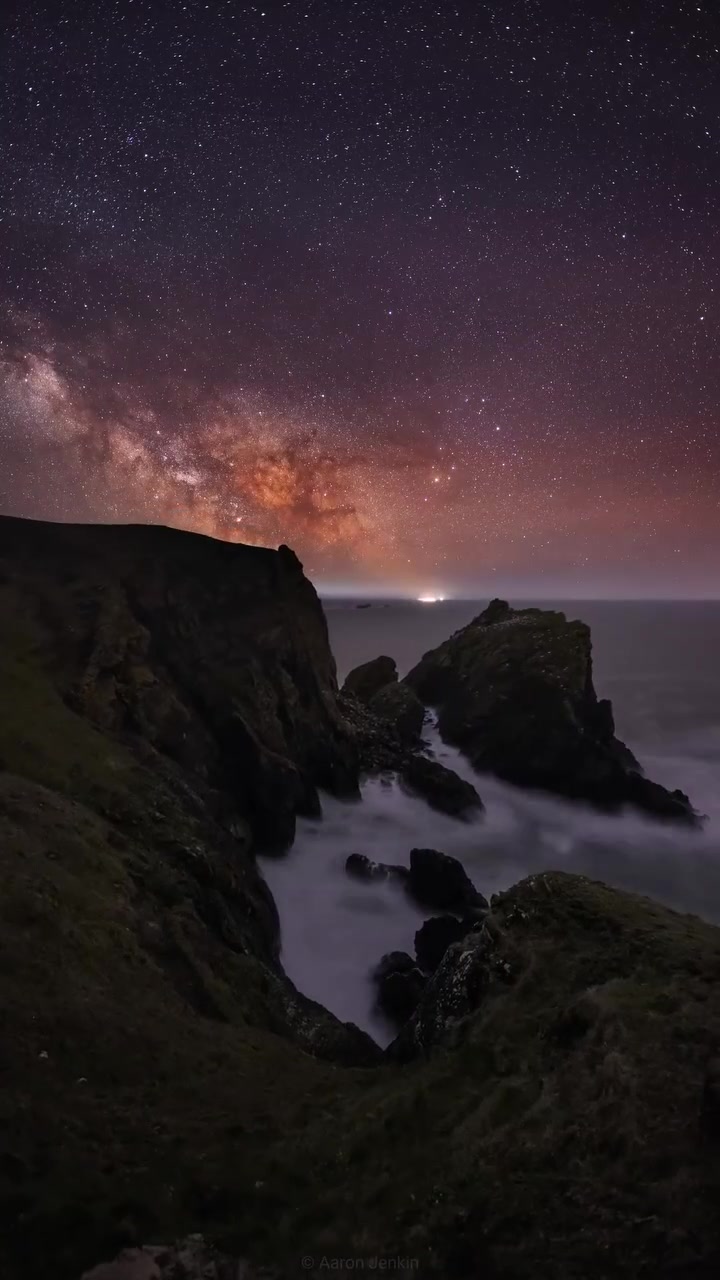
The Milky Way arching over Cornwall's dramatic cliffs, astrophotographers know Cornwall's skies are a nighttime treasure. Aaron Jenkin’s nightscape captures more than just the Milky Way — the Northern Lights dance overhead, while a rugged coastline stretches out before a serene ocean bordered by dark cliffs. Cornwall’s skies have a lack of light pollution, which makes it an exclusive place for astrophotography.
Nightscape Photography
While stargazing is casual, nightscape photography is deliberate. It captures the drama of the night sky — stars, galaxies, and celestial lights — and combines these with dramatic earthly landscapes. The process is laborious. Night landscapes aren't backlit by the sun, which means long exposures. An equatorial mount is often used to capture the rotation of the Earth (important when shooting celestial bodies like stars over long exposures). Nightscape photographers use long exposures to indicate the earth is rotating, and need to balance the light on the land with the soft light from sources far above. Extreme conditions complicate the craft. Nightscape photographers often shoot in remote wilderness, carry heavy equipment, and face unpredictable weather. Aaron Jenkin's vision of Cornwall's coastline is indelible for what he captures: the rotation of the earth and the majesty of the night sky. Our place on the planet itself seems transient, both vast and fragile. Nightscape photography requires planning, precision, and a willingness to brave the elements.
Beyond the bucket list
Globally, but especially in casual hobby circles, the image of the Milky Way and the night sky are symbols of wonder and adventure. The Milky Way’s beauty presents itself to us if we get anywhere not obstructed by light pollution. With light pollution growing, it's no surprise that nightscape photography is appealing as a hobby, and our night skies are the main attraction. Nightscape photography is also an educator: as we summarize the visualization of the rotation of the Earth as a universal need for an equatorial mount, we learn. Nightscape photography shows our place in the universe is punctuated by the beauty and wonder of the stars, but also that the Earth's rotation is physical and, in a way we rarely consider, part of our sensory experience. Cornwall is a bucket-list destination for scenes like Aaron Jenkin's; nightscape photography in these places is why people visit.
Cornwall: A Stargazer's Haven
Cornwall's rugged coastline, sandy beaches, and clear night skies make it a prime destination for nightscape photography. Cornwall’s lack of light pollution allows for stunning views of the Milky Way and other celestial phenomena. Stargazing in Cornwall is a unique experience, and the county is known for its dark skies. Cornwall captives the Milky Way hanging above the ocean, the mysterious allure of the night sky, photographs of complex auroras, and the glistening ocean.
What's Required? Equipment
Equipment is as important as the scenery. A key piece is the equatorial mount, which tracks the Earth's rotation. This allows for long exposures without star trails. Camera settings also matter. Using a wide-angle lens captures the vastness of the night sky. A sturdy tripod and a remote shutter release prevent camera shake, and a long exposure time captures the soft light from the stars. Astrophotographers must balance the exposure of the night sky with the earthly landscape, using light metering to avoid overexposing either. Photo software helps refines the image.
The Unseen Layers
A nightscape photograph like Jenkin’s captures both the sweeping landscape and the ethereal sky. Cornwall's vibrant aurora borealis adds another layer of drama. Nightscape photography blends the beauty of the natural world with the vastness of the universe. This form of photography requires patience, skill, and a deep understanding of both the landscape and the night sky. These images reflect a love for the night sky, as well as a passion for capturing natural beauty and the majesty of the Milky Way.
What Time of Night Is It, Exactly?
Nightscape photography isn't for beginners. Night sky time is magical, but it is complicated because celestial bodies move. For example, star trails are the result of the Earth rotating. Time of exposure has to be calculated to create the long-exposure frames used in timelapse. The pictures are a process composed of many pictures over time. This requires planning, from when to start shooting, to how long to shoot, to how long to keep the shutter open. Spectacular nightscape photographs like Jenkin's require complex work done in the dark.
Make Your Own Milky Way Masterpiece
Plan Ahead: Choose a dark sky location and use a moon phase calendar to plan your shoot. Avoid the full moon; the new moon is your friend, but a quarter phase will do. Check the weather and pollen report to maximize your view. Use photo software to plot the Milky Way’s position and combine with camera settings. Bring layers and stay until you get the shot.
- Bring the Gear: At minimum, a good camera, a wide angle lens, a tripod, a remote shutter release, an equatorial mount and bring extra batteries. You will need all three. The right settings make a huge difference. Depending on the scene work with exposures longer than 15 seconds. Use manual mode and keep your ISO low, to avoid noise in the photo, but increase it as necessary.
Watch the Reel
Questions readers ask
What exactly is nightscape photography and how does it differ from regular night photography?
Nightscape photography is a specialized form of night photography that focuses on capturing the drama of the night sky—including stars, galaxies, and celestial lights—combined with dramatic earthly landscapes. Unlike regular night photography, which might capture cityscapes or other man-made structures at night, nightscape photography requires long exposures and specialized equipment to capture the movement of celestial bodies and the rotation of the Earth. It's a more deliberate and technical process, often involving remote locations and challenging conditions.
Why is Cornwall such a popular destination for nightscape photography?
Cornwall is a prime destination for nightscape photography due to its rugged coastline, sandy beaches, and most importantly, its lack of light pollution. This makes it an ideal place to capture stunning views of the Milky Way and other celestial phenomena. The clear night skies and dramatic landscapes provide a perfect backdrop for capturing the beauty of the night sky, making it a bucket-list destination for many astrophotographers.
What kind of equipment is necessary for nightscape photography?
Nightscape photography requires specialized equipment to capture the night sky effectively. A key piece is an equatorial mount, which tracks the Earth's rotation to allow for long exposures without star trails. Additionally, a wide-angle lens is often used to capture the vastness of the night sky and the landscape. Other essentials include a sturdy tripod, a camera with good low-light performance, and remote shutter release to minimize camera shake.
Why do nightscape photographers often face extreme conditions?
Nightscape photographers often venture into remote wilderness areas to find dark skies free from light pollution. These locations can be challenging to access and may require carrying heavy equipment over difficult terrain. Additionally, unpredictable weather conditions, such as cold temperatures, wind, and moisture, can complicate the shooting process and test the photographer's endurance. The remote and often rugged settings are part of what makes nightscape photography both rewarding and challenging.
How does Aaron Jenkin's work in Cornwall exemplify the best of nightscape photography?
Aaron Jenkin's work in Cornwall exemplifies the best of nightscape photography by capturing the majesty of the night sky over the region's dramatic landscapes. His photographs not only showcase the Milky Way and the Northern Lights but also convey the sense of the Earth's rotation and our transient place on the planet. Jenkin's ability to balance the light from the land with the soft light from celestial bodies creates a sense of wonder and fragility, making his work both visually stunning and emotionally resonant.
Can nightscape photography be done in urban areas?
Nightscape photography is typically more challenging in urban areas due to light pollution, which can obscure the stars and other celestial bodies. However, it is not impossible. Photographers in urban settings might focus more on capturing the interplay between city lights and the night sky, or they might seek out pockets of darkness within the city, such as parks or rooftops. The key is to find a location where the light pollution is minimized, allowing for a better view of the night sky.
How does nightscape photography help us understand the Earth's rotation?
Nightscape photography often involves using an equatorial mount to track the Earth's rotation, which allows for long exposures without star trails. This process not only helps in capturing clear images of the night sky but also serves as a visual reminder of the Earth's constant movement. By seeing the stars in a fixed position relative to the landscape, viewers can better grasp the concept of the Earth's rotation and its impact on our daily experiences, even if we rarely think about it.
Related deep dives
Similar reads based on topic and creator.


Recent articles
Fresh deep dives from the latest Reels we unpacked.
Comments
Be the first to comment.