4 Days in Varanasi: A Comprehensive Travel Itinerary
Varanasi, one of the oldest continually inhabited cities in the world, offers a unique blend of spirituality, history, and culture. Whether you're a first-time visitor or a seasoned traveler, a 4-day itinerary can help you experience the essence of this sacred city. Here’s a detailed guide to make the most of your time in Varanasi.
Why This Matters
Varanasi, also known as Banaras or Kashi, is a city of profound significance. It is believed to be the abode of Lord Shiva and is considered one of the holiest places for Hindus. The city's ghats, temples, and ancient markets offer a rich tapestry of experiences that can deeply enrich any traveler's journey.
Main Discussion
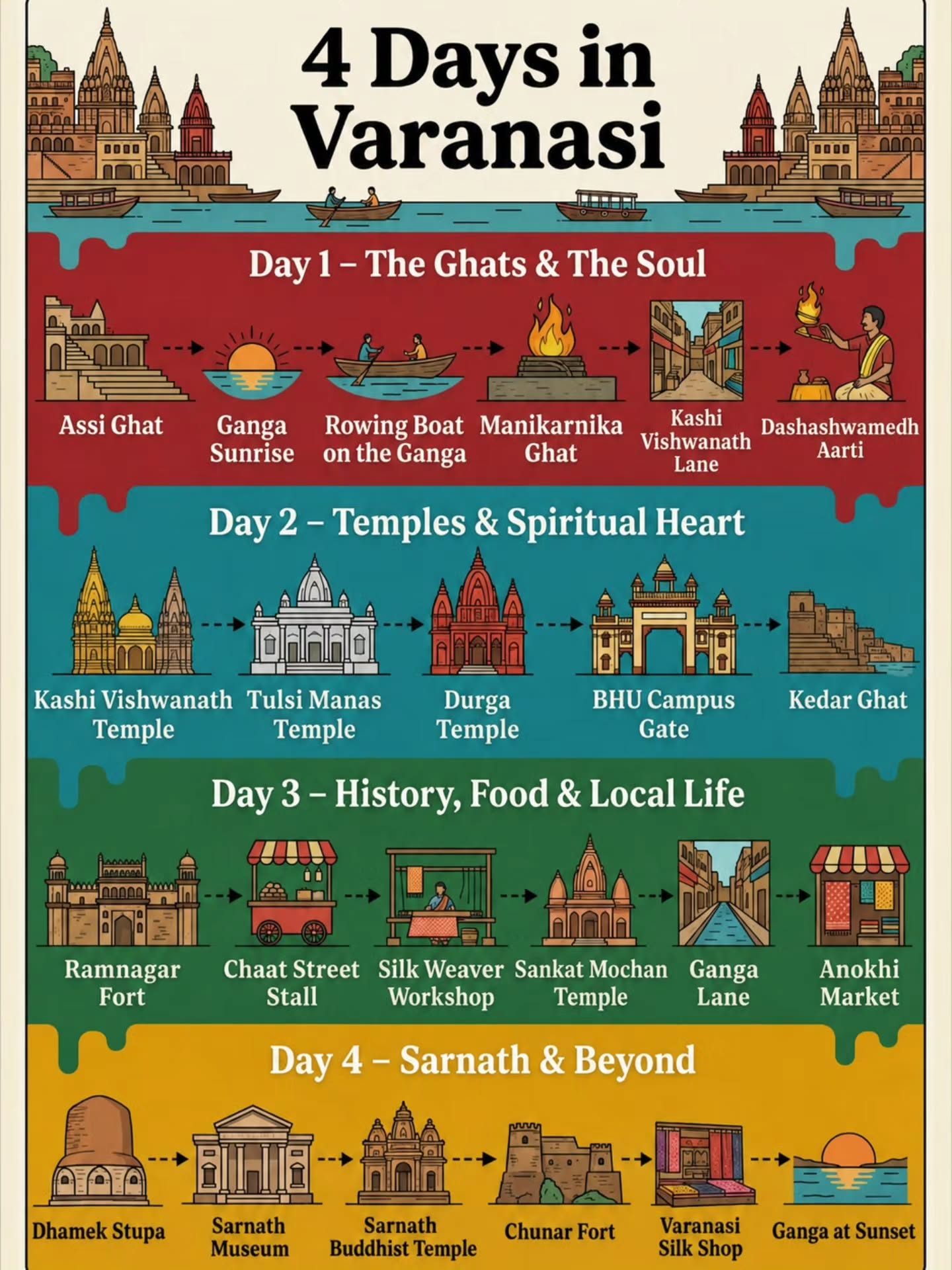
Day 1: The Ghats and The Soul
Your first day in Varanasi should be dedicated to experiencing the ghats and the spiritual atmosphere of the city. The ghats are the lifeblood of Varanasi, where locals and tourists alike gather for various rituals and activities.
Assi Ghat
Start your day at Assi Ghat, one of the most popular ghats in Varanasi. This ghat is known for its vibrant atmosphere and is a great place to watch the sunset. The ghat is also famous for its evening aarti, a Hindu ritual involving the lighting of lamps and chanting of mantras.
Ganga Sunrise
Witness the mesmerizing Ganga Sunrise from Dashashwamedh or Assi Ghat. The sight of the sun rising over the Ganges, with pilgrims performing their morning rituals, is truly unforgettable. This is the ideal time to take a rowing boat ride on the Ganges, offering a serene and spiritual experience.
Manikarnika and Dashashwamedh Aarti
End your day with a visit to Manikarnika Ghat, one of the oldest and most significant ghats in Varanasi. It is considered the holiest place for cremation. After this, head to Dashashwamedh Ghat for the evening Aarti ceremony. The Aarti, with its fire and music, is a spectacle not to be missed.
Day 2: Temples and Spiritual Heart
On your second day, delve into the spiritual heart of Varanasi by visiting some of its most sacred temples.
Kashi Vishwanath Temple
Kashi Vishwanath Temple is one of the most famous Hindu temples dedicated to Lord Shiva. The temple's architecture and the devotion of the pilgrims make it a must-visit site. The temple is also known as the "Golden Temple" and is considered one of the twelve Jyotirlingas, the holiest shrines of Lord Shiva.
Tulsi Manas and Durga Temple
Next, visit Tulsi Manas Temple, famous for its intricate carvings and as a place where the Ramcharitmanas, an epic poem written by the poet Tulsidas, was composed. Nearby, you can also visit Durga Temple. This temple, with its unique architecture and vibrant colors, is dedicated to the goddess Durga and is a significant pilgrimage site.
BHU Campus Gate
Banaras Hindu University (BHU) Campus Gate is another place that combines spiritual significance, ancient architecture, and a serene environment. The campus is a great place to explore and often hosts various cultural events.
Day 3: History, Food, and Local Life
Your third day in Varanasi should be dedicated to exploring the city's rich history, mouthwatering street food, and local markets.
Ramnagar Fort
Start your day with a trip to Ramnagar Fort. This 18th-century fort offers a glimpse into the opulent lifestyle of the former rulers of Kashi. The fort is decorated with beautiful murals and has various museums showcasing the region’s cultural heritage.
Chaat Stalls
Varanasi is famous for its street food, and the Chaat Stalls are a must-try. From pani puri to samosas, the chaat stalls along the ghats offer a delightful culinary experience. Try a variety of snacks and enjoy the local flavors.
Silk Weaver Workshop
Varanasi is known for its silk fabrics, and a visit to a Silk Weaver Workshop can give you an insight into the intricate process of silk weaving. You can also buy authentic Banarasi silk sarees and other items as souvenirs.
Sankat Mochan Ganga and Anokhi Market
End your day at Sankat Mochan Temple, dedicated to Lord Hanuman. This temple is known for its peaceful ambiance and is a popular spot for evening aarti. After that, explore the Anokhi Market, a vibrant market where you can find traditional textiles, handicrafts, and local artifacts. The market is a great place to shop for unique souvenirs.
Day 4: Sarnath and Beyond
Your final day in Varanasi will take you beyond the city to the nearby town of Sarnath, which holds immense historical and spiritual significance.
Dhamek Stupa
Dhamek Stupa is a massive cylindrical structure that marks the spot where Lord Buddha gave his first sermon. The stupa is a significant pilgrimage site for Buddhists and offers a serene environment for meditation and reflection.
Sarnath Museum
The Sarnath Museum houses a rich collection of Buddhist artifacts, including sculptures, manuscripts, and relics. The museum provides valuable insights into the life and teachings of Lord Buddha and the early history of Buddhism.
Chunar Fort
Also, visit the majestic Chunar Fort. This fort, built in the 6th century, stands as a testament to the region’s rich history. The fort offers stunning views of the surrounding landscape and is a must-visit for history enthusiasts.
Varanasi Silk Shop and Ganga at Sunset
On your way back to Varanasi, stop by a Varanasi Silk Shop to buy some authentic silk products. End your day with a serene Ganga Sunset experience, reflecting on your journey and the spiritual energy of the city.
Practical Tips
Best Time to Visit
The best time to visit Varanasi is during the winter months, from October to February, when the weather is pleasant. Summers can be very hot, and the monsoon season can be quite humid.
Accommodation
Varanasi offers a range of accommodation options, from budget guesthouses to luxurious hotels. Staying near the ghats can provide easy access to the main attractions and a more authentic experience.
Transportation
Local transportation in Varanasi is easy to navigate. Auto-rickshaws, cycle-rickshaws, and taxis are readily available. You can also hire a private guide or a taxi for a full-day tour of the city.
Cultural Etiquette
Varanasi is a very spiritual and sacred city. It's important to dress modestly, especially when visiting temples and ghats. Respect local customs and traditions, such as removing your shoes before entering temples and ghats.
Important Takeaways
Varanasi is a city that offers a unique blend of spirituality, history, and culture. The 4-day itinerary ensures that you experience the essence of the city, from the serenity of the ghats to the opulence of its temples and the rich tapestry of its local markets. Make sure to try the local cuisine, explore the ancient markets, and immerse yourself in the spiritual energy of the city.
Conclusion
A 4-day trip to Varanasi is a journey through time and spirituality. From the ancient ghats and temples to the bustling markets and historical sites, the city offers a rich and diverse experience. Whether you seek spiritual enlightenment, a glimpse into history, or a culinary adventure, Varanasi promises to leave you with lasting memories and a deeper understanding of its timeless allure.
Watch the Reel
Related deep dives
Similar reads based on topic and creator.




Recent articles
Fresh deep dives from the latest Reels we unpacked.



Comments
Be the first to comment.