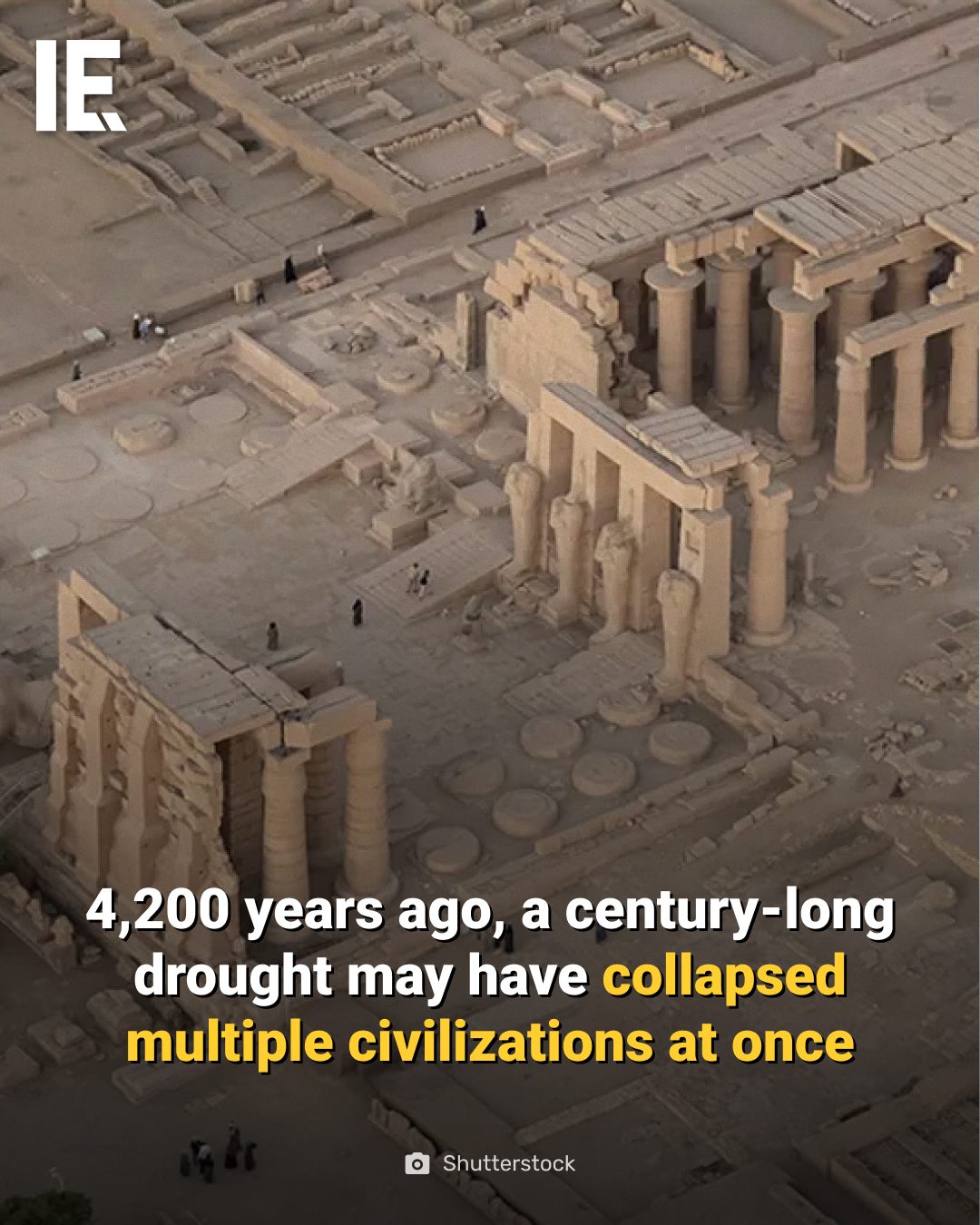
Ancient Civilizations and Drought: The 4.2-Kiloyear Event
Around 2200 BCE, Earth experienced a significant climatic shift that lasted roughly a century. This event, known as the 4.2-kiloyear event, was marked by prolonged aridification and had far-reaching consequences for ancient civilizations. The evidence of this aridification period is scattered across the ancient world, from a barren, dusty soil layer in northeast Syria to stalagmite records in Himalayan caves and a thin clay deposit on Chinese ruins. This event coincides with the collapse of several major civilizations, including the Akkadian Empire in Mesopotamia, the decline of Egypt's Old Kingdom, and the disruption of the Indus Valley Civilization.
Why This Matters
Understanding the 4.2-kiloyear event is crucial for several reasons. It provides insights into how ancient civilizations were affected by climate change, offering a historical perspective on the resilience and vulnerability of human societies. Additionally, it highlights the potential impacts of similar climatic shifts today, as scientists monitor the Atlantic Meridional Overturning Circulation (AMOC) for signs of slowdown.
The 4.2-Kiloyear Event: A Global or Regional Crisis?
The 4.2-kiloyear event is a complex and debated topic among researchers. Some argue that it was a global phenomenon, affecting multiple regions simultaneously. Others suggest that it was a series of regional crises that occurred around the same time but were not directly connected. The International Commission on Stratigraphy has designated the event as the beginning of a new geological age, signifying its importance in Earth's history.
The Akkadian Empire and Mesopotamia
The Akkadian Empire, one of the earliest and most influential civilizations in Mesopotamia, experienced a significant decline during the 4.2-kiloyear event. The empire, which had expanded through military conquests and trade, was weakened by internal strife and external pressures. The prolonged drought exacerbated these issues, leading to social unrest, famine, and ultimately, the collapse of the empire.
Egypt's Old Kingdom
Egypt's Old Kingdom, known for its monumental pyramids and centralized political structure, also faced challenges during this period. The Nile River, the lifeline of ancient Egyptian civilization, experienced reduced flooding, leading to crop failures and social unrest. This disruption likely contributed to the decline of the Old Kingdom and the transition to the First Intermediate Period.
The Indus Valley Civilization
The Indus Valley Civilization, which flourished in modern-day Pakistan and India, showed signs of disruption during the 4.2-kiloyear event. The civilization, known for its urban planning and trade networks, experienced a decline in urban centers and a shift towards more rural, agricultural communities. While the exact reasons for this shift are debated, climate change is considered a significant factor.
Evidence from the Environment
The 4.2-kiloyear event left a trail of environmental evidence across the ancient world. A barren, dusty soil layer in northeast Syria, stalagmite records from Himalayan caves, and a thin clay deposit on Chinese ruins are among the clues that point to a prolonged period of aridification. These environmental changes likely had profound impacts on agriculture, water availability, and overall societal stability.
Practical Tips for Understanding Ancient Climate Change
While the 4.2-kiloyear event is a historical phenomenon, it offers valuable lessons for understanding the impacts of climate change on civilizations. Here are some practical tips for delving deeper into this topic:
Study Regional Impacts
Rather than viewing the 4.2-kiloyear event as a global phenomenon, explore the regional impacts. Each civilization experienced the drought differently, and understanding the local contexts can provide a more nuanced understanding of the event's consequences.
Examine Contemporary Records
Look for contemporary records and archaeological evidence that can provide insights into how different civilizations responded to the drought. This can include climate proxies and historical artifacts.
Compare and Contrast
Compare the 4.2-kiloyear event to other historical periods of climate change. This can help identify patterns and common factors that contributed to the collapse or resilience of ancient civilizations.
Important Takeaways
Climate Change and Civilization
The 4.2-kiloyear event highlights the delicate balance between climate and civilization. Prolonged droughts can have devastating effects on agriculture, water availability, and social stability, leading to the collapse of even the most powerful empires.
The Need for Adaptation
Understanding the past can help us prepare for the future. As we face contemporary climate challenges, studying the 4.2-kiloyear event can provide valuable insights into the need for adaptation and resilience.
The Complexity of Climate Events
The 4.2-kiloyear event was complex and multifaceted, with regional variations and differing impacts on various civilizations. This complexity underscores the importance of comprehensive, nuanced research in understanding climate change.
Conclusion
The 4.2-kiloyear event serves as a stark reminder of the power of climate change and its potential impacts on human societies. From the collapse of the Akkadian Empire to the decline of Egypt's Old Kingdom and the disruption of the Indus Valley Civilization, this prolonged period of aridification left an indelible mark on ancient history. By studying this event, we can gain valuable insights into the resilience and vulnerability of civilizations in the face of climate change, and better prepare for the challenges that lie ahead.
Watch the Reel
Questions readers ask
What exactly was the 4.2-Kiloyear Event?
The 4.2-Kiloyear Event was a severe and prolonged drought that occurred around 2200 BCE. This climatic shift lasted approximately a century and resulted in significant environmental changes, including aridification, which had profound impacts on civilizations of the time.
Which ancient civilizations were most affected by the 4.2-Kiloyear Event?
The 4.2-Kiloyear Event had a significant impact on several major ancient civilizations. Notably, it contributed to the collapse of the Akkadian Empire in Mesopotamia, the decline of Egypt's Old Kingdom, and the disruption of the Indus Valley Civilization. These civilizations were particularly vulnerable due to their dependence on agriculture and water resources.
What kind of evidence supports the occurrence of the 4.2-Kiloyear Event?
The evidence for the 4.2-Kiloyear Event is diverse and comes from various parts of the world. This includes a distinct dusty soil layer in northeast Syria, stalagmite records found in Himalayan caves, and a thin clay deposit on Chinese ruins. These geological markers help scientists understand the extent and duration of the aridification period.
How did drought impact the Akkadian Empire during the 4.2-Kiloyear Event?
The Akkadian Empire, which was heavily reliant on agriculture, suffered greatly from the drought. The prolonged arid conditions led to widespread crop failures and famine, weakening the empire's infrastructure and economy. This environmental stress, combined with other factors like invasions and political instability, ultimately contributed to the empire's collapse.
What can modern societies learn from the 4.2-Kiloyear Event?
The 4.2-Kiloyear Event serves as a reminder of the vulnerability of societies to environmental stressors. Modern societies can learn about the importance of sustainable resource management, climate resiliency, and the need for preparedness in the face of potential climate shifts. Understanding past events can help us better anticipate and mitigate the risks associated with drought and other environmental changes.
What was the impact of the 4.2-Kiloyear Event on Egypt's Old Kingdom?
Egypt's Old Kingdom experienced a significant decline during the 4.2-Kiloyear Event due to the severe drought. The Nile River, which was crucial for agriculture and the livelihood of the people, saw reduced water levels, leading to crop failures and social unrest. This environmental stress, combined with other factors, contributed to the eventual collapse of the Old Kingdom.
Related deep dives
Similar reads based on topic and creator.



Recent articles
Fresh deep dives from the latest Reels we unpacked.




Comments
Be the first to comment.