Energy Sources in 2024: A Comprehensive Overview
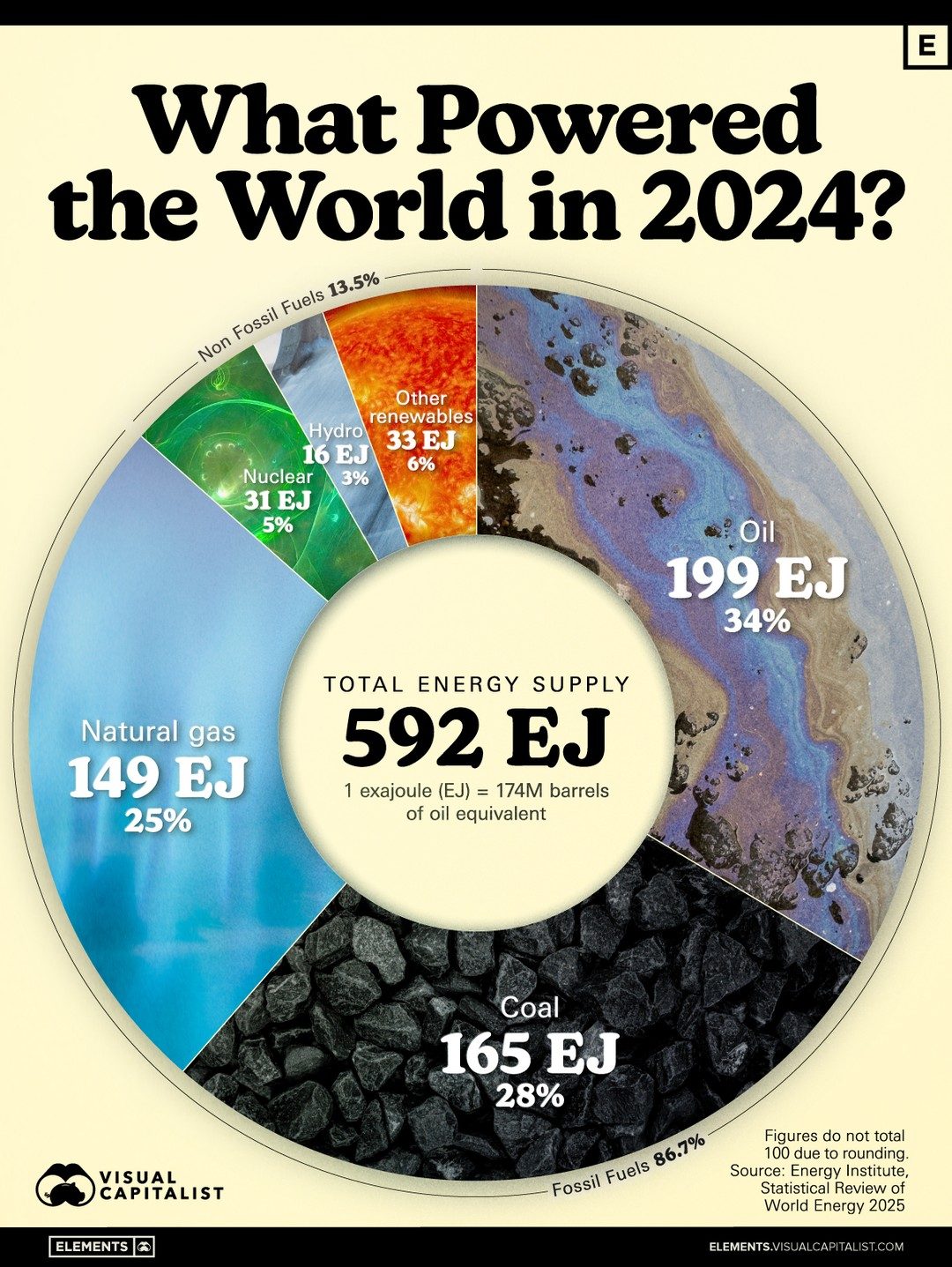
Global energy demand reached an unprecedented 592 exajoules in 2024. While non-fossil fuels saw a 7% year-over-year increase, accounting for 13.5% of the global energy mix, fossil fuels remain the dominant energy source. This article delves into what powered the world in 2024, highlighting the contributions of various energy sources.
Context: Why This Matters
Understanding the global energy landscape is crucial for policymakers, industries, and consumers alike. The energy mix not only influences economic growth but also has significant environmental and geopolitical implications. By examining the data from the Energy Institute, we can gain insights into the current energy dynamics and potential future trends.
Energy Landscape in 2024
Fossil Fuels: Still the Dominant Force
Fossil fuels—comprising coal, oil, and natural gas—accounted for 86.7% of the total energy supply in 2024. This dominance underscores the continued reliance on traditional energy sources despite growing concerns about climate change and sustainability.
Natural Gas: The Leading Fossil Fuel
Natural gas was the leading fossil fuel, contributing 25% (149 EJ) of the total energy supply. Its popularity can be attributed to its relatively lower emissions compared to coal and oil, making it a preferred choice for many countries transitioning towards cleaner energy. Natural gas is also versatile, used in power generation, heating, and industrial processes.
Coal: Powering Industrial Growth
Coal accounted for 28% (165 EJ) of the total energy supply, highlighting its significance in industrial operations. Despite environmental concerns, coal remains a critical energy source, particularly in developing economies where it powers manufacturing and energy-intensive industries.
Oil: Fueling Transportation and Industry
Oil, contributing 34% (199 EJ) of the total energy supply, is indispensable for transportation and various industrial applications. Its dominance in these sectors is expected to persist, although efforts to diversify energy sources are underway.
Non-Fossil Fuels: Growing But Still Minor
Non-fossil fuels, including nuclear, hydro, and other renewables, represented 13.5% of the total energy supply. This category saw the most significant growth, increasing by 7% year-over-year. However, it still trails behind fossil fuels, indicating the challenges ahead in achieving a more sustainable energy mix.
Nuclear Power
Nuclear energy, though a minor contributor in terms of percentage, plays a crucial role in providing stable baseload power. It is a low-carbon option that can support the transition to cleaner energy, but its growth is hampered by safety concerns and regulatory hurdles.
Hydroelectric Power
Hydroelectric power, with 33 EJ, accounts for 5% of the total energy supply. It is a significant source of renewable energy, particularly in countries with abundant water resources. However, its expansion is limited by geographical constraints and environmental impacts.
Renewables and Other Sources
The category of "Other Renewables" includes solar, wind, and other emerging technologies. While these sources are growing rapidly, they still represent a small fraction of the total energy supply. The growth in renewable energy is driven by advancements in technology, policy support, and increasing awareness of climate change.
Practical Tips for Transitioning to a Sustainable Energy Mix
Diversify Energy Portfolios
For governments and corporations, diversifying energy portfolios is essential. Investing in a mix of renewable and traditional energy sources can help balance reliability and sustainability.
Invest in Research and Development
Continuous investment in research and development is crucial for advancing renewable energy technologies. This includes improving storage solutions, enhancing efficiency, and reducing costs.
Policy and Regulatory Support
Strong policy and regulatory frameworks can accelerate the transition to cleaner energy. Governments should implement incentives for renewable energy adoption and set clear targets for reducing fossil fuel reliance.
Important Takeaways
- Fossil fuels remain the dominant energy source, accounting for 86.7% of the total energy supply in 2024.
- Natural gas, coal, and oil are the leading fossil fuels, each contributing significantly to global energy needs.
- Non-fossil fuels, including nuclear, hydro, and renewables, are growing but still represent a minor share of the energy mix.
- Diversification, investment in R&D, and strong policy support are key to transitioning to a more sustainable energy future.
Conclusion
The global energy landscape in 2024 is marked by the dominance of fossil fuels, with natural gas, coal, and oil leading the way. However, the increasing contribution of non-fossil fuels signals a gradual shift towards sustainability. Moving forward, a balanced approach that leverages both traditional and renewable energy sources will be essential for meeting global energy demands while addressing environmental challenges.
Watch the Reel
Questions readers ask
What percentage of the global energy supply was comprised of fossil fuels in 2024?
In 2024, fossil fuels made up 86.7% of the total global energy supply. This includes coal, oil, and natural gas, which remain the primary sources for meeting global energy needs.
How much did the use of non-fossil fuels increase in 2024?
Non-fossil fuels saw a 7% increase in 2024, which is a notable growth. However, despite this growth, non-fossil fuels only accounted for 13.5% of the global energy mix.
Why do fossil fuels still dominate the global energy supply?
Fossil fuels continue to dominate due to their reliability, affordability, and the existing infrastructure designed to support them. They are crucial for economic growth and industrial development.
What was the global energy demand in 2024?
The global energy demand in 2024 reached 592 exajoules, marking an all-time high. This demand is driven by various sectors, including industry, transportation, and residential use.
What are the potential future trends in the global energy mix?
While fossil fuels remain dominant, the 7% increase in non-fossil fuels suggests a gradual shift towards renewable energy sources. Future trends may include more investment in clean energy technologies and infrastructure.
What are the environmental implications of the 2024 energy mix?
The heavy reliance on fossil fuels has significant environmental implications, including increased greenhouse gas emissions and climate change. The growth in non-fossil fuels, however, indicates a step towards more sustainable practices.
How does the world's energy mix influence geopolitics?
The global energy mix, with its reliance on fossil fuels, influences geopolitics by affecting energy security, trade, and resource allocation. Countries with abundant fossil fuel reserves often wield significant global influence.
Related deep dives
Similar reads based on topic and creator.


Recent articles
Fresh deep dives from the latest Reels we unpacked.




Comments
Be the first to comment.