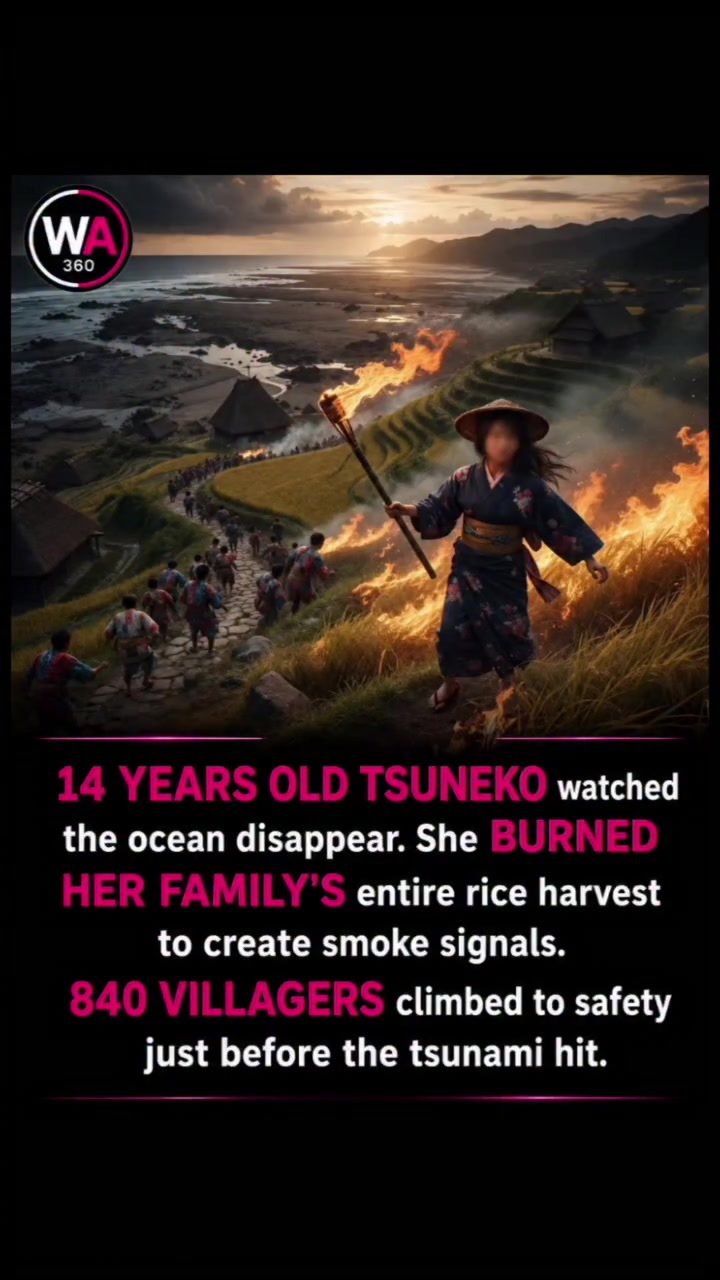
Tsuneko Sasaki: The 14-Year-Old Hero Who Saved 840 Lives
In 1896, a young girl named Tsuneko Sasaki, then just 14 years old, made a decision that would forever change the course of her village's history. Her actions on that fateful day exemplify the extraordinary lengths to which one can go to protect others, making her story a beacon of courage and selflessness.
Context: Why Tsuneko’s Story Matters
Tsuneko’s story is a powerful reminder of the human capacity for bravery and selflessness in the face of disaster. It underscores the importance of recognizing natural warning signs and acting swiftly to ensure the safety of others. While modern technology and alarm systems have advanced significantly, the fundamental principles of quick thinking and community awareness remain crucial in mitigating the impact of natural disasters.
Natural Warning Signs and Quick Thinking
Natural disasters like tsunamis often come with warning signs, but recognizing these signs and acting on them can be the difference between life and death. Tsuneko’s story highlights the importance of being vigilant and ready to respond to these signs.
Tsuneko noticed the ocean suddenly retreating far from the shore, a clear indication of an impending tsunami, highlighting the importance of paying close attention to the natural environment.
The Critical Role of Community and Communication
In the absence of modern alarm systems, effective communication within a community can be a lifesaver. Tsuneko’s use of smoke signals to alert the villagers demonstrates the power of simple yet effective communication methods.
The villagers' immediate response to Tsuneko’s smoke signals showcases the importance of community trust and unity, as they rushed to safety without hesitation.
The Sacrifice and Its Consequences
Tsuneko's decision to burn her family's entire rice harvest, their sole livelihood, was a selfless act that involved immense personal sacrifice. This act underscores the depth of commitment required to ensure the safety of others, sometimes at a personal cost.
Despite losing their most valuable asset, the villagers' survival was a testament to the resilience and unity that can emerge in times of crisis.
The Events of 1896
Recognition of the Warning Sign
Tsuneko's keen observation skills and knowledge of natural phenomena allowed her to recognize the signs of an impending tsunami. Noticing the ocean suddenly retreating was the first critical step in her response.
Her actions were driven by the need to alert the villagers as quickly as possible, given the lack of modern alarm systems.
Setting Fire to the Rice Harvest
Faced with the urgent need to alert the villagers, Tsuneko made the split-second decision to burn her family’s entire rice harvest, their most valuable asset. This drastic measure was necessary to create a visible and immediate warning signal.
The Impact on the Village
The sight of the massive smoke signals prompted 840 villagers to rush up the hill to safety. This timely action ensured that every single villager was safe just moments before the devastating tsunami struck.
Her quick thinking and decisive action saved 840 lives. Tsuneko's bravery and courage have since been remembered as a symbol of selflessness and valor.
Practical Tips for Preparedness
Emergency Planning
Being prepared for natural disasters involves having a well-thought-out emergency plan. This includes recognizing the warning signs, having an evacuation route, and communicating effectively within the community.
Effective Communication
In the absence of modern alarm systems, having a reliable method of communication, such as smoke signals, is crucial. Developing a community-wide communication plan can help ensure that everyone is alerted quickly and efficiently.
Community Response
Community response and unity play a significant role in disaster management. Encouraging a culture of collective responsibility and preparedness can help mitigate the risks and consequences of natural disasters.
Training and Awareness
Conducting regular drills and awareness campaigns can train community members to recognize and respond to warning signs. This can help ensure that everyone is prepared to act swiftly in an emergency.
Important Takeaways
Tsuneko’s story emphasizes the importance of vigilance, quick thinking, and effective communication in the face of natural disasters. It highlights the power of community and the selflessness required to ensure the safety of others, even at great personal cost.
The Power of Selflessness
Selflessness and the willingness to sacrifice personal interests for the greater good are essential qualities that can save lives. Tsuneko’s actions serve as a timeless reminder of the impact one person can have on a community.
Community and Collective Response
A strong sense of community and collective responsibility is crucial in disaster management. Effective communication and response mechanisms can help ensure that everyone is safe and accounted for during emergencies.
The Importance of Preparedness
Being prepared for natural disasters involves recognizing warning signs, having a well-thought-out emergency plan, and developing reliable communication methods. Regular drills and awareness campaigns can help ensure that communities are ready to respond effectively to emergencies.
Conclusion
Tsuneko Sasaki’s story of bravery and selflessness is a poignant reminder of the human capacity for courage and community spirit. Her actions not only saved 840 lives but also left a lasting legacy of resilience and unity. By recognizing natural warning signs, acting swiftly, and fostering effective communication, communities can better prepare for and respond to natural disasters. Tsuneko’s sacrifice underscores the importance of vigilance, quick thinking, and the power of community in mitigating the impact of disasters.
Watch the Reel
Questions readers ask
Who was Tsuneko Sasaki and why is she notable?
Tsuneko Sasaki was a 14-year-old girl who, in 1896, saved 840 lives by swiftly alerting her village to an impending tsunami. She is notable for her courage, quick thinking, and the significant impact of her actions on her community.
How did Tsuneko Sasaki recognize the impending tsunami?
Tsuneko Sasaki recognized the natural warning signs of an impending tsunami, although the specific signs are not detailed in the article. Her ability to interpret these signs and act swiftly is a key aspect of her story.
What can modern communities learn from Tsuneko Sasaki's story?
Modern communities can learn the importance of vigilance, quick thinking, and community unity from Tsuneko Sasaki's story. While technology has advanced, the basic principles of recognizing warning signs and acting promptly remain vital.
How did Tsuneko Sasaki's actions impact her village?
Tsuneko Sasaki's actions directly impacted her village by alerting the community to the impending tsunami, allowing them to evacuate and preventing a significant loss of life. Her courageous response saved 840 lives and left a lasting impact on her village's history.
What role does community unity play in disaster response, as shown in Tsuneko Sasaki's story?
Community unity plays a crucial role in disaster response, as shown in Tsuneko Sasaki's story. Her ability to swiftly alert her village and their collective response to her warnings highlight the importance of working together in times of crisis to ensure the safety of all members.
What are the key principles of disaster response demonstrated by Tsuneko Sasaki's story
Tsuneko Sasaki's story demonstrates the key principles of recognizing natural warning signs, acting swiftly, and fostering community unity in disaster response. Her actions underscore the importance of vigilance, quick thinking, and collective effort in ensuring community safety.
Related deep dives
Similar reads based on topic and creator.

Recent articles
Fresh deep dives from the latest Reels we unpacked.




Comments
Be the first to comment.